
Open textile fiber bales into feed material for a coordinated preparation line. Select the bale opener from the fiber mix, bale layout and downstream demand, then assess tuft consistency, safety interfaces and changeover requirements in a representative process trial. Prioritize materials, layout, take-off. Use the checkpoints to build a consistent equipment scope and confirm the intended trial or installation evidence. The official image is a product reference; it does not establish availability or an authorized supplier relationship. Submit OEM/ODM changes for application-specific feasibility review.
Open textile fiber bales into feed material for a coordinated preparation line. Select the bale opener from the fiber mix, bale layout and downstream demand, then assess tuft consistency, safety interfaces and changeover requirements in a representative process trial.
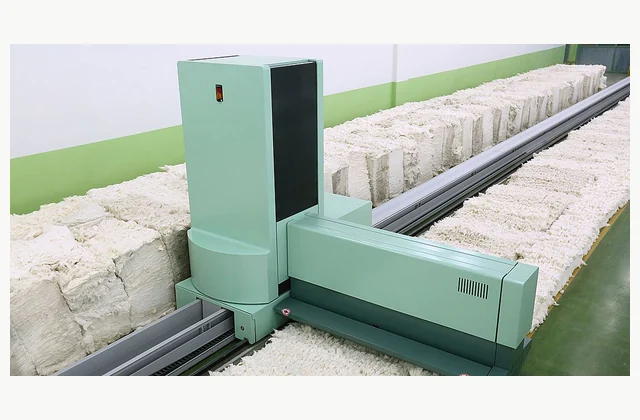
Shown as a configuration reference. Availability and the equipment offered for your project are confirmed separately.
Define the fibers and preparation route
An automatic textile bale opener removes material from arranged bales and prepares feed for the next process. Identify the fibers, bale condition, blend strategy and downstream opening or cleaning line. A bale opener is not a complete cleaning or blending plant by itself. State the intended yarn route and quality objective so the supplier can explain how the take-off arrangement supports the wider preparation system rather than quoting a stand-alone output figure.
Plan the bale layout and supply sequence
Bale dimensions, placement, available floor area and material replenishment shape the installation. Provide a layout including handling equipment, access and storage. Discuss how different fiber lots are arranged and identified and how changes are managed without unintended mixing. The Rieter UNIfloc A 12 reference illustrates an automatic take-off arrangement; exact working area and configuration need to be matched to the mill rather than inferred from a photographed bale row.
Assess take-off and tuft consistency
The size and uniformity of the material removed affect subsequent preparation. Ask how the proposed arrangement deals with different bale heights, density and material properties. Use representative bales in a trial and agree how consistency and stable feeding are evaluated. A high take-off rate on one material does not establish the same useful output for another. Discuss component wear and the maintenance conditions needed to preserve the intended working action.
| Selection issue | Information to specify |
|---|---|
| Materials | Fibers, bale dimensions, density and intended preparation route. |
| Layout | Bale rows, lot separation, handling and replenishment access. |
| Take-off | Feed consistency and proposed arrangement for varying bales. |
| Transfer | Ducts, fans, buffers and downstream control boundaries. |
| Operation | Protective layout, cleaning and maintenance access. |
| Acceptance | Representative material and complete-line feeding evidence. |
Coordinate transport, cleaning and controls
Material transfer to the next machine requires a defined mechanical or pneumatic and control interface. Identify ducts, fans, buffers and downstream demand control where these are part of the design. State which supplier owns each interface and the combined commissioning work. A machine-only quote can omit essential line components. The bale-opening specification should support balanced flow into the preparation route without relying on downstream equipment to absorb an undefined or unstable feed.
Design the operating and intervention arrangement
Bale handling and moving machinery need a suitable installation and operating plan using the selected system’s instructions and local requirements. Identify operator access, replenishment, cleaning and maintenance tasks. Protective arrangements and controls must correspond to the actual layout, not a simplified demonstration. Discuss how material interruptions and unusual bales are handled by trained personnel. Do not assume a high degree of automation removes the need for planned access and competent oversight.
Verify output through the downstream process
Acceptance should use agreed fiber and bale conditions and record the delivered arrangement. Assess feed consistency, usable throughput, waste and stable interaction with the following equipment. Include material changes and cleaning where they affect the mill’s schedule. Request utility needs, parts identification and training for the supplied functions. The relevant result is useful prepared material reaching the next process, not merely movement of the take-off unit or a catalogue maximum.
Bound OEM/ODM to a proven line interface
Bale-layout adaptations, identification and control interfaces may be reviewed. Changes to take-off mechanics, travel systems or protective functions require engineering and material trials. Provide bale dimensions, fibers and the downstream-line information with the brief. A customized alternative needs its own evidence and documented operating arrangement. Reference-brand photographs do not establish permission to copy the design or apply its production and fiber-preparation claims to another machine.
What should your textile bale opener RFQ include?
- Materials: Fibers, bale dimensions, density and intended preparation route.
- Layout: Bale rows, lot separation, handling and replenishment access.
- Take-off: Feed consistency and proposed arrangement for varying bales.
- Transfer: Ducts, fans, buffers and downstream control boundaries.
- Operation: Protective layout, cleaning and maintenance access.
- Acceptance: Representative material and complete-line feeding evidence.
- Destination, site conditions and delivery access
- Installation boundary, utilities and connection drawings
- Acceptance procedure, documentation and training scope
- OEM/ODM changes: interface, material, branding or new design; written engineering feasibility required
Need OEM / ODM customization?
Submit branding, packaging, configuration or engineering requirements for this equipment. Include the target market, initial and annual quantities, required changes and acceptance criteria.
Customization feasibility, permitted branding, development responsibilities, minimum quantity, cost and lead time are reviewed for the proposed supplier and configuration before a quotation is confirmed.
Frequently asked questions
Does a textile bale opener also clean and blend the fibers?
Its role is bale take-off and feed preparation within a wider line. Cleaning and blend functions depend on the complete process and selected equipment. Define the downstream route and required material so a bale-opener quotation is not mistaken for an entire blowroom or blending plant.
Which bale information should be supplied?
Give fiber types, dimensions, density or condition, lot arrangement and replenishment pattern. Include floor layout and handling access. These details influence the take-off and material-flow arrangement; the same nominal fiber name does not establish that different bales present identical operating conditions.
Why does tuft consistency matter?
The material delivered influences the following opening, cleaning and preparation stages. Agree how the feed is evaluated with representative bales and downstream equipment. A high take-off rate alone does not show that the prepared material supports stable line operation or the required quality objective.
Are pneumatic transfer components always included?
Not necessarily. Identify ducts, fans, buffers and controls in the proposed line and allocate responsibility for each. A stand-alone machine quote can omit components needed for actual transfer and stable feeding, so compare the complete interface rather than the central machine alone.
How should bale-opener performance be tested?
Use representative fibers and bale conditions and assess feed consistency, useful output and downstream interaction by agreed methods. Include changeover and cleaning where relevant. Record the supplied configuration so a demonstration on another layout or material is not treated as evidence for the delivered process.
Can bale-opening equipment be customized for a mill layout?
Layout, identification and control interfaces may be considered. Changes to take-off mechanics, travel or protective arrangements need engineering and material trials. Supply the bale and line details in the OEM/ODM request and define the combined acceptance and documentation responsibilities.
Reference information
- Automatic Bale Opener UNIfloc A 12 | Rieter
- Blowroom & Carding Machines – Sliver Quality for Spinning | Rieter
Reference data and images explain equipment configurations. IndustryApex engineers confirm the offered model, specification and commercial scope in your project quotation.