
Choose a stationary horizontal-shaft impact crusher from the feed's abrasiveness, impact behavior and required reduction and product shape. Define rotor, blow bars, apron settings and the fixed circuit, then verify grading and wear assumptions with representative material. Process representative feed at documented rotor and apron settings, sampling agreed final fractions and shape measures. Record usable throughput, fines, interruptions and initial wear observations using a defined trial length. Include feed preparation and screening; an empty rotor run cannot establish product quality or long-term wear performance. Submit the intended configuration and any OEM/ODM changes for project-specific feasibility review.
Choose a stationary horizontal-shaft impact crusher from the feed's abrasiveness, impact behavior and required reduction and product shape. Define rotor, blow bars, apron settings and the fixed circuit, then verify grading and wear assumptions with representative material.
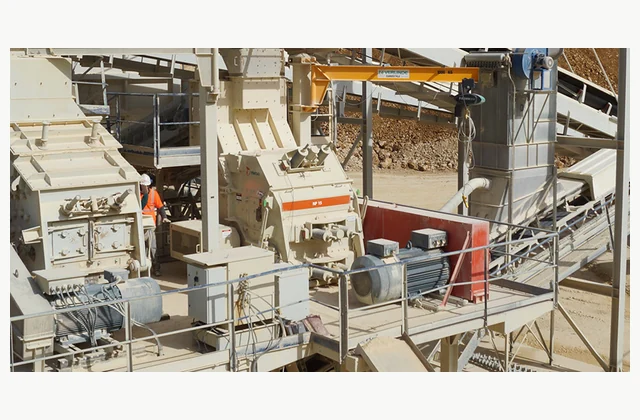
Shown as a configuration reference. Availability and the equipment offered for your project are confirmed separately.
Confirm suitable impact-crushing feed
Provide rock type, test results, abrasiveness, silica or other relevant constituents, feed size and moisture. Impact crushing can suit particular reduction and shape objectives but is not automatically the economical choice for every hard abrasive material. Review the actual duty with the equipment engineer.
Specify product grading and shape
State target fractions and shape requirements with the proposed screen circuit. Evaluate rotor speed and apron adjustments through trials rather than one nominal setting. A visually cubical sample does not establish consistent saleable grading, especially when recycled feed or changing geology alters the material.
Match rotor and wear components
Compare rotor configuration, blow-bar material and liners for the material and contamination risk. A wear alloy selected for one feed may be unsuitable for another impact condition. Obtain the supplier's selection basis and precise part identification, keeping expected wear life conditional on actual duty.
Define feed control and tramp response
Describe the feeder, chute and upstream removal of unwanted material. Confirm the exact protection and clearance arrangement offered and the safe response to blockage or tramp objects. A large inlet alone does not establish tolerance of every foreign component or an acceptable clearing procedure.
Plan access to the open housing
Blow bars and internal liners require lifting and safe support during replacement. Specify opening clearance, handling equipment and maintenance platforms. The civil and steelwork layout must accommodate service positions as well as normal operation, preventing a compact installation from blocking essential access.
Include dust drive and downstream interfaces
Itemize motor, drive, starting method, discharge conveyor and dust management. Impact crushing can create fines that influence the surrounding process. A bare crusher supply and a fixed operating installation have different responsibilities, so all guards, interlocks and utility interfaces need clear scope.
Compare a complete stationary impact crusher scope
| Decision | Information to compare |
|---|---|
| Confirm suitable impact-crushing feed | Rock/material tests, abrasiveness, feed size, moisture and reduction objective |
| Specify product grading and shape | Target grading/shape, screen circuit and product-sampling method |
| Match rotor and wear components | Rotor, blow-bar/liner material, contamination risk and part identifiers |
| Define feed control and tramp response | Feeder/chute, tramp removal, protection and safe blockage response |
| Plan access to the open housing | Housing opening, lifting tools, service platforms and replacement clearance |
| Include dust drive and downstream interfaces | Drive/start, discharge conveyor, fines/dust management and interlocks |
Plan installation and access
The plant engineer should coordinate dynamic foundation loads, feed/discharge transitions, guarding and dust provisions using the offered unit's data. Provide access for heavy wear parts and safe isolation of connected equipment. Verify service and open-housing positions before finalizing the support structure.
Agree acceptance evidence before ordering
Process representative feed at documented rotor and apron settings, sampling agreed final fractions and shape measures. Record usable throughput, fines, interruptions and initial wear observations using a defined trial length. Include feed preparation and screening; an empty rotor run cannot establish product quality or long-term wear performance.
Define OEM/ODM engineering boundaries
OEM liners, wear materials and fixed-plant interfaces may be assessed. ODM rotor, housing or drive changes require mechanical and crushing validation. Reference imagery does not prove stock, authorization or equivalent performance for a different impact-crusher design.
What should your stationary impact crusher RFQ include?
- Rock/material tests, abrasiveness, feed size, moisture and reduction objective
- Target grading/shape, screen circuit and product-sampling method
- Rotor, blow-bar/liner material, contamination risk and part identifiers
- Feeder/chute, tramp removal, protection and safe blockage response
- Housing opening, lifting tools, service platforms and replacement clearance
- Drive/start, discharge conveyor, fines/dust management and interlocks
- Destination, working environment, access and delivery constraints
- Installation responsibility, utilities and connection drawings
- Acceptance samples, documented test method, operator training and maintenance scope
- OEM/ODM changes requested: identification, tooling, interfaces or new design; engineering feasibility to be confirmed
Need OEM / ODM customization?
Submit branding, packaging, configuration or engineering requirements for this equipment. Include the target market, initial and annual quantities, required changes and acceptance criteria.
Customization feasibility, permitted branding, development responsibilities, minimum quantity, cost and lead time are reviewed for the proposed supplier and configuration before a quotation is confirmed.
Frequently asked questions
How do I confirm suitable impact-crushing feed?
Provide rock type, test results, abrasiveness, silica or other relevant constituents, feed size and moisture. Impact crushing can suit particular reduction and shape objectives but is not automatically the economical choice for every hard abrasive material. Review the actual duty with the equipment engineer.
How do I specify product grading and shape?
State target fractions and shape requirements with the proposed screen circuit. Evaluate rotor speed and apron adjustments through trials rather than one nominal setting. A visually cubical sample does not establish consistent saleable grading, especially when recycled feed or changing geology alters the material.
How do I match rotor and wear components?
Compare rotor configuration, blow-bar material and liners for the material and contamination risk. A wear alloy selected for one feed may be unsuitable for another impact condition. Obtain the supplier's selection basis and precise part identification, keeping expected wear life conditional on actual duty.
How do I define feed control and tramp response?
Describe the feeder, chute and upstream removal of unwanted material. Confirm the exact protection and clearance arrangement offered and the safe response to blockage or tramp objects. A large inlet alone does not establish tolerance of every foreign component or an acceptable clearing procedure.
How do I plan access to the open housing?
Blow bars and internal liners require lifting and safe support during replacement. Specify opening clearance, handling equipment and maintenance platforms. The civil and steelwork layout must accommodate service positions as well as normal operation, preventing a compact installation from blocking essential access.
How do I include dust drive and downstream interfaces?
Itemize motor, drive, starting method, discharge conveyor and dust management. Impact crushing can create fines that influence the surrounding process. A bare crusher supply and a fixed operating installation have different responsibilities, so all guards, interlocks and utility interfaces need clear scope.
Reference information
- Metso Nordberg NP Series official product reference
- Metso stationary impact crusher official family or technical reference
Reference data and images explain equipment configurations. IndustryApex engineers confirm the offered model, specification and commercial scope in your project quotation.