
Plan a precast concrete prestressing system around the engineered element, casting bed and complete strand force path. Match anchors, jacks, pumps and controlled detensioning with qualified structural and production responsibility, then validate the installed system before routine manufacture. Validate equipment calibration and the approved stressing/detensioning sequence using the responsible engineers' test plan. Record force, elongation, anchorage behavior and relevant concrete-release evidence. Inspect the complete bed and protective arrangements, retaining traceable component records and sign-off; an isolated jack pressure test is insufficient system acceptance. Submit the intended configuration and any OEM/ODM changes for project-specific feasibility review.
Plan a precast concrete prestressing system around the engineered element, casting bed and complete strand force path. Match anchors, jacks, pumps and controlled detensioning with qualified structural and production responsibility, then validate the installed system before routine manufacture.
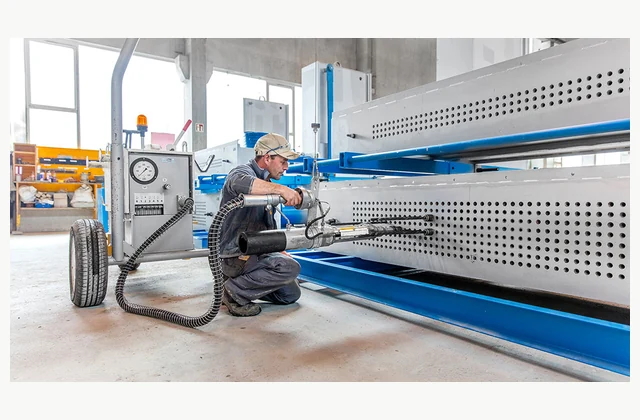
Shown as a configuration reference. Availability and the equipment offered for your project are confirmed separately.
Define the engineered precast product
Provide element drawings, prestressing-steel specification, strand layout and the structural designer's force and elongation requirements. The equipment supplier needs an approved production duty. A stressing-jack capacity alone does not establish a suitable system or certify the resulting precast element.
Assess the casting bed and abutments
The force path includes foundations, abutments, anchor plates, moulds and supporting structures. Assign their design and inspection to qualified engineers. A jack and hydraulic power pack cannot be treated as a complete installation when the plant's existing bed capacity and condition have not been verified.
Match jacks pumps and gripping components
Confirm compatibility of strand diameter, grips, jack stroke and hydraulic supply. Itemize hoses, pressure indication and accessories for the actual stressing sequence. Similar nominal pressure or pull ratings do not prove that components from different systems can be combined without an engineering review.
Control stressing and detensioning sequences
Define the approved loading order, measurement checks and controlled transfer of force to the concrete. Detensioning is part of the system design, not an improvised reverse operation. Include concrete-release criteria and responsibilities with the structural and production specialists before equipment is ordered.
Design access and exclusion arrangements
Stored strand energy requires a qualified risk assessment and engineered protective measures. Specify barriers, operator positions and controlled access around the bed and anchor ends. A convenient plant layout must not override the need to keep people out of hazardous force paths during stressing and release.
Keep calibration and wear evidence traceable
Obtain jack/pump identification, calibration records and inspection procedures for grips, hoses and anchorage components. Define replacement criteria and records for each force path. A pressure gauge reading should remain traceable to the offered equipment and approved procedure rather than an undocumented field assumption.
Compare a complete precast concrete prestressing system scope
| Decision | Information to compare |
|---|---|
| Define the engineered precast product | Element drawings, steel/strand data, layout, stressing force and elongation criteria |
| Assess the casting bed and abutments | Bed/abutment design, foundation capacity, anchor plates and condition assessment |
| Match jacks pumps and gripping components | Strand/grip match, jack stroke, pump, hoses and calibrated measurement |
| Control stressing and detensioning sequences | Stressing order, elongation checks, concrete-release criteria and detensioning method |
| Design access and exclusion arrangements | Risk assessment, barriers, operator position and stored-energy exclusion zones |
| Keep calibration and wear evidence traceable | Calibration, serial identifiers, grip/hose inspection and replacement criteria |
Plan installation and access
Qualified structural, hydraulic and production personnel must coordinate foundations, anchor alignment, utilities and protective access. Verify the installed force path against approved drawings before stressing. Include lifting, strand preparation, cutting, emergency isolation and controlled detensioning responsibilities within the commissioning plan.
Agree acceptance evidence before ordering
Validate equipment calibration and the approved stressing/detensioning sequence using the responsible engineers' test plan. Record force, elongation, anchorage behavior and relevant concrete-release evidence. Inspect the complete bed and protective arrangements, retaining traceable component records and sign-off; an isolated jack pressure test is insufficient system acceptance.
Define OEM/ODM engineering boundaries
OEM bed interfaces, controls and approved jack/grip arrangements may be reviewed. ODM force-bearing, hydraulic or release changes require qualified design and validation. Reference imagery does not certify a precast production line or establish manufacturer-authorized supply or permission to reproduce its system.
What should your precast concrete prestressing system RFQ include?
- Element drawings, steel/strand data, layout, stressing force and elongation criteria
- Bed/abutment design, foundation capacity, anchor plates and condition assessment
- Strand/grip match, jack stroke, pump, hoses and calibrated measurement
- Stressing order, elongation checks, concrete-release criteria and detensioning method
- Risk assessment, barriers, operator position and stored-energy exclusion zones
- Calibration, serial identifiers, grip/hose inspection and replacement criteria
- Destination, working environment, access and delivery constraints
- Installation responsibility, utilities and connection drawings
- Acceptance samples, documented test method, operator training and maintenance scope
- OEM/ODM changes requested: identification, tooling, interfaces or new design; engineering feasibility to be confirmed
Need OEM / ODM customization?
Submit branding, packaging, configuration or engineering requirements for this equipment. Include the target market, initial and annual quantities, required changes and acceptance criteria.
Customization feasibility, permitted branding, development responsibilities, minimum quantity, cost and lead time are reviewed for the proposed supplier and configuration before a quotation is confirmed.
Frequently asked questions
How do I define the engineered precast product?
Provide element drawings, prestressing-steel specification, strand layout and the structural designer's force and elongation requirements. The equipment supplier needs an approved production duty. A stressing-jack capacity alone does not establish a suitable system or certify the resulting precast element.
How do I assess the casting bed and abutments?
The force path includes foundations, abutments, anchor plates, moulds and supporting structures. Assign their design and inspection to qualified engineers. A jack and hydraulic power pack cannot be treated as a complete installation when the plant's existing bed capacity and condition have not been verified.
How do I match jacks pumps and gripping components?
Confirm compatibility of strand diameter, grips, jack stroke and hydraulic supply. Itemize hoses, pressure indication and accessories for the actual stressing sequence. Similar nominal pressure or pull ratings do not prove that components from different systems can be combined without an engineering review.
How do I control stressing and detensioning sequences?
Define the approved loading order, measurement checks and controlled transfer of force to the concrete. Detensioning is part of the system design, not an improvised reverse operation. Include concrete-release criteria and responsibilities with the structural and production specialists before equipment is ordered.
How do I design access and exclusion arrangements?
Stored strand energy requires a qualified risk assessment and engineered protective measures. Specify barriers, operator positions and controlled access around the bed and anchor ends. A convenient plant layout must not override the need to keep people out of hazardous force paths during stressing and release.
How do I keep calibration and wear evidence traceable?
Obtain jack/pump identification, calibration records and inspection procedures for grips, hoses and anchorage components. Define replacement criteria and records for each force path. A pressure gauge reading should remain traceable to the offered equipment and approved procedure rather than an undocumented field assumption.
Reference information
- PAUL Precast factory prestressing system official product reference
- PAUL precast concrete prestressing system official family or technical reference
Reference data and images explain equipment configurations. IndustryApex engineers confirm the offered model, specification and commercial scope in your project quotation.