
Order picking trucks carry the operator and collected goods through a warehouse picking route. Their value depends on the order profile and repeated access tasks rather than only the weight of a full pallet. Describe case sizes, picking heights, positions per tour and the load carrier. Map the required reach to both sides and record repeated mounting, dismounting or stepping tasks during an ordinary shift.
Order picking trucks carry the operator and collected goods through a warehouse picking route. Their value depends on the order profile and repeated access tasks rather than only the weight of a full pallet. Compare application fit, configuration and OEM/ODM scope through the buyer checklist below.
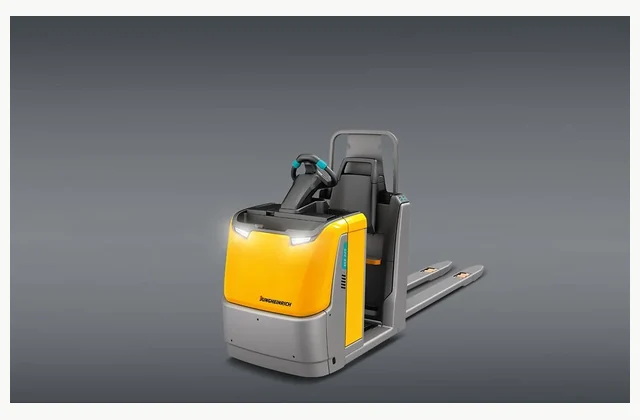
Shown as a configuration reference. Availability and the equipment offered for your project are confirmed separately.
Picking height: application and input specification
Order picking trucks carry the operator and collected goods through a warehouse picking route. Their value depends on the order profile and repeated access tasks rather than only the weight of a full pallet.
Describe case sizes, picking heights, positions per tour and the load carrier. Map the required reach to both sides and record repeated mounting, dismounting or stepping tasks during an ordinary shift.
A picking route with frequent short moves places different demands on controls from a route dominated by long travel. Observe how the operator advances between adjacent locations, reaches a carton and places it on the carrier. Count awkward movements separately from truck travel distance.
Load carrier: configuration tradeoffs
Compare operator platform, fork layout, controls and load support against the picking method. A low-level picker and an elevating operator platform solve different access problems; selection needs a task review.
Fork length must follow the load-building method. Picking onto several carriers can reduce return travel but increases turning envelope and makes the rear load harder to observe. Test the fully loaded combination at the most constrained crossing before accepting a productivity claim.
| Decision | What to resolve | Useful evidence |
|---|---|---|
| Picking height | Operator access method | Task demonstration at real locations |
| Load carrier | Fork and support compatibility | Mixed-order load stability |
| Travel route | Floor and traffic suitability | Representative-order route trial |
Process integration and handover points
Confirm pallet or roll-cage dimensions, aisle widths, cross-aisle turns and replenishment conflicts. Identify barcode terminals, scanners, work lights and any warehouse-system mounting or communication requirements.
The picked load changes throughout the tour. Heavy cases may begin at one end and light fragile cartons may accumulate above them. Include the intended stacking rules in the demonstration, checking whether the truck supports stable order building without repeated manual rearrangement.
Installation and maintainable operating arrangements
Measure floor joints, gradients, thresholds and traffic separation. Define battery charging, spare-device storage and operator training. Review protection and permitted access for the proposed working-height configuration.
For elevated picking, specify whether the operator, load carrier or both need to rise. Reach distance and protection differ between these arrangements. A truck capable of reaching a location may still be unsuitable for the actual carton-handling task at that location.
Acceptance evidence for travel route
Use representative orders with normal carton sizes and mixed pick locations. Observe load stability, visibility, access and route completion, including ordinary congestion and battery replenishment instead of a straight empty run.
Accessory placement influences visibility and hand clearance. Mount the intended terminal, scanner and document holder during evaluation instead of judging an unaccessorized truck. Check cable routing, charging connections and whether devices remain usable when the operator works on either side of the aisle.
OEM/ODM scope and future changes
Fleet labels, interface language and scanner mounts can be requested as OEM scope. Modified platforms, forks, access arrangements or controls require manufacturer feasibility and a revised rated configuration.
Separate fleet integration from mechanical suitability. Charging windows, spare batteries where applicable and shift handover routines need to match the site. Keep an agreed configuration record so replacement trucks preserve the load-carrier dimensions, operator controls and accessory locations demonstrated during the picking trial.
Image reference: Jungheinrich ECE 220/225 low-level order picker family. The illustrated manufacturer configuration does not establish stock, an agency appointment or permission to relabel it. OEM/ODM requests require a written feasibility response for the actual proposed equipment.
What should your order picking truck RFQ include?
- Order profiles and pick locations
- Case sizes and collected load distribution
- Pallet or roll-cage dimensions
- Required operator access heights
- Aisle, turning and replenishment layout
- Floor interfaces and traffic plan
- Battery and charging duty
- Terminal, scanner and accessory mounts
- Representative-order acceptance route
- OEM/ODM configuration and fleet quantities
Need OEM / ODM customization?
Submit branding, packaging, configuration or engineering requirements for this equipment. Include the target market, initial and annual quantities, required changes and acceptance criteria.
Customization feasibility, permitted branding, development responsibilities, minimum quantity, cost and lead time are reviewed for the proposed supplier and configuration before a quotation is confirmed.
Frequently asked questions
What inputs determine selection of order picking truck?
Describe case sizes, picking heights, positions per tour and the load carrier. Map the required reach to both sides and record repeated mounting, dismounting or stepping tasks during an ordinary shift.
How should I compare load carrier options?
Compare operator platform, fork layout, controls and load support against the picking method. A low-level picker and an elevating operator platform solve different access problems; selection needs a task review.
Which adjoining operations need to be specified?
Confirm pallet or roll-cage dimensions, aisle widths, cross-aisle turns and replenishment conflicts. Identify barcode terminals, scanners, work lights and any warehouse-system mounting or communication requirements.
What is a useful acceptance trial for order picking truck?
Use representative orders with normal carton sizes and mixed pick locations. Observe load stability, visibility, access and route completion, including ordinary congestion and battery replenishment instead of a straight empty run.
Which OEM/ODM changes can I request?
Fleet labels, interface language and scanner mounts can be requested as OEM scope. Modified platforms, forks, access arrangements or controls require manufacturer feasibility and a revised rated configuration.
What application boundary is easy to overlook?
A picking route with frequent short moves places different demands on controls from a route dominated by long travel. Observe how the operator advances between adjacent locations, reaches a carton and places it on the carrier. Count awkward movements separately from truck travel distance.
Reference information
- Jungheinrich ECE 220/225 low-level order picker family official reference
- Jungheinrich related technology or portfolio reference
Reference data and images explain equipment configurations. IndustryApex engineers confirm the offered model, specification and commercial scope in your project quotation.