
Select a lithium battery pack from the power and energy duty it must serve, with the exact inverter or other system interface identified. Compare usable energy, current limits, temperature conditions, BMS communication and permitted parallel arrangements. Review the complete installation and destination requirements with qualified project parties. Acceptance should verify the offered configuration and agreed operating boundary. Include protection, cables, racks, commissioning, transport documentation and warranty conditions in the total project scope.
Applications and production fit
Describe whether the battery supports solar self-consumption, backup loads or another defined energy duty. Provide a load profile and the required operating duration rather than only a desired nominal capacity. Distinguish continuous power from starting or short-duration demand. The pack belongs to a complete system, so identify the inverter or other connected equipment and the conditions under which the project expects energy to be delivered.
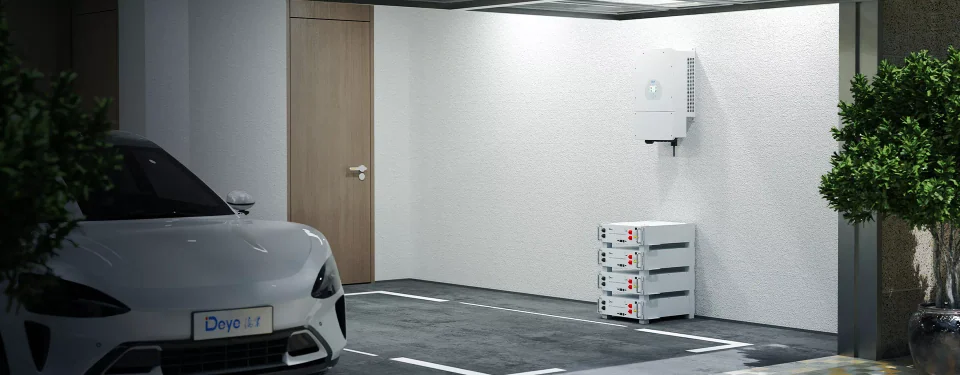
Shown as a configuration reference. Availability and the equipment offered for your project are confirmed separately.
Configuration choices to compare
Compare nominal and usable energy boundaries, allowed charge and discharge limits and the relevant temperature conditions. Ask for the exact pack and BMS communication compatibility with the intended inverter and firmware. Verify permitted module combinations and expansion arrangements in the manufacturer’s documentation. A similar voltage or an identical-looking communication socket does not establish compatibility. Do not transfer a model-family capacity or cycle statement to an unspecified alternative configuration.
Utilities, layout and site compatibility
A qualified installation review should cover location, environmental protection, mechanical support, access, electrical protection and other requirements applicable to the exact system. Identify who checks the destination documentation and authority requirements. A rack-mount module shown indoors should not be assumed suitable for an outdoor installation. Review transport and receiving arrangements as part of the project, with the relevant battery documentation and handling responsibilities confirmed before shipment.
Delivered project cost and scope
Price the packs with racks or enclosures, protection devices, cables, communications, integration and commissioning clearly identified. Ask which components and engineering are excluded. Compare warranty terms against operating temperature, depth of discharge, throughput and other stated conditions without assuming that a headline term covers every duty. Include monitoring or service fees where relevant. Nominal energy per purchase price is incomplete if usable output and system scope differ.
Representative acceptance testing
Agree acceptance with the responsible system team, including identity, serial records, configuration, communication and relevant functional checks. Define the boundary and conditions for any capacity or operating test. Include inverter integration rather than testing the pack as an isolated box when system operation is the objective. Preserve commissioning records and settings. A BMS display showing a percentage does not by itself establish measured usable AC energy or complete backup capability.
Maintenance and operating handover
Handover should contain exact model manuals, compatibility records, warranty terms, transport-related documents and service contacts. Ask how firmware changes and future expansion are controlled and who approves replacement modules. Keep changes to the pack or connected inverter under review. Local service and a practical replacement route matter because a component swap can affect the system configuration; the original nominal voltage alone is insufficient evidence for substitution.
OEM/ODM and project customization
Define customization as a separate scope in the quotation. Configuration choices concern the equipment arrangement and operating requirements; OEM requests can include permitted branding, labels, manuals and packaging; ODM requests may involve engineering changes. Identify the party responsible for design, documentation and verification before agreeing to a change. A manufacturer reference photograph demonstrates a category or model family and does not establish that IndustryApex represents that brand or can relabel its product. Ask which changes are feasible for the proposed supplier, what sample or drawing approval is needed and how the change affects service parts, testing and delivery.
RFQ checklist for a comparable proposal
Send a concise project brief with the specific items below and attach drawings, samples or site information where available. Distinguish essential requirements from preferences so alternative offers remain comparable. Ask each bidder to return a configuration list, utility and installation boundary, relevant model documentation, acceptance plan and an itemized quotation. State the destination and who will review applicable local requirements for the exact offered configuration. Identify exclusions, recurring consumables, training, warranty conditions and after-sales responsibilities before comparing totals. If important data is unavailable, mark it as an assumption to verify instead of allowing different bidders to silently solve different projects.
- Backup or self-consumption duty
- Load power profile and required duration
- Connected inverter model and firmware
- Nominal and usable energy boundaries
- Continuous and short-duration current requirements
- BMS protocol and approved compatibility records
- Parallel quantity and future expansion plan
- Indoor or outdoor installation environment
- Rack, enclosure and electrical protection scope
- Destination and transport documentation
- Commissioning and capacity-test boundary
- Warranty duty conditions and local service
Manufacturer configuration references
Review the linked manufacturer information as configuration references. Request the current sheet, included scope and relevant evidence for the exact proposed equipment; these references do not establish an IndustryApex supply relationship.
What should you include in your RFQ?
- Backup or self-consumption duty
- Load power profile and required duration
- Connected inverter model and firmware
- Nominal and usable energy boundaries
- Continuous and short-duration current requirements
- BMS protocol and approved compatibility records
- Parallel quantity and future expansion plan
- Indoor or outdoor installation environment
- Rack, enclosure and electrical protection scope
- Destination and transport documentation
- Commissioning and capacity-test boundary
- Warranty duty conditions and local service
For OEM / ODM requests, include the branding, packaging, configuration or engineering changes you need, initial and annual quantities, target market, sample approval and acceptance requirements. Feasibility and commercial scope are confirmed for the specific project.
Need OEM / ODM customization?
Submit branding, packaging, configuration or engineering requirements for this equipment. Include the target market, initial and annual quantities, required changes and acceptance criteria.
Customization feasibility, permitted branding, development responsibilities, minimum quantity, cost and lead time are reviewed for the proposed supplier and configuration before a quotation is confirmed.
Frequently asked questions
Are nominal battery energy and usable AC energy the same?
No. Usable output depends on the operating window, reserve, conversion and auxiliary consumption within the defined system boundary. Request conditions for the exact battery and inverter configuration rather than comparing nominal pack energy as if it were delivered AC energy.
Does matching battery voltage prove inverter compatibility?
No. Check the exact models, permitted operating limits, BMS communication and applicable firmware documentation. Similar voltage or connector appearance does not establish an approved combination. Have the responsible supplier and system designer confirm compatibility.
Can more lithium battery modules always be added later?
No. Follow the exact manufacturer's permitted module combinations, system limits and expansion process. Ask how age, firmware and configuration are reviewed. Future expansion should be an agreed design provision rather than an assumption based on empty rack space.
Does a battery pack automatically provide whole-site backup?
No. Backup behavior depends on the inverter, controls, isolation, protected loads and installation design. Provide the critical load schedule and starting demands. A qualified designer should verify the complete system and the intended operating mode.
Can I request OEM or ODM customization for a lithium battery pack?
Yes, include the requested configuration, branding or engineering changes in your project inquiry. Feasibility, ownership of the design, validation, documentation, minimum quantities and delivery terms need confirmation with the proposed supplier. The referenced manufacturer model is an example, not an OEM commitment from that brand.
What information is needed to request a lithium battery pack quotation?
Send the category-specific checklist on this page, the destination, your operating conditions and available drawings or samples. Ask for an itemized complete project scope and a representative acceptance plan. Flag missing input data so quotations state the same assumptions rather than appearing comparable while covering different configurations.
Reference information
- Deye SE-G5.1 Pro-B lithium battery module
- Deye ESS official supporting product documentation
Reference data and images explain equipment configurations. IndustryApex engineers confirm the offered model, specification and commercial scope in your project quotation.