
Design an irrigation filtration station from source-water analysis, emitter requirements and operating flow. Compare screen, disc or other treatment routes with pressure loss, cleaning water and controls, then verify the actual protection and backwash behavior across the irrigation schedule. Test representative flow and source-water conditions, measuring pressure loss and cleaning response with agreed methods. Verify valves, alarms and backwash discharge and inspect delivered element grades. Record water condition, configuration and settings; a clean-water pressure test alone does not establish long-term emitter protection. Submit the intended configuration and any OEM/ODM changes for project-specific feasibility review.
Design an irrigation filtration station from source-water analysis, emitter requirements and operating flow. Compare screen, disc or other treatment routes with pressure loss, cleaning water and controls, then verify the actual protection and backwash behavior across the irrigation schedule.
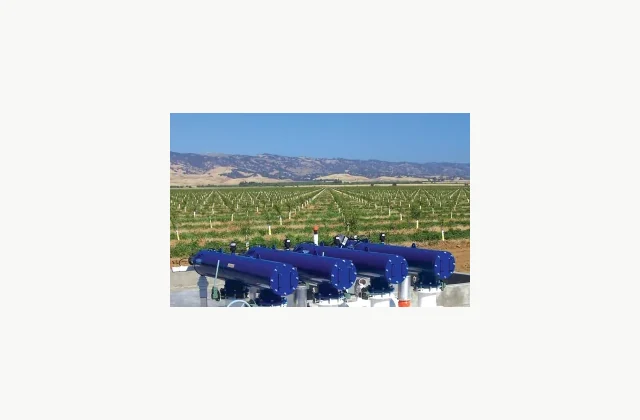
Shown as a configuration reference. Availability and the equipment offered for your project are confirmed separately.
Analyze the actual water source
Provide representative solids, particle distribution, organic content, chemistry and seasonal changes. Different contaminants may need different treatment stages. A filter selected only by flow or mesh label may not address the material that causes the farm's emitters to clog.
Match filtration to downstream emitters
Obtain the emitter or nozzle's required filtration and the irrigation designer's treatment plan. Screen, disc and media systems have different operating and cleaning boundaries. A small nominal filtration value does not establish the correct complete station or substitute for chemical/biological management where required.
Size flow and allowable pressure loss
Provide minimum, peak and simultaneous-zone flow with inlet pressure variation. Include clean and cleaning-trigger conditions in the hydraulic assessment. Port size or a maximum catalog flow does not establish that the station leaves sufficient pressure for the downstream irrigation network.
Design automatic cleaning and waste routes
Confirm cleaning principle, minimum conditions, backwash water and drain capacity for the exact filter. Define where discharge goes and whether irrigation continues during cleaning. An automatic label alone does not establish successful cleaning at low pressure or without an adequate waste outlet.
Specify valves monitoring and controls
Itemize isolation, pressure sensing, differential-pressure trigger and timer or controller interfaces. Agree fault responses and manual operation. A product photograph of one filter does not establish that the complete valve manifold, power and communication arrangement is included in the station supply.
Keep elements and seals serviceable
Provide space for element withdrawal and safe pressure release. Obtain screen/disc, seal and cleaning-mechanism identification with inspection guidance. Service must restore the required filtration degree; a damaged or mismatched element can pass material while the station appears to operate normally.
Compare a complete irrigation filtration station scope
| Decision | Information to compare |
|---|---|
| Analyze the actual water source | Water analysis, particles/organics, chemistry and seasonal variability |
| Match filtration to downstream emitters | Emitter requirement, treatment stages, filtration method and required degree |
| Size flow and allowable pressure loss | Flow range, inlet pressure, clean/dirty loss and downstream pressure budget |
| Design automatic cleaning and waste routes | Backwash conditions/water, drain capacity, discharge route and online cleaning |
| Specify valves monitoring and controls | Valves/manifold, pressure monitoring, cleaning trigger and controller interface |
| Keep elements and seals serviceable | Element removal, depressurization, screens/discs, seals and inspection criteria |
Plan installation and access
Qualified irrigation and piping personnel should approve station support, flow direction, isolation and drainage. Confirm the exact hydraulic and control layout and safe service clearances. Flush upstream construction debris as specified before introducing the station to the emitter network and recording the initial operating condition.
Agree acceptance evidence before ordering
Test representative flow and source-water conditions, measuring pressure loss and cleaning response with agreed methods. Verify valves, alarms and backwash discharge and inspect delivered element grades. Record water condition, configuration and settings; a clean-water pressure test alone does not establish long-term emitter protection.
Define OEM/ODM engineering boundaries
OEM manifolds, control interfaces and approved filter combinations can be reviewed. ODM elements, cleaning mechanisms or pressure boundaries require engineering and water trials. Reference imagery does not establish stock, manufacturer agency or guaranteed clog-free operation under unassessed water conditions.
What should your irrigation filtration station RFQ include?
- Water analysis, particles/organics, chemistry and seasonal variability
- Emitter requirement, treatment stages, filtration method and required degree
- Flow range, inlet pressure, clean/dirty loss and downstream pressure budget
- Backwash conditions/water, drain capacity, discharge route and online cleaning
- Valves/manifold, pressure monitoring, cleaning trigger and controller interface
- Element removal, depressurization, screens/discs, seals and inspection criteria
- Destination, working environment, access and delivery constraints
- Installation responsibility, utilities and connection drawings
- Acceptance samples, documented test method, operator training and maintenance scope
- OEM/ODM changes requested: identification, tooling, interfaces or new design; engineering feasibility to be confirmed
Need OEM / ODM customization?
Submit branding, packaging, configuration or engineering requirements for this equipment. Include the target market, initial and annual quantities, required changes and acceptance criteria.
Customization feasibility, permitted branding, development responsibilities, minimum quantity, cost and lead time are reviewed for the proposed supplier and configuration before a quotation is confirmed.
Frequently asked questions
How do I analyze the actual water source?
Provide representative solids, particle distribution, organic content, chemistry and seasonal changes. Different contaminants may need different treatment stages. A filter selected only by flow or mesh label may not address the material that causes the farm's emitters to clog.
How do I match filtration to downstream emitters?
Obtain the emitter or nozzle's required filtration and the irrigation designer's treatment plan. Screen, disc and media systems have different operating and cleaning boundaries. A small nominal filtration value does not establish the correct complete station or substitute for chemical/biological management where required.
How do I size flow and allowable pressure loss?
Provide minimum, peak and simultaneous-zone flow with inlet pressure variation. Include clean and cleaning-trigger conditions in the hydraulic assessment. Port size or a maximum catalog flow does not establish that the station leaves sufficient pressure for the downstream irrigation network.
How do I design automatic cleaning and waste routes?
Confirm cleaning principle, minimum conditions, backwash water and drain capacity for the exact filter. Define where discharge goes and whether irrigation continues during cleaning. An automatic label alone does not establish successful cleaning at low pressure or without an adequate waste outlet.
How do I specify valves monitoring and controls?
Itemize isolation, pressure sensing, differential-pressure trigger and timer or controller interfaces. Agree fault responses and manual operation. A product photograph of one filter does not establish that the complete valve manifold, power and communication arrangement is included in the station supply.
How do I keep elements and seals serviceable?
Provide space for element withdrawal and safe pressure release. Obtain screen/disc, seal and cleaning-mechanism identification with inspection guidance. Service must restore the required filtration degree; a damaged or mismatched element can pass material while the station appears to operate normally.
Reference information
- Amiad Filtomat official product reference
- Amiad irrigation filtration station official family or technical reference
Reference data and images explain equipment configurations. IndustryApex engineers confirm the offered model, specification and commercial scope in your project quotation.