
Select a hose-reel irrigation traveler from strip length, crop demand and measured inlet pressure and flow. Match hose, sprinkler or boom cart and retraction control to the field, then assess application uniformity and complete pull-and-rewind operation with the intended water supply. Operate a representative full strip at the intended supply and evaluate distribution with the designer's agreed method. Record pressure, nozzle, wind and travel speed along the rewind. Demonstrate pullout, automatic stopping, draining and transport conversion, keeping output claims specific to the tested strip and conditions. Submit the intended configuration and any OEM/ODM changes for project-specific feasibility review.
Select a hose-reel irrigation traveler from strip length, crop demand and measured inlet pressure and flow. Match hose, sprinkler or boom cart and retraction control to the field, then assess application uniformity and complete pull-and-rewind operation with the intended water supply.
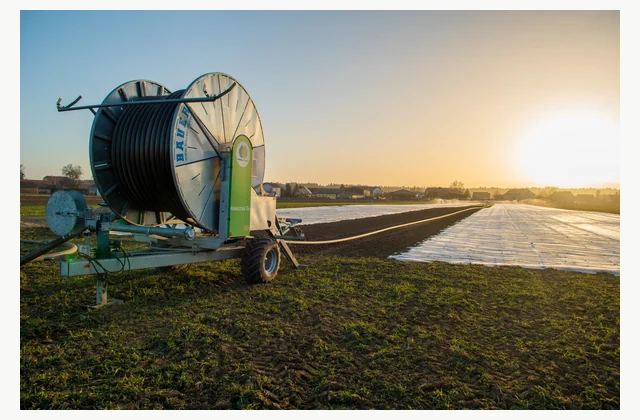
Shown as a configuration reference. Availability and the equipment offered for your project are confirmed separately.
Map strips slopes and field access
Provide field dimensions, pull lengths, headlands, gradients and locations of supply points. The hose must be pulled and rewound along a practical route. Nominal hose length alone does not establish useful coverage where obstacles, access or steep changes prevent the intended travel path.
Match crop and application objective
The irrigation designer needs crop, soil infiltration and the planned water depth and interval. Gun and boom-cart application can have different wind and distribution behavior. A wide wetted pattern is not proof of suitable application when runoff, drift or crop damage limits the useful operating condition.
Calculate hose and pressure losses
Provide source flow, inlet pressure and hose diameter/length with elevation. Confirm pressure required at the selected applicator under operating flow. A pump's shutoff pressure cannot establish this duty, and increasing hose length can change both losses and the usable nozzle configuration.
Control retraction and travel speed
Specify the desired speed or application control and the drive arrangement of the offered reel. Check behavior through changing reel diameter and supply conditions. An indicated travel speed needs verification over the full pull, because nonuniform movement can change water application along the strip.
Review cart handling and transport
Match cart wheels, stability, hose pullout and reel positioning with the tractor and field. Include connections and transport locking. A compact reel footprint does not establish safe positioning or movement on every surface, especially with the hose filled and the cart at the end of a long strip.
Plan nozzle turbine and hose service
Identify nozzle, turbine or drive parts, hose connections and any filtration requirement. Obtain cleaning, draining and seasonal storage procedures for the offered model. Replacement nozzles and control settings must preserve the designed pressure and application rather than simply fit the original thread.
Compare a complete hose reel irrigation traveler scope
| Decision | Information to compare |
|---|---|
| Map strips slopes and field access | Field strips, pull length, slopes, obstacles and supply points |
| Match crop and application objective | Crop/soil, depth/interval, wind and gun/boom application choice |
| Calculate hose and pressure losses | Operating flow/pressure, hose dimensions, elevation and applicator pressure |
| Control retraction and travel speed | Retraction drive, speed control, full-pull behavior and supply variation |
| Review cart handling and transport | Cart/reel support, tractor handling, pullout, connections and transport locks |
| Plan nozzle turbine and hose service | Nozzle/drive parts, filtration, draining, hose repair and winter storage |
Plan installation and access
Qualified irrigation personnel should establish reel positions, supply connections and approved pull routes with the farm team. Verify support and transport setup using the manufacturer's instructions. Commission pressure and retraction controls before routine irrigation, preserving safe access around moving hose, reel and cart components.
Agree acceptance evidence before ordering
Operate a representative full strip at the intended supply and evaluate distribution with the designer's agreed method. Record pressure, nozzle, wind and travel speed along the rewind. Demonstrate pullout, automatic stopping, draining and transport conversion, keeping output claims specific to the tested strip and conditions.
Define OEM/ODM engineering boundaries
OEM hose/cart combinations and approved controls can be reviewed. ODM reel, drive, pressure or support changes require engineering and field trials. Reference imagery does not establish stock, manufacturer authorization or a universal water-saving or coverage guarantee.
What should your hose reel irrigation traveler RFQ include?
- Field strips, pull length, slopes, obstacles and supply points
- Crop/soil, depth/interval, wind and gun/boom application choice
- Operating flow/pressure, hose dimensions, elevation and applicator pressure
- Retraction drive, speed control, full-pull behavior and supply variation
- Cart/reel support, tractor handling, pullout, connections and transport locks
- Nozzle/drive parts, filtration, draining, hose repair and winter storage
- Destination, working environment, access and delivery constraints
- Installation responsibility, utilities and connection drawings
- Acceptance samples, documented test method, operator training and maintenance scope
- OEM/ODM changes requested: identification, tooling, interfaces or new design; engineering feasibility to be confirmed
Need OEM / ODM customization?
Submit branding, packaging, configuration or engineering requirements for this equipment. Include the target market, initial and annual quantities, required changes and acceptance criteria.
Customization feasibility, permitted branding, development responsibilities, minimum quantity, cost and lead time are reviewed for the proposed supplier and configuration before a quotation is confirmed.
Frequently asked questions
How do I map strips slopes and field access?
Provide field dimensions, pull lengths, headlands, gradients and locations of supply points. The hose must be pulled and rewound along a practical route. Nominal hose length alone does not establish useful coverage where obstacles, access or steep changes prevent the intended travel path.
How do I match crop and application objective?
The irrigation designer needs crop, soil infiltration and the planned water depth and interval. Gun and boom-cart application can have different wind and distribution behavior. A wide wetted pattern is not proof of suitable application when runoff, drift or crop damage limits the useful operating condition.
How do I calculate hose and pressure losses?
Provide source flow, inlet pressure and hose diameter/length with elevation. Confirm pressure required at the selected applicator under operating flow. A pump's shutoff pressure cannot establish this duty, and increasing hose length can change both losses and the usable nozzle configuration.
How do I control retraction and travel speed?
Specify the desired speed or application control and the drive arrangement of the offered reel. Check behavior through changing reel diameter and supply conditions. An indicated travel speed needs verification over the full pull, because nonuniform movement can change water application along the strip.
How do I review cart handling and transport?
Match cart wheels, stability, hose pullout and reel positioning with the tractor and field. Include connections and transport locking. A compact reel footprint does not establish safe positioning or movement on every surface, especially with the hose filled and the cart at the end of a long strip.
How do I plan nozzle turbine and hose service?
Identify nozzle, turbine or drive parts, hose connections and any filtration requirement. Obtain cleaning, draining and seasonal storage procedures for the offered model. Replacement nozzles and control settings must preserve the designed pressure and application rather than simply fit the original thread.
Reference information
- BAUER RAINSTAR T official product reference
- BAUER hose reel irrigation traveler official family or technical reference
Reference data and images explain equipment configurations. IndustryApex engineers confirm the offered model, specification and commercial scope in your project quotation.