
Choose an industrial gearbox using required output speed and torque, the load cycle and relevant radial or axial shaft loads. Match ratio, mounting orientation, shaft interfaces, lubrication and environmental conditions to the actual machine. Review motor coupling or adapter compatibility as part of the configuration. Acceptance should verify dimensions and agreed operating tests. Include alignment, base work, protection, commissioning and local replacement support in the complete delivered project scope.
Applications and production fit
Begin with the driven machine and its required output motion, including starts, stops, reversals and shock loads. For a replacement, capture the nameplate, mounting and shaft dimensions as well as the reason for failure or change. A matching ratio is not enough if the load or support arrangement differs. Conveyors, agitators and other equipment should be compared through their own duty instead of a single motor-power figure.
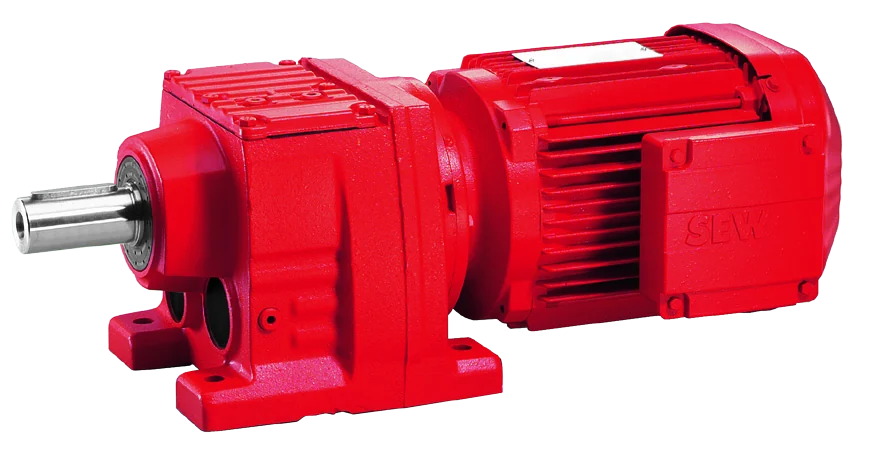
Shown as a configuration reference. Availability and the equipment offered for your project are confirmed separately.
Configuration choices to compare
Specify output speed and torque with the load cycle, then review the proposed gearbox ratio and service conditions. Include radial and axial loads applied to the shafts and the location of pulleys or sprockets where relevant. Ask about motor adapters, coupling, backlash and mounting interfaces required by the application. A complete gearmotor and a bare reducer have different supply boundaries that should be made explicit in every offer.
Utilities, layout and site compatibility
Review mounting orientation, lubrication, ambient conditions and access with the exact manufacturer’s documentation. A gearbox supplied for one position may need a different configuration for another. Qualified parties should assess mechanical support, guarding and any destination-specific equipment requirements. Confirm the available envelope and shaft alignment. A similar-looking housing or foot pattern does not establish that the offered replacement is suitable without modifications to the surrounding machine.
Delivered project cost and scope
Compare the gearbox with motor adapter or gearmotor, coupling, base changes, lubrication, protection and commissioning included. Ask for replacement seal, bearing and local service arrangements. For a retrofit, identify downtime and engineering needed to adapt shafts or foundations. Operating cost depends on duty and maintenance conditions as well as efficiency. The cheapest reducer price is incomplete if installing it requires substantial unquoted mechanical work.
Representative acceptance testing
Acceptance should verify exact identity, ratio and mechanical interfaces against the approved drawings. Agree any running checks, temperature or vibration assessments and load conditions with qualified project parties and the manufacturer’s procedure. Include the driven machine when integration is part of the scope. An unloaded reducer turning correctly does not establish suitability for the required torque cycle or external shaft loads. Keep test records tied to the offered configuration.
Maintenance and operating handover
Handover should preserve the mounting code, lubricant specification, drawings and service records. Ask how oil condition, seals and relevant wear are inspected under the approved maintenance plan. Identify the parts and complete-unit replacement route before an outage occurs. A later change in driven load, mounting position or speed should trigger review. Avoid treating a familiar ratio or housing size as sufficient evidence for an unassessed substitute.
OEM/ODM and project customization
Define customization as a separate scope in the quotation. Configuration choices concern the equipment arrangement and operating requirements; OEM requests can include permitted branding, labels, manuals and packaging; ODM requests may involve engineering changes. Identify the party responsible for design, documentation and verification before agreeing to a change. A manufacturer reference photograph demonstrates a category or model family and does not establish that IndustryApex represents that brand or can relabel its product. Ask which changes are feasible for the proposed supplier, what sample or drawing approval is needed and how the change affects service parts, testing and delivery.
RFQ checklist for a comparable proposal
Send a concise project brief with the specific items below and attach drawings, samples or site information where available. Distinguish essential requirements from preferences so alternative offers remain comparable. Ask each bidder to return a configuration list, utility and installation boundary, relevant model documentation, acceptance plan and an itemized quotation. State the destination and who will review applicable local requirements for the exact offered configuration. Identify exclusions, recurring consumables, training, warranty conditions and after-sales responsibilities before comparing totals. If important data is unavailable, mark it as an assumption to verify instead of allowing different bidders to silently solve different projects.
- Driven machine and operating cycle
- Required output speed and torque
- Starts, reversals and shock-load conditions
- Input motor and adapter details
- Radial and axial shaft loads
- Shaft, keyway, flange and foot dimensions
- Mounting orientation and available envelope
- Lubricant and ambient conditions
- Backlash or special output requirements
- Coupling, alignment and base modifications
- Agreed running and load-test boundary
- Destination and local replacement support
Manufacturer configuration references
Review the linked manufacturer information as configuration references. Request the current sheet, included scope and relevant evidence for the exact proposed equipment; these references do not establish an IndustryApex supply relationship.
What should you include in your RFQ?
- Driven machine and operating cycle
- Required output speed and torque
- Starts, reversals and shock-load conditions
- Input motor and adapter details
- Radial and axial shaft loads
- Shaft, keyway, flange and foot dimensions
- Mounting orientation and available envelope
- Lubricant and ambient conditions
- Backlash or special output requirements
- Coupling, alignment and base modifications
- Agreed running and load-test boundary
- Destination and local replacement support
For OEM / ODM requests, include the branding, packaging, configuration or engineering changes you need, initial and annual quantities, target market, sample approval and acceptance requirements. Feasibility and commercial scope are confirmed for the specific project.
Need OEM / ODM customization?
Submit branding, packaging, configuration or engineering requirements for this equipment. Include the target market, initial and annual quantities, required changes and acceptance criteria.
Customization feasibility, permitted branding, development responsibilities, minimum quantity, cost and lead time are reviewed for the proposed supplier and configuration before a quotation is confirmed.
Frequently asked questions
Can gearboxes with the same ratio replace each other?
No. Compare torque duty, shaft loads, mounting orientation, dimensions, lubrication and motor interfaces. For a replacement, provide the original nameplate and drawings plus actual operating conditions. Equal ratio is not a complete mechanical compatibility assessment.
Why does mounting orientation matter for a gearbox?
The exact unit's lubrication and installation configuration may depend on its position. Follow the manufacturer documentation and have the proposed arrangement reviewed. Do not assume a reducer prepared for one orientation is ready to operate in another.
Is a gearmotor quotation the same as a gearbox quotation?
Not necessarily. A gearmotor includes a defined motor and reducer combination; a bare gearbox may need an adapter, coupling or separate motor. Request the exact component list and interfaces before comparing prices.
What shaft-load data should be included in a gearbox RFQ?
Provide relevant radial and axial forces, their location and the load cycle, along with output torque and speed. Include pulley, sprocket or other connection drawings. Ask the supplier to assess the exact proposed arrangement rather than only motor power.
Can I request OEM or ODM customization for an industrial gearbox?
Yes, include the requested configuration, branding or engineering changes in your project inquiry. Feasibility, ownership of the design, validation, documentation, minimum quantities and delivery terms need confirmation with the proposed supplier. The referenced manufacturer model is an example, not an OEM commitment from that brand.
What information is needed to request an industrial gearbox quotation?
Send the category-specific checklist on this page, the destination, your operating conditions and available drawings or samples. Ask for an itemized complete project scope and a representative acceptance plan. Flag missing input data so quotations state the same assumptions rather than appearing comparable while covering different configurations.
Reference information
- SEW-EURODRIVE R series helical gear units
- SEW-EURODRIVE official supporting product documentation
Reference data and images explain equipment configurations. IndustryApex engineers confirm the offered model, specification and commercial scope in your project quotation.