
An electric duct heater adds heat to a moving air or qualified gas stream within a duct. The selection centers on airflow distribution, element temperature and interlocks, distinguishing it from a liquid circulation heater or radiant panel. Choose the configuration by airflow temperature and duct geometry and element stages and protective interlocks. Verify the agreed air-heating duty and temperature distribution under representative flow conditions. Demonstrate fan-heater sequencing and approved protection tests, recording installation geometry, electrical input and the relevant measured temperatures. OEM/ODM requirements are reviewed against the intended process, site interfaces and acceptance evidence; the reference image identifies a product family and does not establish supply availability or an authorized brand relationship.
An electric duct heater adds heat to a moving air or qualified gas stream within a duct. The selection centers on airflow distribution, element temperature and interlocks, distinguishing it from a liquid circulation heater or radiant panel. Airflow proving and outlet temperature define air heating duty.
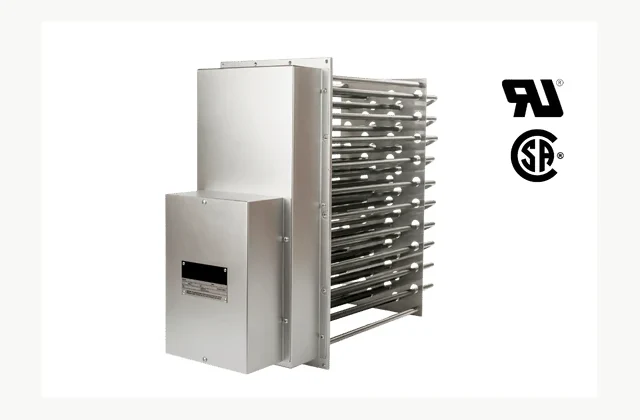
Shown as a configuration reference. Availability and the equipment offered for your project are confirmed separately.
What is the application scope for electric duct heater?
An electric duct heater adds heat to a moving air or qualified gas stream within a duct. The selection centers on airflow distribution, element temperature and interlocks, distinguishing it from a liquid circulation heater or radiant panel.
Airflow proving and outlet temperature define air heating duty. Total airflow can appear adequate while a nonuniform velocity profile overheats part of an element bank. Compare the installed duct arrangement and the minimum flow case rather than only a nominal fan rating. Dust or other contaminants can change thermal behavior and cleaning needs. The operating and independent protective functions should be accepted as a coordinated system with the fan and duct controls.
How should airflow temperature and duct geometry be specified?
Provide flow range, inlet and outlet temperatures, pressure, duct dimensions and air quality. Uneven velocity, nearby bends and obstructions can expose parts of the heater to less cooling than the average airflow suggests.
The RFQ should make airflow temperature and duct geometry a separate review item. Describe the expected variation, not only the easiest operating case, and ask the bidder to identify restrictions that affect the intended production mix.
What configuration evidence should be compared?
Compare element type, staged or modulating control, pressure loss and the required airflow and temperature protections. The fan and heater sequence must prevent heating when the qualified cooling airflow is unavailable.
| Decision | Evidence to compare | Procurement consequence |
|---|---|---|
| Airflow temperature and duct geometry | Provide flow range, inlet and outlet temperatures, pressure, duct dimensions and air quality. Uneven velocity, nearby bends and obstructions can expose parts of the heater to less cooling than the average airflow suggests. | Defines the input and work envelope to be included in the offer. |
| Element stages and protective interlocks | Compare element type, staged or modulating control, pressure loss and the required airflow and temperature protections. The fan and heater sequence must prevent heating when the qualified cooling airflow is unavailable. | Determines configuration, supporting equipment and exclusions. |
| Production acceptance | Verify the agreed air-heating duty and temperature distribution under representative flow conditions. Demonstrate fan-heater sequencing and approved protection tests, recording installation geometry, electrical input and the relevant measured temperatures. | Establishes the agreed demonstration and inspection records. |
What must be prepared for installation?
Provide the specified duct support, service access, insulation and electrical enclosure environment. Coordinate fan control, airflow proving and clearances with the HVAC or process-air designer.
Keep the approved duct arrangement, airflow envelope and fan-heater interlocks with the commissioning record. The receiving team should repeat the relevant airflow and protection checks after changing filters, fans, control logic or nearby ductwork.
How should production acceptance be demonstrated?
Verify the agreed air-heating duty and temperature distribution under representative flow conditions. Demonstrate fan-heater sequencing and approved protection tests, recording installation geometry, electrical input and the relevant measured temperatures.
Keep reference samples and a signed results sheet linked to the tested configuration. Changes to tooling, controls or incoming conditions after the trial should trigger an appropriate review of the acceptance evidence.
Which service provisions protect repeatability?
Inspect elements, connections, deposits, sensors and airflow conditions. Check the protective sequence after fan changes, filter loading, duct modifications or heater service.
Request practical service training using the supplied equipment. Include safe cleaning, wear assessment and replacement procedures; define warranty conditions separately from the consumables that are expected to wear during normal use.
What can be customized through OEM or ODM?
OEM duct sizes and control stages may be configured; ODM gas streams or unusual air conditions require material, thermal and safety engineering before a heater arrangement is approved.
Submit the proposed changes with the electric duct heater duty and acceptance plan. Separate a purchased option from new engineering, and agree drawings, validation responsibility, documentation and spare-part support before design release. The manufacturer example is a technical reference only; customization does not imply permission to copy protected designs or use a brand.
What should your electric duct heater RFQ include?
- Electric duct heater application and required process result
- Airflow temperature and duct geometry: Provide flow range, inlet and outlet temperatures, pressure, duct dimensions and air quality. Uneven velocity, nearby bends and obstructions can expose parts of the heater to less cooling than the average airflow suggests.
- Element stages and protective interlocks: Compare element type, staged or modulating control, pressure loss and the required airflow and temperature protections. The fan and heater sequence must prevent heating when the qualified cooling airflow is unavailable.
- Representative input variation and difficult production cases
- Required acceptance evidence: Verify the agreed air-heating duty and temperature distribution under representative flow conditions. Demonstrate fan-heater sequencing and approved protection tests, recording installation geometry, electrical input and the relevant measured temperatures.
- Site and utility scope: Provide the specified duct support, service access, insulation and electrical enclosure environment. Coordinate fan control, airflow proving and clearances with the HVAC or process-air designer.
- Service provision: Inspect elements, connections, deposits, sensors and airflow conditions. Check the protective sequence after fan changes, filter loading, duct modifications or heater service.
- OEM/ODM engineering scope: OEM duct sizes and control stages may be configured; ODM gas streams or unusual air conditions require material, thermal and safety engineering before a heater arrangement is approved.
- Upstream preparation and downstream handling interfaces
- Destination country and applicable installation requirements
- Production schedule, changeover mix and operator availability
- Drawings, samples, inspection method and rejected-output criteria
Need OEM / ODM customization?
Submit branding, packaging, configuration or engineering requirements for this equipment. Include the target market, initial and annual quantities, required changes and acceptance criteria.
Customization feasibility, permitted branding, development responsibilities, minimum quantity, cost and lead time are reviewed for the proposed supplier and configuration before a quotation is confirmed.
Frequently asked questions
What defines the application boundary for electric duct heater?
An electric duct heater adds heat to a moving air or qualified gas stream within a duct. The selection centers on airflow distribution, element temperature and interlocks, distinguishing it from a liquid circulation heater or radiant panel. Airflow proving and outlet temperature define air heating duty. Define the intended production result before comparing nominal ratings, and ask for evidence using the actual input conditions.
What should the electric duct heater RFQ state about airflow temperature and duct geometry?
Provide flow range, inlet and outlet temperatures, pressure, duct dimensions and air quality. Uneven velocity, nearby bends and obstructions can expose parts of the heater to less cooling than the average airflow suggests. Send the representative inputs and the difficult cases together, then require the supplier to state any restrictions or preparation steps needed to repeat the proposed result.
How should element stages and protective interlocks be checked?
Compare element type, staged or modulating control, pressure loss and the required airflow and temperature protections. The fan and heater sequence must prevent heating when the qualified cooling airflow is unavailable. Ask the bidder to document the selected arrangement and exclusions against the real duty. Confirm which supporting components and setup work are included in the commercial scope.
What acceptance test is appropriate for electric duct heater?
Verify the agreed air-heating duty and temperature distribution under representative flow conditions. Demonstrate fan-heater sequencing and approved protection tests, recording installation geometry, electrical input and the relevant measured temperatures. Agree the sampling method and rejection criteria before the trial, and keep configuration and inspection records for the later site-acceptance comparison.
What installation and service details should be confirmed?
Provide the specified duct support, service access, insulation and electrical enclosure environment. Coordinate fan control, airflow proving and clearances with the HVAC or process-air designer. Inspect elements, connections, deposits, sensors and airflow conditions. Check the protective sequence after fan changes, filter loading, duct modifications or heater service. Allocate local preparations and specialist support to named parties before shipment so commissioning and subsequent maintenance have a clear owner.
Can electric duct heater configurations be customized through OEM or ODM?
OEM duct sizes and control stages may be configured; ODM gas streams or unusual air conditions require material, thermal and safety engineering before a heater arrangement is approved. Supply drawings and operating conditions for feasibility review. Engineering changes require agreed validation and documentation; a reference brand image does not establish an authorized supply or manufacturing relationship.
Reference information
- ADH & ADHT Flanged Duct Heaters | Chromalox
- Circular Duct Heaters | Chromalox
Reference data and images explain equipment configurations. IndustryApex engineers confirm the offered model, specification and commercial scope in your project quotation.