
Choose an EV AC charging station using the vehicle's onboard charging capability, parking duration and the building's available electrical capacity. Match connector, phase and current configuration to the exact installation. Define load management, user access, backend and billing requirements for shared locations. A qualified designer should review protection and destination-specific requirements. Acceptance should demonstrate representative vehicles and the agreed operating workflow, including site load control where specified.
Applications and production fit
Identify who parks at the site and for how long. Workplace, hotel, residential shared parking and fleet overnight use can favor different access and management functions. Collect vehicle onboard charging information where available, because the vehicle participates in limiting AC charging. Compare the energy opportunity during real parking windows rather than treating the highest station current as automatically the most useful project choice.
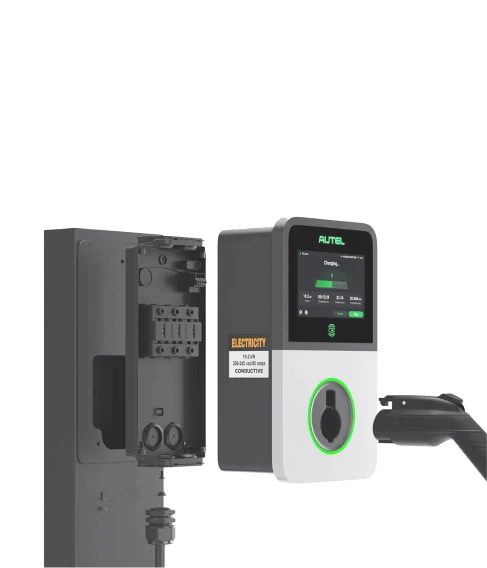
Shown as a configuration reference. Availability and the equipment offered for your project are confirmed separately.
Configuration choices to compare
Specify connector arrangement, cable length or socket format, phase and current configuration for the installation. Ask how the offered station manages user access, schedules and any shared charging. Define load-management behavior, metering and backend functions with the intended operator. Hardware that supports a feature may still require a separate meter, controller or software service. The quotation should identify the complete working combination and its integration responsibilities.
Utilities, layout and site compatibility
A qualified electrical review should examine available supply, distribution capacity, protection, cable routes and the proposed parking layout. Include accessibility, mounting and the environment of the exact location. Verify destination-specific equipment and billing requirements for the proposed application. If multiple stations share a building supply, document how load information is measured and how the control boundary works. A wallbox alone does not establish the completed building charging installation.
Delivered project cost and scope
Include stations, mounting, electrical-site work, communications, any load-management meters and commissioning in the budget. Ask about backend, connectivity, payment and service fees over the expected ownership period. For phased expansion, show the infrastructure and controller assumptions needed for additional points. A cheap first station can be less attractive if later expansion requires replacing the control arrangement or repeating substantial civil and cable work.
Representative acceptance testing
Acceptance should cover exact hardware configuration, relevant electrical checks by qualified personnel and representative vehicle sessions. Demonstrate authorization, reporting and the agreed load-management behavior where those functions are supplied. Include the operator’s backend and billing workflow, with responsibilities assigned. Record the station and vehicle conditions. A successful single-car session does not establish that several chargers will share building capacity or handle user access as contracted.
Maintenance and operating handover
Handover should clarify ownership of accounts, backend settings, commissioning records and local service access. Identify who manages firmware, lost user access and recurring subscriptions. Ask for cable or connector replacement arrangements and relevant inspection instructions. When new chargers or different vehicles are introduced, reassess power allocation and compatibility. Preserve the configuration and network records so maintenance does not depend on one installer’s undocumented account or phone application.
OEM/ODM and project customization
Define customization as a separate scope in the quotation. Configuration choices concern the equipment arrangement and operating requirements; OEM requests can include permitted branding, labels, manuals and packaging; ODM requests may involve engineering changes. Identify the party responsible for design, documentation and verification before agreeing to a change. A manufacturer reference photograph demonstrates a category or model family and does not establish that IndustryApex represents that brand or can relabel its product. Ask which changes are feasible for the proposed supplier, what sample or drawing approval is needed and how the change affects service parts, testing and delivery.
RFQ checklist for a comparable proposal
Send a concise project brief with the specific items below and attach drawings, samples or site information where available. Distinguish essential requirements from preferences so alternative offers remain comparable. Ask each bidder to return a configuration list, utility and installation boundary, relevant model documentation, acceptance plan and an itemized quotation. State the destination and who will review applicable local requirements for the exact offered configuration. Identify exclusions, recurring consumables, training, warranty conditions and after-sales responsibilities before comparing totals. If important data is unavailable, mark it as an assumption to verify instead of allowing different bidders to silently solve different projects.
- Workplace, hotel, shared parking or fleet use
- Vehicle onboard AC charging information
- Parking duration and charging schedule
- Connector, cable or socket preference
- Available supply, phase and distribution data
- Number of points and expansion plan
- Load-management meter and controller scope
- User authorization and backend platform
- Billing and reporting requirements
- Mounting, parking and cable-route layout
- Destination and qualified electrical responsibility
- Commissioning, accounts and service ownership
Manufacturer configuration references
Review the linked manufacturer information as configuration references. Request the current sheet, included scope and relevant evidence for the exact proposed equipment; these references do not establish an IndustryApex supply relationship.
What should you include in your RFQ?
- Workplace, hotel, shared parking or fleet use
- Vehicle onboard AC charging information
- Parking duration and charging schedule
- Connector, cable or socket preference
- Available supply, phase and distribution data
- Number of points and expansion plan
- Load-management meter and controller scope
- User authorization and backend platform
- Billing and reporting requirements
- Mounting, parking and cable-route layout
- Destination and qualified electrical responsibility
- Commissioning, accounts and service ownership
For OEM / ODM requests, include the branding, packaging, configuration or engineering changes you need, initial and annual quantities, target market, sample approval and acceptance requirements. Feasibility and commercial scope are confirmed for the specific project.
Need OEM / ODM customization?
Submit branding, packaging, configuration or engineering requirements for this equipment. Include the target market, initial and annual quantities, required changes and acceptance criteria.
Customization feasibility, permitted branding, development responsibilities, minimum quantity, cost and lead time are reviewed for the proposed supplier and configuration before a quotation is confirmed.
Frequently asked questions
Will a higher-current AC station make every car charge faster?
No. The vehicle's onboard charger, installation supply and configured limits also affect AC charging. Match the offered station to the actual vehicle and parking window. The station's maximum rating alone does not establish the session result.
What is needed for dynamic load management?
Define the controlled electrical boundary, measurement, controller and communication arrangement for the exact project. Ask which meters and software are included and how behavior is tested. A charger supporting load management does not necessarily include every required component.
Should workplace chargers have a backend?
Choose from user access, reporting, billing and maintenance requirements. A managed site may need functions beyond starting a charge. Confirm integration, account ownership and recurring fees so the operator understands the complete service arrangement.
How should several AC chargers be accepted together?
Demonstrate representative vehicles, access control and the specified shared-load behavior with the intended backend. Include qualified electrical checks and record configuration. Testing one station in isolation does not establish the operation of the whole parking installation.
Can I request OEM or ODM customization for an EV ac charging station?
Yes, include the requested configuration, branding or engineering changes in your project inquiry. Feasibility, ownership of the design, validation, documentation, minimum quantities and delivery terms need confirmation with the proposed supplier. The referenced manufacturer model is an example, not an OEM commitment from that brand.
What information is needed to request an EV ac charging station quotation?
Send the category-specific checklist on this page, the destination, your operating conditions and available drawings or samples. Ask for an itemized complete project scope and a representative acceptance plan. Flag missing input data so quotations state the same assumptions rather than appearing comparable while covering different configurations.
Reference information
- Autel MaxiCharger AC Pro
- Autel Energy official supporting product documentation
Reference data and images explain equipment configurations. IndustryApex engineers confirm the offered model, specification and commercial scope in your project quotation.