
Prepare more consistent sliver by selecting a draw frame around fiber characteristics, doubling, drafting and downstream spinning requirements. Compare autolevelling needs, can handling and quality evidence as a process package rather than relying on delivery speed alone. Prioritize material, process role, quality objective. Use the checkpoints to build a consistent equipment scope and confirm the intended trial or installation evidence. The official image is a product reference; it does not establish availability or an authorized supplier relationship. Submit OEM/ODM changes for application-specific feasibility review.
Prepare more consistent sliver by selecting a draw frame around fiber characteristics, doubling, drafting and downstream spinning requirements. Compare autolevelling needs, can handling and quality evidence as a process package rather than relying on delivery speed alone.
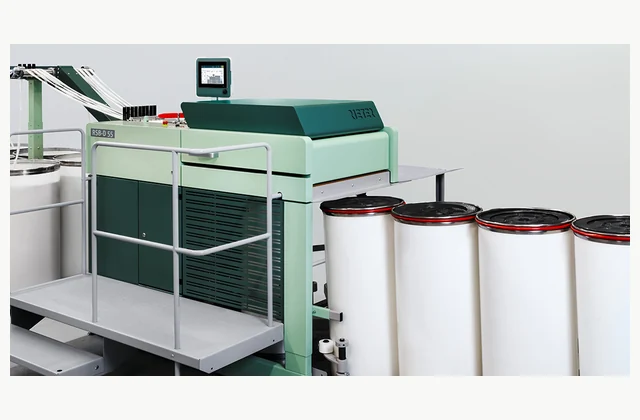
Shown as a configuration reference. Availability and the equipment offered for your project are confirmed separately.
Define the sliver and process position
A draw frame combines and drafts sliver within a spinning preparation route. Specify the fiber types, blend, incoming sliver condition and required outgoing sliver. Identify whether the machine follows carding, combing or another passage, because the process role affects selection. Include downstream spinning needs and the mill’s quality objectives. A change to one draw-frame passage can influence both material flow and the preparation assumptions used elsewhere in the line.
Distinguish levelling from non-levelling duty
Autolevelling and non-autolevelling arrangements serve different process requirements. Clarify where variation is measured and corrected and how the chosen machine fits the planned passage sequence. The Rieter RSB-D 55 reference should be assessed as its specified configuration, rather than treated as equivalent to every draw frame in the range. Ask for a process recommendation tied to the intended fibers and incoming sliver, not simply the most automated option.
Evaluate drafting and fiber compatibility
Fiber length distribution, cohesion, finish and recycled content can affect the appropriate drafting arrangement and operating settings. Provide representative material and identify blends that are difficult to run. The trial should assess sliver quality alongside stable operation, waste and cleaning demand. High delivery speed is useful only when the produced sliver remains suitable for the next stage. Agree the measurements and evaluation method before sending samples.
| Selection issue | Information to specify |
|---|---|
| Material | Fiber mix, length characteristics and incoming sliver condition. |
| Process role | Upstream stage, passage sequence and downstream spinning route. |
| Quality objective | Outgoing sliver requirements and agreed measurement method. |
| Handling | Incoming and outgoing can dimensions and movement routes. |
| Line balance | Usable output allowing for cleaning and can changes. |
| Control scope | Recipes, quality records and mill-system interfaces. |
Lay out cans, creel and delivery
Incoming cans, feed positions and outgoing can format shape the machine’s space and labor requirements. Provide can dimensions and the intended movement routes. Check how changes, full cans and residual material are handled, including any automatic functions offered. Maintenance and cleaning access must remain available in the final layout. A compact machine footprint can be misleading when it excludes the creel, can movement and safe operator routes.
Plan quality records and recipe handling
Ask which quality signals are measured, displayed and retained, and whether the proposed software supports the mill’s reporting needs. Clarify recipe management for fiber changes and who can alter settings. Connect alarms and stops to an agreed response procedure so quality monitoring has an operational purpose. Where a wider mill system is proposed, itemize the interface, licensing and responsibilities rather than assuming the standalone machine automatically provides complete production reporting.
Compare usable output and maintenance
Calculate line balance using actual materials, can changes, cleaning and expected changeovers. Obtain the utility schedule and identify consumables and wear components associated with the drafting and suction arrangements. Operators should be able to demonstrate routine cleaning and inspection tasks. Acceptance should document the agreed sliver properties, stable running and can handling on representative material. Record the machine configuration and trial settings so later quality investigations have a useful reference.
Limit OEM/ODM to a defined process objective
Can interfaces, material identification and line integration may be adapted after review. Changes to drafting, sensing or autolevelling require specialist engineering and fiber trials. Provide the process position and quality objective with any OEM/ODM request. A new branding arrangement does not transfer an established manufacturer’s performance evidence. Ask for the customized design’s own trial plan, documentation and responsibility for integration with upstream and downstream machines.
What should your draw frame RFQ include?
- Material: Fiber mix, length characteristics and incoming sliver condition.
- Process role: Upstream stage, passage sequence and downstream spinning route.
- Quality objective: Outgoing sliver requirements and agreed measurement method.
- Handling: Incoming and outgoing can dimensions and movement routes.
- Line balance: Usable output allowing for cleaning and can changes.
- Control scope: Recipes, quality records and mill-system interfaces.
- Destination, site conditions and delivery access
- Installation boundary, utilities and connection drawings
- Acceptance procedure, documentation and training scope
- OEM/ODM changes: interface, material, branding or new design; written engineering feasibility required
Need OEM / ODM customization?
Submit branding, packaging, configuration or engineering requirements for this equipment. Include the target market, initial and annual quantities, required changes and acceptance criteria.
Customization feasibility, permitted branding, development responsibilities, minimum quantity, cost and lead time are reviewed for the proposed supplier and configuration before a quotation is confirmed.
Frequently asked questions
What is the main purpose of a draw frame?
It combines and drafts sliver to prepare a suitable feed for later spinning stages. Selection depends on incoming material, the preparation route and required outgoing sliver. Buyers should state the machine’s process position rather than request a speed class without a quality objective.
Is an autoleveller necessary at every drawing passage?
That depends on the planned preparation sequence and quality requirements. Levelling and non-levelling duties should be evaluated within the complete process. Ask for a recommendation using your incoming sliver, fibers and downstream route rather than assuming every passage needs an identical configuration.
Which fibers need a dedicated trial?
Provide the main production fibers and blends, especially materials with challenging length distributions, cohesion or recycled content. The supplier should evaluate drafting stability and output quality on representative material. A successful standard-cotton demonstration does not establish performance for an unrelated specialty blend.
Why do can dimensions affect procurement?
Can size and movement determine feed arrangement, delivery handling and required floor space. Identify incoming and outgoing formats and routes for full and empty cans. This prevents a machine-only footprint from concealing the area or accessories needed for normal operation and changeovers.
How should draw-frame performance be accepted?
Agree sliver-quality measurements and stable-running expectations using representative material. Include can changes, waste, cleaning and the intended quality-monitoring functions. Record the machine configuration and trial conditions so the results describe the delivered process rather than a maximum-speed demonstration under unrelated conditions.
Can a draw frame be customized for an existing line?
Can handling, identification and interfaces may be reviewed. Modifications to drafting or levelling functions need engineering assessment and material trials. Supply upstream and downstream machine details and the intended sliver specifications so the OEM/ODM proposal defines both process evidence and integration responsibilities.
Reference information
- Einkopfstrecken RSB-D 55 und SB-D 55 | Rieter
- Draw Frames, Combers & Roving Frames – Superior Spinning Preparation
Reference data and images explain equipment configurations. IndustryApex engineers confirm the offered model, specification and commercial scope in your project quotation.