
Choose a disc harrow for the intended residue management and shallow tillage job, matching soil condition, disc arrangement and tractor capability. Specify the required finish and field constraints before comparing working widths or catalogue travel speeds. Prioritize cultivation task, soil, disc arrangement. Use the checkpoints to build a consistent equipment scope and confirm the intended trial or installation evidence. The official image is a product reference; it does not establish availability or an authorized supplier relationship. Submit OEM/ODM changes for application-specific feasibility review.
Choose a disc harrow for the intended residue management and shallow tillage job, matching soil condition, disc arrangement and tractor capability. Specify the required finish and field constraints before comparing working widths or catalogue travel speeds.
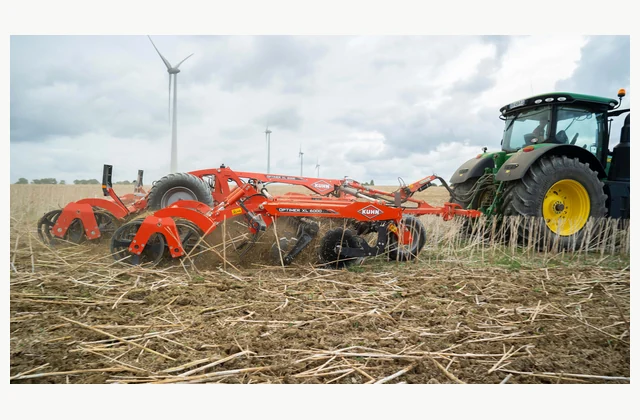
Shown as a configuration reference. Availability and the equipment offered for your project are confirmed separately.
Identify the intended cultivation result
Disc harrows cut and mix surface material, but their effect depends on construction, depth, soil and residue. State whether the priority is residue incorporation, shallow stubble work or preparation for another pass. Do not treat a disc harrow as a substitute for correcting a diagnosed deep compacted layer. Describe the following operation and the soil surface it needs so the proposed machine is judged by an agronomic task rather than appearance.
Compare disc arrangement and residue flow
Disc diameter, profile, spacing and mounting arrangement influence penetration and the passage of material. Provide crop residues, soil texture, stones and the intended working-depth range. A configuration that flows through heavy residue may leave a different finish from one chosen for finer work. Discuss how the discs maintain depth across uneven ground and how obstacle protection works. Evaluate the whole arrangement rather than selecting only the largest disc diameter.
Match the tractor and hitch system
Working width and soil conditions affect draft, while mounted and trailed arrangements place different demands on the tractor. Check drawbar or linkage compatibility, implement mass, hydraulic connections and transport setup. Confirm the proposed tractor’s suitability for the actual speed and depth objective. Engine power alone cannot establish traction or lifting performance. Give the tire and ballast arrangement when asking the supplier to assess a tractor-implement combination.
| Selection issue | Information to specify |
|---|---|
| Cultivation task | Residue type, intended mixing and following field operation. |
| Soil | Texture, stones, moisture window and planned working depth. |
| Disc arrangement | Diameter, profile, spacing and obstacle protection. |
| Tractor | Hitch, traction, hydraulic services and transport match. |
| Finishing | Rear roller and required consolidation or surface condition. |
| Acceptance | Representative field, settings and observable cultivation result. |
Choose rear equipment for the next pass
Rear rollers and finishing devices influence reconsolidation, leveling and the condition left for seeding or another cultivation step. The best arrangement depends on soil and moisture; a finish suitable in one field may be unsuitable elsewhere. Ask how the selected roller behaves with sticky ground, stones and residue. Include adjustment and cleaning access in the discussion. Do not assume that every roller shown in an OPTIMER XL reference photograph is included.
Check depth control and field setup
A useful demonstration shows how depth is adjusted and maintained, how the implement enters work and how headlands are managed. Inspect whether the chosen configuration follows representative contours without leaving undesirable ridges or uneven disturbance. Settings should be recorded with soil and residue conditions. A fast demonstration on a convenient field is less useful than observing the actual intended cultivation result and the condition required for the next operation.
Include wearing parts and transport
Discs, bearings, scrapers and fasteners form an important service package. Request identification and replacement guidance for the offered configuration. Check access for inspection and the method used to address a damaged component. Transport width, folding, lighting and parking must fit local movement requirements and farm access. Confirm what is included for road travel and delivery, especially where the implement crosses narrow gateways or is moved frequently between separate fields.
Request OEM/ODM with soil and tractor data
Possible changes include hitch interfaces, working arrangement, roller selection or wear materials. Altering frame width, disc layout or loading needs engineering review and a reassessment of tractor demand. Provide the cultivation objective, soil description and implement combination with the request. Ask for trials and drawings appropriate to the change. Branding or color choices should remain separate from claims about residue handling, durability or field performance.
What should your disc harrow RFQ include?
- Cultivation task: Residue type, intended mixing and following field operation.
- Soil: Texture, stones, moisture window and planned working depth.
- Disc arrangement: Diameter, profile, spacing and obstacle protection.
- Tractor: Hitch, traction, hydraulic services and transport match.
- Finishing: Rear roller and required consolidation or surface condition.
- Acceptance: Representative field, settings and observable cultivation result.
- Destination, site conditions and delivery access
- Installation boundary, utilities and connection drawings
- Acceptance procedure, documentation and training scope
- OEM/ODM changes: interface, material, branding or new design; written engineering feasibility required
Need OEM / ODM customization?
Submit branding, packaging, configuration or engineering requirements for this equipment. Include the target market, initial and annual quantities, required changes and acceptance criteria.
Customization feasibility, permitted branding, development responsibilities, minimum quantity, cost and lead time are reviewed for the proposed supplier and configuration before a quotation is confirmed.
Frequently asked questions
Is a disc harrow suitable for deep compaction removal?
A disc harrow is generally selected for a surface cultivation task, not assumed to remove a restrictive layer deep in the soil. Diagnose the soil problem and define the desired disturbance. A different implement or agronomic response may be needed for deeper compaction.
Does a larger disc diameter guarantee a better result?
No. Diameter works with profile, spacing, mounting, depth and soil conditions. Describe residue and the intended cultivation finish, then compare a complete arrangement. Field evidence should show useful mixing and material flow rather than relying on one dimensional feature as a performance guarantee.
How should a disc harrow be matched to a tractor?
Check draft, traction, hitch or drawbar requirements, mass, hydraulic services and transport. Mounted equipment also needs an appropriate lifting assessment. Provide the soil, intended depth and operating arrangement so the supplier evaluates the actual combination instead of a headline horsepower figure.
Why does the rear roller matter?
The roller affects consolidation, leveling and the finish left for the next operation. Its behavior varies with soil, moisture and residue. Specify the following pass and ask which roller arrangement is proposed, including cleaning and adjustment needs, instead of treating all rollers as interchangeable.
What should a field trial demonstrate?
Use representative soil and residue and record the tractor and settings. Inspect depth consistency, material flow, surface finish and headland behavior. The trial should establish whether the intended agronomic result is achieved, not merely that the tractor can pull the machine at a high speed.
Can a disc harrow configuration be customized?
Hitch, roller and wear-component options can be submitted for feasibility review. Frame or disc-layout changes need structural and draft assessment. Include tractor information, soil and the required finish in the OEM/ODM brief, with an agreed field trial for any materially changed design.
Reference information
- KUHN Optimer® XL Series High-Speed Compact Discs | KUHNLINKEDIN_Icon_128x128px_WHITE_1905LINKEDIN_Icon_128x128px_WHITE_1905
- Déchaumeurs à disques indépendants OPTIMER L et XL | KUHN
Reference data and images explain equipment configurations. IndustryApex engineers confirm the offered model, specification and commercial scope in your project quotation.