
Choose a disc harrow for stubble residue management by matching disc arrangement, residue flow capacity and rear finishing equipment to the intended incorporation depth and following field operation. Confirm tractor compatibility for the actual soil, working depth and transport requirements before comparing catalogue specifications.
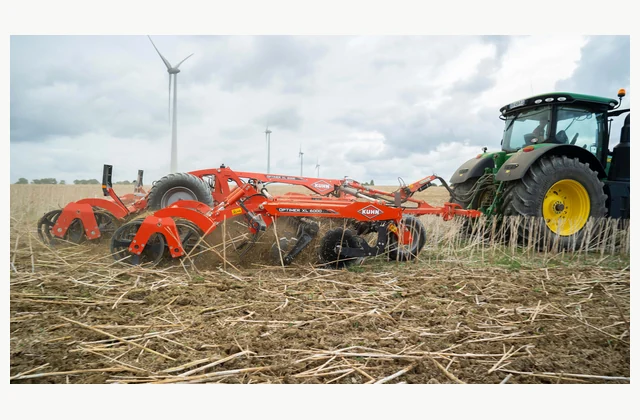
Shown as a configuration reference. Availability and the equipment offered for your project are confirmed separately.
Define the residue management objective
Stubble residue management describes several distinct field outcomes. State whether the priority is cutting tall stalks and distributing them evenly, incorporating organic material into the upper soil layer, or preparing a surface suitable for a direct seeding pass. Do not assume that surface mixing alone will address a deep compaction layer or eliminate the need for additional tillage passes in heavy residue conditions.
Describe the crop residue type, density and standing height. Corn stalks with attached leaves demand different cutting and flow characteristics than wheat stubble or cover crop residue. Provide the soil texture and the intended working depth so the supplier can assess whether the proposed disc arrangement will achieve the desired mixing without creating excessive disturbance or leaving unmanaged clumps.
Compare disc arrangement and residue flow capacity
Disc profile, notching pattern and spacing influence cutting action and material flow. Each disc blade uses its own suspension arm and elastomer mounting blocks to clear obstacles without upsetting the rest of the blades [S1]. Request a demonstration that shows how the proposed configuration handles the actual crop residue at the intended depth and travel speed. Inspect whether residue passes cleanly through the frame or accumulates between disc gangs. A configuration that flows through corn stalks may leave a coarser finish than one selected for lighter stubble incorporation.
Assess rear roller effect on surface condition
The rear roller reconsolidates soil, breaks clods and influences the finish left for the next operation. Roller design affects performance in sticky soil, stones and varying moisture. Do not select a roller based solely on diameter or appearance. Ask the supplier which roller arrangement is proposed for the stated soil texture, moisture window and residue density. Discuss scraper design, cleaning behavior and adjustment access.
If the following operation is direct seeding, specify the required seedbed firmness and surface trash distribution. A roller suitable for one soil and moisture combination may clog or leave an unsuitable finish in different conditions.
Match tractor capability to actual field demand
Mounted and trailed disc harrow configurations impose different tractor requirements. Mounted models require adequate three-point hitch lift capacity for the implement mass, hydraulic services for depth control, and sufficient traction for the draft load at the intended depth and speed. Trailed versions have a transport carriage and drawbar that change the traction and weight distribution calculation.
Provide the tractor model, hitch category, hydraulic capacity, tire size, ballast arrangement and estimated field speed. The supplier should assess whether the proposed combination is suitable for the stated soil texture, residue density and working depth rather than relying on a headline horsepower figure. Engine power alone cannot confirm that the tractor will maintain the intended depth and speed in actual field conditions without excessive wheel slip or hitch overload.
Decision table: Disc harrow configuration for stubble residue management
| Decision factor | Buyer inputs required | Configuration differences | Evidence to request |
|---|---|---|---|
| Residue cutting and flow | Crop type, stalk height, residue density, intended incorporation depth | Disc diameter, notching pattern, spacing, frame clearance, independent or gang suspension | Field demonstration with actual residue; inspect material flow, cutting action and clumping |
| Surface finishing | Following operation, required seedbed firmness, soil texture, moisture range, stone presence | Roller type, scraper design, cleaning behavior | Roller comparison in stated soil; observe consolidation, clod breakage, cleaning and adjustment access |
| Tractor match | Tractor model, hitch type, hydraulic services, tire and ballast, intended speed | Mounted vs. trailed; implement mass, draft estimate, hydraulic requirements | Tractor-implement compatibility assessment; confirm lift capacity, traction, hydraulic flow and transport width |
| Depth control | Working depth range, adjustment frequency, operator preference | Mechanical shim system vs. hydraulic cylinder control; manual vs. in-cab adjustment | Demonstration of depth setting, gauge reading and consistency across field contours |
| Obstacle protection | Field stone size and frequency, root obstacles, terrain variation | Individual disc suspension with elastomer blocks vs. rigid gang mounting | Explanation and demonstration of suspension action; inspect disc reset and gang stability after obstacle strike |
Rejection conditions
Reject a proposed disc harrow configuration when: (1) the disc diameter and frame clearance cannot accommodate the stated residue density and stalk height without frequent plugging; (2) the rear roller is unsuitable for the stated soil texture or moisture window, leading to clogging or inadequate finishing; (3) the tractor cannot provide adequate lift capacity, traction or hydraulic services for the implement mass and field demand; (4) transport width exceeds farm access constraints or local road limits; (5) the working depth range does not include the intended incorporation depth; (6) the supplier cannot demonstrate residue flow and surface finishing in representative field conditions.
Verify field setup and wearing parts access
A useful acceptance trial uses representative soil texture, moisture and residue density. Record the tractor model, hitch setup, ballast, travel speed and depth setting. Inspect whether the implement maintains consistent depth across field contours, whether residue flows cleanly without accumulation, and whether the surface finish meets the requirement for the next operation. Headland management, turning clearance and transport setup should also be demonstrated.
Identify wearing components including disc blades, bearings, scrapers and fasteners. Request replacement intervals, part identification and access procedures for the offered configuration. Disc blade thickness and bearing sealing influence service life and inspection frequency. Confirm what is included in the equipment supply for road transport, lighting and parking, especially if the implement will be moved frequently between fields or must pass through narrow gateways.
Equipment supply and application assessment
IndustryApex engineers work directly with buyers on cultivation equipment selection, tractor compatibility assessment and configuration review. Provide the residue management objective, soil description, tractor details and field constraints when requesting an equipment solution. Thedisc harrow product guide covers the broader implement category; this article addresses the specific decision of matching a disc harrow to stubble residue management tasks. Discuss application requirements and request a project-specific quotation rather than assuming catalogue specifications establish suitability for your field conditions.
Define your equipment requirements
Review the Disc harrow buying guide for the complete equipment scope.
Discuss this equipment project ↗ · OEM requirements · ODM requirements. Configuration and feasibility are reviewed for your application.
Frequently asked questions
How does disc diameter affect stubble residue management?
Disc diameter works with disc profile, spacing, frame clearance and suspension design. Provide the crop residue type, density and intended incorporation depth so the supplier can assess whether the proposed disc arrangement will cut, flow and mix the material effectively. Field demonstration in actual residue is more useful than comparing diameter specifications alone.
What rear roller is best for incorporating corn stalks?
Roller suitability depends on soil texture, moisture, stone presence and the required surface finish, not only the residue type. Discuss the complete field condition and following operation with the supplier. Request a comparison of roller options showing consolidation, clod breakage, cleaning behavior and adjustment access in your soil rather than selecting based on a general residue category.
How should tractor capability be matched to a disc harrow?
Provide the tractor model, hitch type, hydraulic capacity, tire size, ballast and intended field speed along with soil texture, residue density and working depth. The supplier should assess lift capacity for mounted models or drawbar load for trailed versions, traction for the actual draft demand, and hydraulic services for depth control. Engine horsepower alone cannot confirm suitability.
What should a field demonstration show?
Use representative soil, moisture and residue conditions. Record the tractor, settings and travel speed. Inspect whether residue flows cleanly through the frame without accumulation, whether the implement maintains consistent depth across contours, and whether the surface finish meets the requirement for the next operation. Headland management and transport setup should also be demonstrated.
Can disc spacing or roller type be customized?
Frame width, disc layout and roller selection may be submitted for engineering feasibility review. Provide the cultivation objective, soil description, residue type and tractor details with the customization request. Ask for drawings, a reassessment of tractor demand and a field trial for any materially changed design. Confirm what warranty and service support apply to the modified configuration.
Why does independent disc suspension matter?
Independent suspension allows each disc to clear an obstacle without lifting adjacent discs or leaving an untilled strip. This design reduces the risk that one stone or root will disrupt the entire gang. Ask how the suspension resets after an obstacle strike and how it affects depth consistency. Inspect the suspension in a field demonstration rather than relying on a catalogue description.
Reference information
- KUHN Optimer® XL Series High-Speed Compact Discs | KUHN
Reference data and images explain equipment configurations. IndustryApex engineers confirm the offered model, specification and commercial scope in your project quotation.