
Carton flow racking presents boxes or totes to a picking face on inclined roller or wheel tracks. Replenishment normally occurs from the other side. It differs from pallet flow systems because carrier rigidity, small-item access and repeated manual picking govern the lane design. Provide carton or tote dimensions, underside condition, loaded mass and picking method. Include partly depleted boxes and the intended SKU allocation. A rigid tote and a soft corrugated carton can travel differently despite identical outside dimensions, making actual carrier trials essential.
Carton flow racking presents boxes or totes to a picking face on inclined roller or wheel tracks. Replenishment normally occurs from the other side. It differs from pallet flow systems because carrier rigidity, small-item access and repeated manual picking govern the lane design. Compare application fit, configuration and OEM/ODM scope through the buyer checklist below.
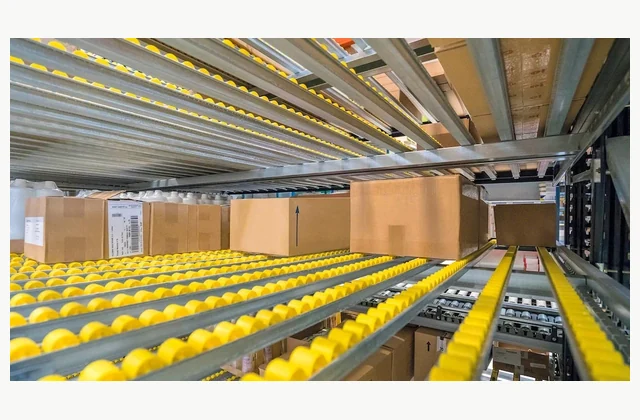
Shown as a configuration reference. Availability and the equipment offered for your project are confirmed separately.
Carrier: application and input specification
Carton flow racking presents boxes or totes to a picking face on inclined roller or wheel tracks. Replenishment normally occurs from the other side. It differs from pallet flow systems because carrier rigidity, small-item access and repeated manual picking govern the lane design.
Provide carton or tote dimensions, underside condition, loaded mass and picking method. Include partly depleted boxes and the intended SKU allocation. A rigid tote and a soft corrugated carton can travel differently despite identical outside dimensions, making actual carrier trials essential.
The carton underside is a running surface. Soft panels, tape seams and damage can change how it contacts rollers. Obtain samples from ordinary supply and include partially emptied cartons, whose shape and stiffness may differ from the same box when full.
Picking face: configuration tradeoffs
Compare track arrangement, lane width, slope, end stops and picking-face presentation against the product. Check whether the operator removes whole boxes or individual items. A configuration should balance reliable movement with access and product protection rather than maximizing the number of lanes alone.
Picking ergonomics depends on the contents. A deep box of small items and a carton of large components need different reach and presentation. Demonstrate the actual task at the proposed height, checking hand clearance, visibility and how an empty carrier is removed.
| Decision | What to resolve | Useful evidence |
|---|---|---|
| Carrier | Rigid tote versus changing carton shape | Full and depleted box trials |
| Picking face | Reach, visibility and access | Actual-item picking demonstration |
| Flow | Movement and stop behavior | Light and heavy carrier tests |
Process integration and handover points
Coordinate replenishment aisles, picking routes, labels and any pick-to-light or inventory interface. Define empty-carton handling and lane reassignment. Where replenishment and picking interact, establish the operating sequence so movement of a new carton does not disrupt the operator's access.
Flow speed needs control suitable for the carrier and product. Light boxes may stall while heavier ones can strike the front stop differently. Test the permitted mass range and inspect contents after travel, rather than treating a visually moving carton as a complete acceptance result.
Installation and maintainable operating arrangements
Review structural loading, floor support, access and warehouse-service clearances. Assess reach height and carton presentation with the intended workforce and tools. Include inspection of tracks and stops plus a method for clearing stalled or damaged carriers without improvising inside a loaded lane.
Replenishment should preserve the intended stock rotation. Assign lanes and labels so the wrong SKU cannot be placed behind an existing carton unnoticed. If electronic guidance is included, define its actual function and interfaces without assuming it replaces the operating team's identification procedure.
Acceptance evidence for flow
Run normal cartons and totes through the proposed lanes at full and depleted conditions. Check travel, stopping, picking access and product damage. Include ordinary carrier wear and changing fill levels rather than qualifying flow with a single new, fully loaded box.
Empty packaging needs a route outside the picking space. Evaluate whether the operator must fold cartons, move totes or transfer waste to a return conveyor. These tasks affect usable picking access and should appear in the workstation layout rather than being left to commissioning.
OEM/ODM scope and future changes
ODM includes lane geometry, picking angles, dividers and information-system integration after application review. OEM finishes and labels are separate. Retain the qualified carrier range and change rules so future packaging or SKU additions do not silently alter movement and loading conditions.
Keep lane settings and carrier specifications with handover documents. A new box supplier or changed fill quantity can affect flow even when the product is unchanged. Recheck movement, stops and picking access before extending the rack to the revised packaging.
Image reference: Mecalux Live storage for picking. The illustrated manufacturer configuration does not establish stock, an agency appointment or permission to relabel it. OEM/ODM requests require a written feasibility response for the actual proposed equipment.
Include these application details in your quotation request:
- Carton and tote dimensions with underside samples
- Full and depleted carrier mass range
- Product fragility and picking method
- SKU allocation and stock-rotation rules
- Lane, track and front-stop requirements
- Pick-face reach and workstation layout
- Replenishment and empty-carrier routes
- Labels, pick-to-light and inventory interfaces
- Actual-carrier flow and picking acceptance
- OEM/ODM lane changes and qualified carrier record
What should your carton flow racking RFQ include?
- Carton and tote dimensions with underside samples
- Full and depleted carrier mass range
- Product fragility and picking method
- SKU allocation and stock-rotation rules
- Lane, track and front-stop requirements
- Pick-face reach and workstation layout
- Replenishment and empty-carrier routes
- Labels, pick-to-light and inventory interfaces
- Actual-carrier flow and picking acceptance
- OEM/ODM lane changes and qualified carrier record
Need OEM / ODM customization?
Submit branding, packaging, configuration or engineering requirements for this equipment. Include the target market, initial and annual quantities, required changes and acceptance criteria.
Customization feasibility, permitted branding, development responsibilities, minimum quantity, cost and lead time are reviewed for the proposed supplier and configuration before a quotation is confirmed.
Frequently asked questions
What inputs determine selection of carton flow racking?
Provide carton or tote dimensions, underside condition, loaded mass and picking method. Include partly depleted boxes and the intended SKU allocation. A rigid tote and a soft corrugated carton can travel differently despite identical outside dimensions, making actual carrier trials essential.
How should I compare picking face options?
Compare track arrangement, lane width, slope, end stops and picking-face presentation against the product. Check whether the operator removes whole boxes or individual items. A configuration should balance reliable movement with access and product protection rather than maximizing the number of lanes alone.
Which adjoining operations need to be specified?
Coordinate replenishment aisles, picking routes, labels and any pick-to-light or inventory interface. Define empty-carton handling and lane reassignment. Where replenishment and picking interact, establish the operating sequence so movement of a new carton does not disrupt the operator's access.
What is a useful acceptance trial for carton flow racking?
Run normal cartons and totes through the proposed lanes at full and depleted conditions. Check travel, stopping, picking access and product damage. Include ordinary carrier wear and changing fill levels rather than qualifying flow with a single new, fully loaded box.
Which OEM/ODM changes can I request?
ODM includes lane geometry, picking angles, dividers and information-system integration after application review. OEM finishes and labels are separate. Retain the qualified carrier range and change rules so future packaging or SKU additions do not silently alter movement and loading conditions.
What application boundary is easy to overlook?
The carton underside is a running surface. Soft panels, tape seams and damage can change how it contacts rollers. Obtain samples from ordinary supply and include partially emptied cartons, whose shape and stiffness may differ from the same box when full.
Reference information
- Mecalux Live storage for picking official reference
- Mecalux related technology or portfolio reference
Reference data and images explain equipment configurations. IndustryApex engineers confirm the offered model, specification and commercial scope in your project quotation.