
Prepare fabric lays with a spreader selected for roll properties, tension sensitivity and the cutting workflow. Compare loading, edge alignment, ply orientation and end cutting using production materials, with the table and handling package clearly included in the quotation. Prioritize fabric, rolls, lay. Use the checkpoints to build a consistent equipment scope and confirm the intended trial or installation evidence. The official image is a product reference; it does not establish availability or an authorized supplier relationship. Submit OEM/ODM changes for application-specific feasibility review.
Prepare fabric lays with a spreader selected for roll properties, tension sensitivity and the cutting workflow. Compare loading, edge alignment, ply orientation and end cutting using production materials, with the table and handling package clearly included in the quotation.
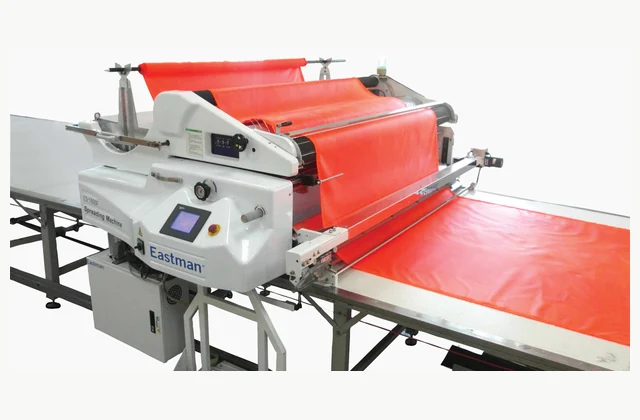
Shown as a configuration reference. Availability and the equipment offered for your project are confirmed separately.
Describe fabrics and roll presentation
Fabric spreading should begin with actual material behavior, not only roll width. Provide woven or knitted construction, stretch, surface condition, roll mass and diameter and any special handling requirement. Include difficult slippery, delicate or coated materials for a trial. The Eastman ES-1800 reference illustrates an automated spreading system, but a broad fabric application statement does not establish acceptable behavior for every production roll or the same settings across unrelated materials.
Define lay length, height and cutting interface
Specify the required lay dimensions, ply count or stack requirement and how the material will be cut. Coordinate the spreader with table width, usable length, transfer and downstream cutter. Stack limits and roll-handling limits describe different parts of the system. A machine capable of a particular spread height does not establish compatibility with every cutter or fabric stack. Include the physical layout and how completed lays move through the production sequence.
Evaluate tension and material relaxation
Knits and other tension-sensitive materials can change shape during handling. Describe the required relaxation and handling process with the production team and assess the offered tension-control arrangement using actual rolls. Avoid judging only whether a sheet reaches the end of the table. The important result includes its condition after spreading and when it is cut. An apparently straight lay can still be unsuitable if the material has been stretched or otherwise disturbed beyond the product requirements.
| Selection issue | Information to specify |
|---|---|
| Fabric | Construction, stretch, surface and demanding production samples. |
| Rolls | Width, mass, diameter and loading arrangement. |
| Lay | Length, height, orientation and cutting-system interface. |
| Quality | Tension, relaxation, edges and any pattern-matching needs. |
| Handling | Table, loading, end cutting and finished-lay transfer. |
| Trial | Representative rolls through a repeatable complete lay. |
Specify ply orientation and alignment
Face-up, face-to-face and other laying methods have different workflows. State directional print, nap, pattern or matching needs and the acceptable alignment objective. Check edge control, end behavior and supported operating modes for the exact configuration. A mode name does not prove that every patterned fabric will be matched automatically. Include the operator’s checks and any manual alignment work in the cycle comparison rather than assume all positioning is handled without intervention.
Include roll loading and end cutting
Roll supply, lifting, loading and changeovers can dominate useful work on short runs. Define the available handling equipment and who provides any loader or carrier. Assess end-cutting quality with the intended fabrics and identify blades or other consumables. A spreader-only price may omit table, loading or transfer equipment essential to the workflow. Compare the complete material path from stored roll to finished lay rather than the central carriage operating in isolation.
Accept a repeatable production lay
Trial representative rolls and the intended lay and cutting route. Assess alignment, material condition, ends, handling and changeover by agreed methods. Record the fabric, settings and configuration so accepted results can be repeated. Review guarding, operator access and routine servicing under the equipment instructions. Include utilities, controls and spare cutting components in handover. A rapid demonstration on easy cloth is not evidence for the buyer’s more demanding material mix.
Bound OEM/ODM to the material-flow package
Tables, loading interfaces, identification and selected workflow integration can be reviewed. Changes to feed, tension, motion or protective arrangements need engineering and fabric trials. Supply roll and lay specifications with the brief and clarify software and tooling ownership where relevant. A customized design needs its own evidence of usable lays. Reference-brand images do not establish agency, private-label rights or permission to transfer another machine’s claimed spreading performance.
What should your automatic fabric spreading machine RFQ include?
- Fabric: Construction, stretch, surface and demanding production samples.
- Rolls: Width, mass, diameter and loading arrangement.
- Lay: Length, height, orientation and cutting-system interface.
- Quality: Tension, relaxation, edges and any pattern-matching needs.
- Handling: Table, loading, end cutting and finished-lay transfer.
- Trial: Representative rolls through a repeatable complete lay.
- Destination, site conditions and delivery access
- Installation boundary, utilities and connection drawings
- Acceptance procedure, documentation and training scope
- OEM/ODM changes: interface, material, branding or new design; written engineering feasibility required
Need OEM / ODM customization?
Submit branding, packaging, configuration or engineering requirements for this equipment. Include the target market, initial and annual quantities, required changes and acceptance criteria.
Customization feasibility, permitted branding, development responsibilities, minimum quantity, cost and lead time are reviewed for the proposed supplier and configuration before a quotation is confirmed.
Frequently asked questions
Is fabric width enough to select a spreader?
No. Construction, stretch, surface, roll weight and diameter and required lay behavior also matter. Provide production samples and difficult materials. A matching width or broad application description does not establish that the machine can handle the actual rolls without unacceptable tension, alignment or loading problems.
Why is tension control important for knitted fabric?
Handling can alter material shape and affect the cut result. Define relaxation and spreading requirements with the production team and assess actual rolls. A straight-looking sheet at the end of the table does not by itself establish that the fabric remains suitable for the intended cutting and garment process.
Does face-to-face spreading guarantee automatic print matching?
No such assumption should be made. Orientation, print or nap requirements and alignment functions must be specified separately. Check the exact supported configuration and operator work. A spreading-mode name does not establish automatic matching for every patterned fabric or product requirement.
Are the table and roll loader included?
Inclusion depends on the package. Specify usable table dimensions, loading, transfer and downstream cutting interfaces and itemize supplier responsibilities. Comparing carriage-only prices can conceal equipment needed to turn a stored roll into a usable finished lay in the actual production workflow.
What should a spreading trial demonstrate?
Use representative fabrics, rolls and lay dimensions and assess alignment, tension-related condition, end cutting and handling. Include roll changes and the cutting route where relevant. Record settings and configuration so the trial supports repeat production rather than a rapid demonstration on an easier unrelated material.
Can a spreading system be customized through OEM/ODM?
Tables, loading and workflow interfaces can be reviewed. Feed, tension, motion or protective changes require engineering and material trials. Provide roll and lay data and define the required evidence so the customized package demonstrates usable output rather than merely a modified carriage or branded exterior.
Reference information
- Eastman ES-1800 official product reference
- Eastman ES-1800 official technical or family reference
Reference data and images explain equipment configurations. IndustryApex engineers confirm the offered model, specification and commercial scope in your project quotation.