
Attach garment buttons with a sewing system selected for the actual button, fabric stack and stitch requirement. Compare clamp tooling, pattern settings and feeding scope, then assess seam quality and complete operator cycles using production samples. Prioritize button, garment, stitching. Use the checkpoints to build a consistent equipment scope and confirm the intended trial or installation evidence. The official image is a product reference; it does not establish availability or an authorized supplier relationship. Submit OEM/ODM changes for application-specific feasibility review.
Attach garment buttons with a sewing system selected for the actual button, fabric stack and stitch requirement. Compare clamp tooling, pattern settings and feeding scope, then assess seam quality and complete operator cycles using production samples.
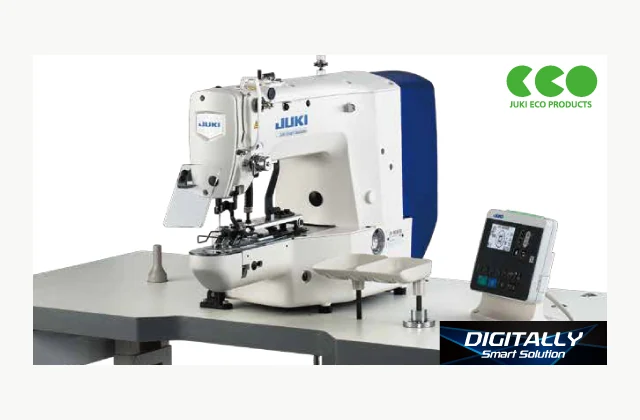
Shown as a configuration reference. Availability and the equipment offered for your project are confirmed separately.
Define the button and garment samples
Button sewing begins with the physical button and the material under it. Provide hole arrangement, spacing, outside shape, thickness and any special geometry, together with fabric, lining or reinforcement samples. A shank or unusually shaped button may need a different arrangement from a standard flat button. The intended seam and garment use matter more than nominal machine speed. Ask the supplier to identify the exact machine variant and tooling suitable for the samples.
Specify stitch and attachment requirements
Clarify the required stitch arrangement, stitch count, thread and any thread-shank objective according to the product specification. Different sewing systems and patterns are not automatically equivalent. The JUKI LK-1903BN reference is a computer-controlled lockstitch button-sewing system; its features should be checked for the selected version. A pattern library does not establish that an arbitrary button can be clamped and sewn correctly without the appropriate mechanical setup and sample assessment.
Match clamps and material positioning
The clamp must hold the button and garment in the intended position without unacceptable marks or movement. Discuss button size range, fabric thickness and access around seams or pockets. Identify jaws, plates, gauges and any other product-specific tooling included with the machine. A software setting cannot compensate for unsuitable workholding. For frequent style changes, ask how tooling is changed and verified and how the operator avoids selecting the wrong setup for a garment.
| Selection issue | Information to specify |
|---|---|
| Button | Physical samples, hole spacing, shape and thickness. |
| Garment | Fabric layers, reinforcement and access at the sewing position. |
| Stitching | Pattern, thread, attachment and finish requirements. |
| Tooling | Clamps, jaws, guides and style-change identification. |
| Workflow | Manual or automatic feeding and complete operator cycle. |
| Acceptance | Sample seam quality, material condition and approved setup. |
Separate automatic sewing from automatic feeding
A machine can execute a sewing cycle automatically while an operator still places the garment and button. An automatic button feeder, indexer or other handling equipment is a separate scope unless explicitly included. Describe the required workflow and button presentation. Compare complete cycles including loading, positioning and unloading rather than extrapolate production from maximum stitches per minute. Feeding needs should be evaluated on the actual button surface, shape and size range.
Evaluate finish, damage and downstream use
Trial the intended button, fabric and thread and assess stitch formation, attachment quality, thread trimming and material condition. Agree any strength or appearance requirements using the buyer’s method and product specification; do not invent a universal test limit. Check reverse-side finish and accessibility on the actual garment shape. A successful demonstration on a flat swatch can miss positioning or handling problems encountered on a nearly completed product.
Plan settings, services and maintenance
Clarify power, table and stand, control panel and any optional communication or data-management functions. Retain the approved pattern and tooling identification for each garment style. Ask how operators select settings and how changes are controlled. Include needles, clamps and other service items for the supplied version. Acceptance should connect the machine, software pattern, button and fabric sample so later production staff can reproduce the validated setup.
Bound OEM/ODM around sample-based tooling
Custom clamps, guides, identification and handling interfaces can be reviewed. Changes to sewing mechanics, controls or feeding equipment require engineering and production-sample trials. Provide the full button range and garment construction with the brief. A customized alternative needs its own seam evidence and tooling documentation. Reference-brand images do not establish permission to relabel equipment or guarantee that another design produces the same attachment result.
What should your automatic button sewing machine RFQ include?
- Button: Physical samples, hole spacing, shape and thickness.
- Garment: Fabric layers, reinforcement and access at the sewing position.
- Stitching: Pattern, thread, attachment and finish requirements.
- Tooling: Clamps, jaws, guides and style-change identification.
- Workflow: Manual or automatic feeding and complete operator cycle.
- Acceptance: Sample seam quality, material condition and approved setup.
- Destination, site conditions and delivery access
- Installation boundary, utilities and connection drawings
- Acceptance procedure, documentation and training scope
- OEM/ODM changes: interface, material, branding or new design; written engineering feasibility required
Need OEM / ODM customization?
Submit branding, packaging, configuration or engineering requirements for this equipment. Include the target market, initial and annual quantities, required changes and acceptance criteria.
Customization feasibility, permitted branding, development responsibilities, minimum quantity, cost and lead time are reviewed for the proposed supplier and configuration before a quotation is confirmed.
Frequently asked questions
Does automatic button sewing include automatic button feeding?
Not necessarily. The machine may automate stitching while placement remains manual. Specify the desired loading and handling workflow and itemize any feeder or indexer. Compare complete operator cycles with actual buttons and garments rather than assume every automatic sewing system includes an automated supply device.
Which button details should be supplied for a quotation?
Provide physical samples and drawings showing hole arrangement and spacing, outside shape, size and thickness. Include garment layers and the desired attachment. A nominal button diameter alone cannot establish clamp suitability or whether the proposed sewing pattern and machine variant meet the product requirement.
Can software patterns replace button-specific tooling?
No. Pattern control needs suitable mechanical workholding. Clamps, jaws, guides and plates must hold the button and garment correctly. Ask for the tooling supplied for each sample range and a verified changeover method, particularly where operators alternate between styles or unusual button shapes.
How should attachment quality be accepted?
Use intended buttons, fabrics and thread and inspect stitch formation, position, trim and material condition against the buyer’s specification. Include any required attachment-strength assessment with an agreed method. A demonstration on an unrelated swatch does not establish the result on the finished garment construction.
Does maximum sewing speed predict factory output?
No. Loading, positioning, feeding, trimming and unloading contribute to the complete cycle. Button and garment handling can dominate the work. Assess representative production samples and the supplied workflow, including style changes, instead of converting the highest stitches-per-minute figure directly into finished garments per hour.
Can button sewing tooling be customized?
Clamps, guides and handling interfaces can be submitted for sample-based review. Sewing or feeding changes need engineering and trials with the full button and garment range. An OEM/ODM scope should identify tooling, approved patterns and acceptance evidence for the delivered setup.
Reference information
- LK-1903BN (Standard Type)|Button Sewing Machine| JUKI Industrial Sewing Machine
- JUKI LK-1903BN official product and application information
Reference data and images explain equipment configurations. IndustryApex engineers confirm the offered model, specification and commercial scope in your project quotation.