
METAL FABRICATION
Handheld laser welders
Select by actual joints, weld acceptance and a reviewed laser-safe work area.
Explore the buying guideReference: SENFENG HW series (pictured power variant unconfirmed)

Equipment category
Compare cutting, forming, machining and joining equipment around real workpieces, tolerances and accepted production output.
Select by actual joints, weld acceptance and a reviewed laser-safe work area.
Explore the buying guideReference: SENFENG HW series (pictured power variant unconfirmed)

Select a laser marker by sample marks, traceability needs and safe integration.
Explore the buying guideReference: Telesis ProStation marking workstation/enclosure (laser configuration varies)
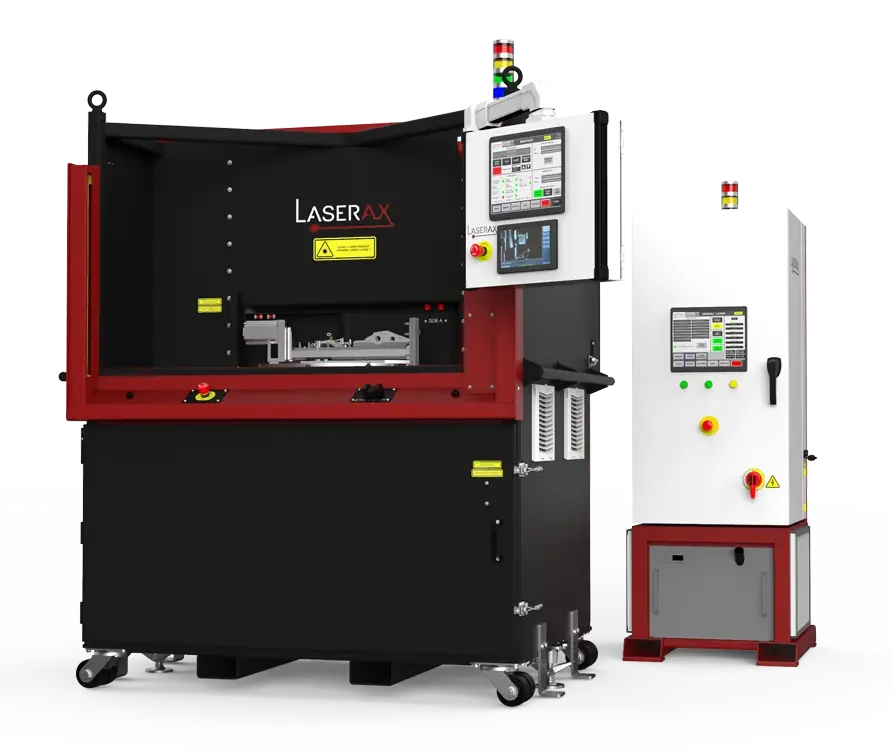
Compare laser cleaning through sample treatment, surface acceptance and extraction scope.
Explore the buying guideReference: Laserax Rotary Laser Cleaning Workstation
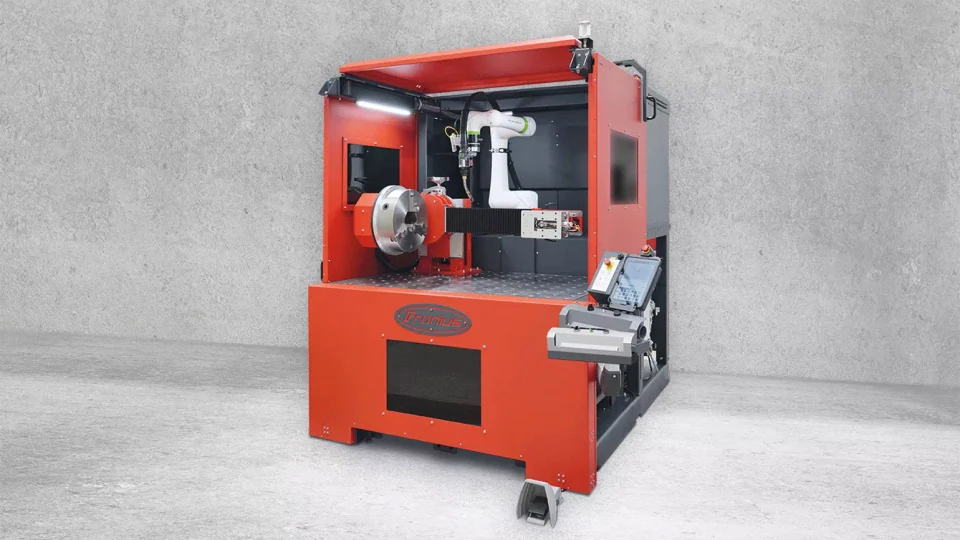
Plan the weld process, fixtures and loading cycle before choosing a robotic welding cell.
Explore the buying guideReference: Fronius CWC-S cobot welding cell

Specify the full sheet stack and weld access before comparing resistance spot welders.
Explore the buying guideReference: TECNA 464x rocker-arm family (pictured 4644N)

Match induction heating to the heated zone, coil and temperature process.
Explore the buying guideReference: Ambrell EASYHEAT family
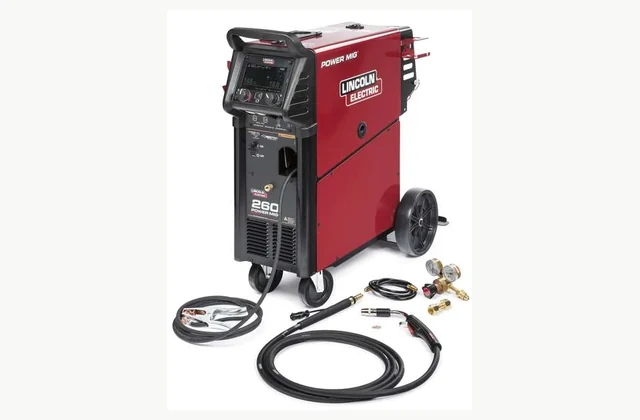
MIG/MAG welding feeds consumable wire into an arc protected by shielding gas. The gas, transfer mode and procedure must match the joint and material rather than the power source label alone. Wire-fed arc joining with shielding gas; procedure trials must match material and joint design.
Explore the buying guideReference: Lincoln Electric Power MIG 260

TIG welding uses a nonconsumable tungsten electrode and shielding gas to make controlled joints, with filler supplied separately when needed. Access, cleanliness and heat control are central to repeatable production. Non-consumable-electrode joining for controlled welds; operator access and filler method matter.
Explore the buying guideReference: Miller Electric Dynasty 400 TIG power source
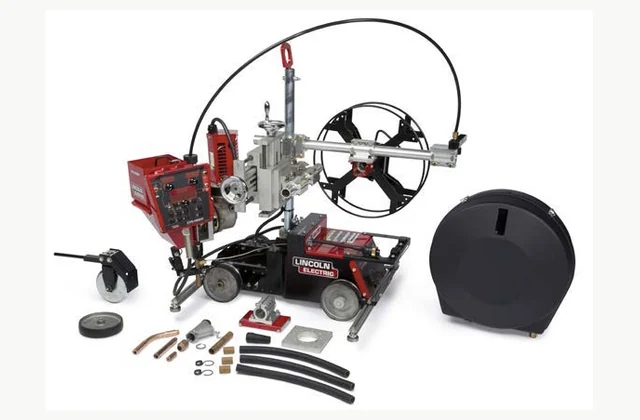
Submerged arc welding feeds wire beneath a granular flux cover for mechanized joining. Consistent seam access, fit-up and flux handling determine the useful production scope. Flux-covered automated arc joining for long seams; quote flux recovery and seam handling.
Explore the buying guideReference: Lincoln Electric Cruiser submerged arc tractor

Orbital tube welding rotates an electrode or weld head around a prepared tube joint. Tube fit-up, purge and head clearance determine whether the programmed cycle can be repeated at the installation. Rotates a weld head around a tube joint; fit-up and head clearance define the scope.
Explore the buying guideReference: Orbitalum Power Welder orbital welding power source

Resistance seam welding forms overlapping weld nuggets with rotating wheel electrodes. Joint access, contact pressure and current timing govern the seam, separate from an arc-welding carriage. Overlapping resistance welds form a continuous seam; electrode wheels and seam access drive choice.
Explore the buying guideReference: Taylor-Winfield TwinLap resistance seam welder

Friction stir welding joins material below melting through a rotating tool moving along the joint. Tool loads, rigid backing and clamping make the machine and fixture one engineered process. Solid-state joining with a rotating tool; clamping force and backing differ from arc welding.
Explore the buying guideReference: Precision Technologies Group Powerstir friction stir welding system

Rotary friction welding joins rotational parts by generating heat through relative rotation and applying axial force. Joint shape, clamping and shortening are fundamental to the resulting assembly. Joins rotational components using friction and axial force; part symmetry governs suitability.
Explore the buying guideReference: KUKA Genius

Stud welding attaches a fastener through a short controlled welding cycle. Capacitor-discharge and drawn-arc methods have different requirements for sheet thickness, surface condition and stud design. Attaches studs to workpieces; define stud geometry, base material and attachment acceptance.
Explore the buying guideReference: HBS ARC 800

Laser brazing melts filler into a joint while limiting melting of the parent material. Joint fit-up, wetting and accurate wire guidance distinguish this application from a general laser fusion-welding cell. Uses laser heat with a brazing filler; joint-gap control distinguishes it from fusion welding.
Explore the buying guideReference: Scansonic ALO3 laser brazing processing head

Electron beam welding directs an energetic electron stream at a joint, commonly within a vacuum chamber. Chamber arrangement, pump-down and internal motion are central to the project scope. Beam joining with a defined chamber or atmosphere; workpiece handling is a separate project boundary.
Explore the buying guideReference: Sciaky VX4 electron beam welder

A welding positioner rotates and tilts a supported part to place its joint in a usable orientation. The combined mass, center of gravity and fixture offset determine the working load. Orients fixtures and parts for welding; load center and required axes matter more than nominal mass.
Explore the buying guideReference: Pemamek PEMA Skymaster PRO

Welding rotators support and turn cylindrical fabrications on driven and idler wheels. Shell diameter, stiffness and contact traction govern the setup rather than nominal tonnage alone. Turns cylindrical fabrications during joining; compare diameter range, traction and shell support.
Explore the buying guideReference: Pemamek PEMA A12 roller bed

A column and boom positions a welding head over a large fabrication. Its reach and stiffness must be evaluated with the actual head, wire system, flux equipment and supporting work-handling devices. Positions a welding head over large work; define travel and weld-head integration boundaries.
Explore the buying guideReference: Pemamek PEMA HD 4x4

Powder coating uses electrostatic application to deposit dry coating before curing. The application unit is one part of a process that also needs suitable pretreatment, recovery and a validated oven cycle. Applies powder with controlled recovery; curing and pretreatment must be scoped separately.
Explore the buying guideReference: Gema OptiFlex Pro manual powder coating unit

An electroplating line moves parts through preparation, deposition and rinsing stages. Chemistry, current distribution and material transfer determine coating quality and the environmental interfaces of the plant. Deposits metallic coatings in process baths; quote chemistry containment and wastewater interfaces.
Explore the buying guideReference: Atotech DynaPlus plating line

An anodizing line builds an oxide layer on suitable metal through controlled electrochemical treatment. Alloy, preparation, current and sealing must be considered as one coating process. Electrochemical oxide finishing of suitable metals; bath sequence and part fixturing set the scope.
Explore the buying guideReference: Technic Dual hoist anodizing line

Wheel blasting accelerates abrasive through rotating wheels to clean or condition components. The chamber and part-handling arrangement must expose all required surfaces while recovering and separating media. Centrifugal abrasive treatment of parts; coverage, media recovery and part handling distinguish the system.
Explore the buying guideReference: Wheelabrator DT tumblast machine
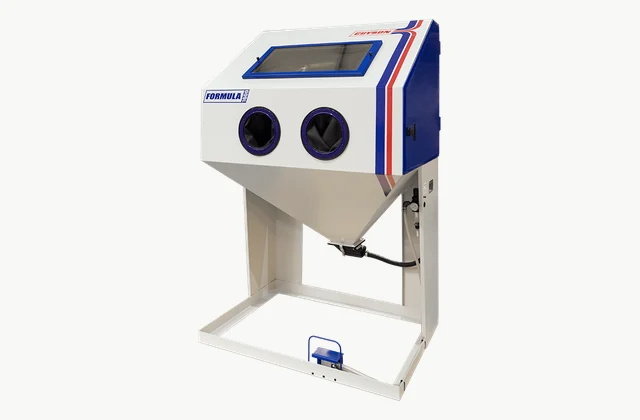
An abrasive blast cabinet encloses nozzle blasting while the operator manipulates parts or directs the nozzle. Working access, visibility, media recovery and dust extraction define a usable cabinet. Enclosed nozzle blasting with operator access; workpiece envelope and abrasive handling govern choice.
Explore the buying guideReference: Guyson Formula 1600 blast cabinet
Build a comparable request
Share the application, required output, destination, utilities, quantities and planned timing. For OEM / ODM projects, include the branding, configuration or engineering changes, sample approval and acceptance requirements.
Practical buying decisions
A comparable ultrasonic parts cleaning system quotation starts with ultrasonic parts cleaning system application and required process result, contamination and component compatibility, bath loading and process sequence. Record the required result, site interfaces and acceptance evidence in one revision-controlled RFQ. IndustryApex engineers use these inputs…
Read the guideA comparable vibratory finishing machine quotation starts with vibratory finishing machine application and required process result, part geometry and edge requirement, media motion and separation. Record the required result, site interfaces and acceptance evidence in one revision-controlled RFQ. IndustryApex engineers use these inputs to define…
Read the guideA comparable abrasive blast cabinet quotation starts with abrasive blast cabinet application and required process result, part access and abrasive, pressure versus suction feed. Record the required result, site interfaces and acceptance evidence in one revision-controlled RFQ. IndustryApex engineers use these inputs to define the…
Read the guide
