
Specify a fabric sanforizing range around the required residual shrinkage of woven fabric. Match conditioning, compressive shrinking and drying or stabilization stages, then test finished dimensions after the agreed washing method with representative constructions and documented process settings. Run representative woven fabrics through the full supplied route at documented conditioning and compression settings. Measure dimensions and appearance after the specified care and conditioning method. Demonstrate stable restart, recipe change and maintenance access, recording good finished length; any branded certification or performance label requires its own applicable authorization and evidence. Submit the intended configuration and any OEM/ODM changes for project-specific feasibility review.
Specify a fabric sanforizing range around the required residual shrinkage of woven fabric. Match conditioning, compressive shrinking and drying or stabilization stages, then test finished dimensions after the agreed washing method with representative constructions and documented process settings.
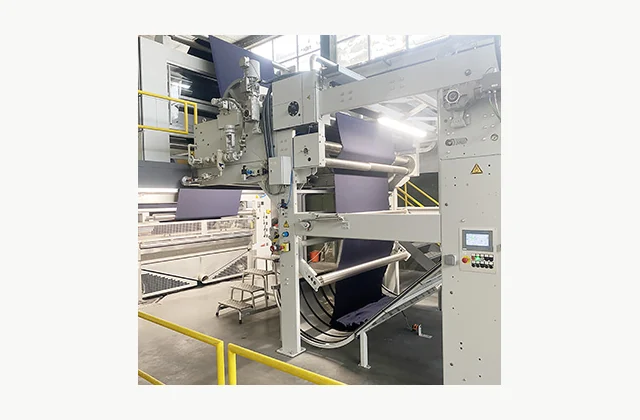
Shown as a configuration reference. Availability and the equipment offered for your project are confirmed separately.
Define woven fabric and shrinkage targets
Provide fiber blend, weave, width, mass and incoming dimensional behavior. State length and width targets using an agreed care and measuring method. Sanforizing addresses a defined process objective, so a machine name alone cannot establish a certification claim or guarantee the same dimensional result for every construction.
Control conditioning before compression
Describe fabric entry moisture, temperature and uniformity across width. Review the offered steaming or moistening arrangement and its controls. Uneven conditioning can change compression response, so the process trial should verify actual fabric condition rather than infer it solely from steam pressure or the commanded water setting.
Match rubber belt and shrinking action
Identify the compressive-shrinking configuration, working width and adjustment range in the exact offer. Trial the intended cloth without assuming more compression always improves it. Belt condition and process geometry influence the result, and the supplier must show how the target is reached without unacceptable surface change or distortion.
Coordinate stabilization and fabric handling
Itemize downstream drying, felt or cylinder stages, cooling and winding as applicable to the offered range. Define tension and guiding through the complete route. Successful compression at one stage does not establish retained dimensions if a subsequent module stretches the fabric or introduces creases before inspection.
Verify post-care dimensional evidence
Agree sample positions, conditioning, wash and measurement procedures before trials. Include center and edge behavior and visible finish. A short sample measured hot at the machine exit is not evidence of residual shrinkage after care; retain the complete test record and the fabric and settings used.
Plan belts felts and maintenance access
Obtain approved belt and felt inspection, grinding or restoration instructions where applicable, along with replacement and lifting requirements. Review cleaning and safe access to hot moving parts. Consumable condition is a process variable, so service support should demonstrate how operators return to the accepted recipe and fabric outcome after maintenance.
Compare a complete fabric sanforizing machine scope
| Decision | Information to compare |
|---|---|
| Define woven fabric and shrinkage targets | Fiber/weave, width/mass, incoming behavior and residual-shrinkage test targets |
| Control conditioning before compression | Entry moisture/temperature, conditioning method and across-width verification |
| Match rubber belt and shrinking action | Shrinking configuration, belt condition, adjustment and surface/distortion limits |
| Coordinate stabilization and fabric handling | Dry/stabilization stages, tension, guiding, cooling and winding boundaries |
| Verify post-care dimensional evidence | Sampling grid, conditioning/wash procedure, dimensions and finish acceptance evidence |
| Plan belts felts and maintenance access | Belt/felt inspection, approved restoration, lifting, spares and service training |
Plan installation and access
Qualified mechanical, electrical, steam and heat-system personnel should coordinate foundations and all conditioning and drying modules. Confirm fabric entry and exit routes, ventilation and safe access for belts or felts. Retain protective-function validation, utility settings and the approved isolation and maintenance procedures for the complete supplied range.
Agree acceptance evidence before ordering
Run representative woven fabrics through the full supplied route at documented conditioning and compression settings. Measure dimensions and appearance after the specified care and conditioning method. Demonstrate stable restart, recipe change and maintenance access, recording good finished length; any branded certification or performance label requires its own applicable authorization and evidence.
Define OEM/ODM engineering boundaries
OEM widths, conditioning packages and approved module interfaces can be reviewed. ODM compression geometry, belt systems or heat control require engineering and fabric trials. Reference imagery establishes neither agency nor certification rights or a transferable shrinkage guarantee for a different cloth and care method.
What should your fabric sanforizing machine RFQ include?
- Fiber/weave, width/mass, incoming behavior and residual-shrinkage test targets
- Entry moisture/temperature, conditioning method and across-width verification
- Shrinking configuration, belt condition, adjustment and surface/distortion limits
- Dry/stabilization stages, tension, guiding, cooling and winding boundaries
- Sampling grid, conditioning/wash procedure, dimensions and finish acceptance evidence
- Belt/felt inspection, approved restoration, lifting, spares and service training
- Destination, working environment, access and delivery constraints
- Installation responsibility, utilities and connection drawings
- Acceptance samples, documented test method, operator training and maintenance scope
- OEM/ODM changes requested: identification, tooling, interfaces or new design; engineering feasibility to be confirmed
Need OEM / ODM customization?
Submit branding, packaging, configuration or engineering requirements for this equipment. Include the target market, initial and annual quantities, required changes and acceptance criteria.
Customization feasibility, permitted branding, development responsibilities, minimum quantity, cost and lead time are reviewed for the proposed supplier and configuration before a quotation is confirmed.
Frequently asked questions
How do I define woven fabric and shrinkage targets?
Provide fiber blend, weave, width, mass and incoming dimensional behavior. State length and width targets using an agreed care and measuring method. Sanforizing addresses a defined process objective, so a machine name alone cannot establish a certification claim or guarantee the same dimensional result for every construction.
How do I control conditioning before compression?
Describe fabric entry moisture, temperature and uniformity across width. Review the offered steaming or moistening arrangement and its controls. Uneven conditioning can change compression response, so the process trial should verify actual fabric condition rather than infer it solely from steam pressure or the commanded water setting.
How do I match rubber belt and shrinking action?
Identify the compressive-shrinking configuration, working width and adjustment range in the exact offer. Trial the intended cloth without assuming more compression always improves it. Belt condition and process geometry influence the result, and the supplier must show how the target is reached without unacceptable surface change or distortion.
How do I coordinate stabilization and fabric handling?
Itemize downstream drying, felt or cylinder stages, cooling and winding as applicable to the offered range. Define tension and guiding through the complete route. Successful compression at one stage does not establish retained dimensions if a subsequent module stretches the fabric or introduces creases before inspection.
How do I verify post-care dimensional evidence?
Agree sample positions, conditioning, wash and measurement procedures before trials. Include center and edge behavior and visible finish. A short sample measured hot at the machine exit is not evidence of residual shrinkage after care; retain the complete test record and the fabric and settings used.
How do I plan belts felts and maintenance access?
Obtain approved belt and felt inspection, grinding or restoration instructions where applicable, along with replacement and lifting requirements. Review cleaning and safe access to hot moving parts. Consumable condition is a process variable, so service support should demonstrate how operators return to the accepted recipe and fabric outcome after maintenance.
Reference information
- BRÜCKNER POWER-SHRINK official product reference
- BRÜCKNER fabric sanforizing machine official family or technical reference
Reference data and images explain equipment configurations. IndustryApex engineers confirm the offered model, specification and commercial scope in your project quotation.