
Choose a fiber laser cutting machine by testing your actual material and parts against the output and finish you need. Compare the complete configuration, installed cost and support. A laser power rating or maximum-thickness claim alone does not establish the right machine.
What is a fiber laser cutting machine used for?
A fiber laser cutting machine uses a focused laser to cut metal parts. This guide focuses on sheet-metal procurement: fabrication shops, component production and manufacturers bringing cutting in-house. Confirm suitability for every important alloy, thickness and finish on the exact proposed model.
Identify the work that earns its place in your production schedule. A frequent thin-sheet job and an occasional thick-sheet order may need different evidence. Record whether cut edges will be welded, painted, deburred or left visible. Include small holes, tight contours and parts prone to tipping in the trial set.
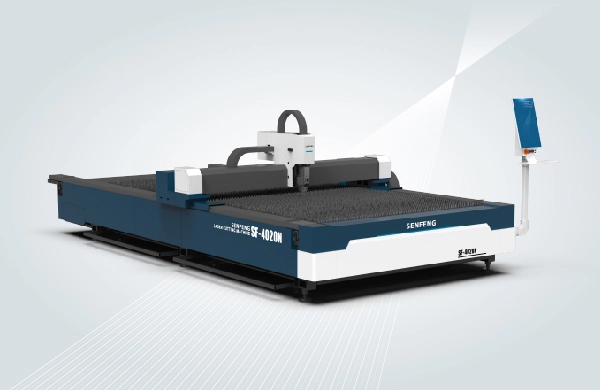
Shown as a configuration reference. Availability and the equipment offered for your project are confirmed separately.
How do you choose laser power without relying on a thickness chart?
Compare accepted parts per complete production cycle. Ask each supplier to cut the same material and nest, using the offered source, head, gas and software. A demonstration should include loading, piercing, cutting and unloading. Record rejected parts and any extra finishing.
TRUMPF’s process explanation describes focused optics, the laser beam and cutting gas acting together. This is why a power rating cannot substitute for process evidence. SENFENG’s N-series page, for example, lists a family with different powers and working areas; request the current sheet for the exact offered configuration.
A workshop mainly cuts 3–6 mm mild steel, occasionally needs 10 mm parts and uses 1,500 × 3,000 mm sheets. Its shortlist should be tested on that job mix. These numbers describe an example requirement; they are not a cutting-capacity claim for any model.
Use the 3 kW vs 6 kW comparison guide to organize evidence, rather than assuming the larger rating always produces the best economic result.
Which specifications belong in a complete laser cutter quote?
| Specification | What to state | Evidence to request |
|---|---|---|
| Workload | Grades, thickness mix, sheet sizes, part drawings | Sample report tied to the proposed configuration |
| Working area and handling | Usable sheet area, access and loading arrangement | Dimensioned layout and loading requirements |
| Laser source and head | Exact makes and model numbers | Configuration sheet, warranty scope and repair route |
| Gas, cooling and extraction | Available supply and site conditions | Required pressure, quality, consumption basis and included equipment |
| Electrical supply | Voltage, phase, frequency and site limitations | Installed-load and connection requirements |
| Software and service | File formats, licenses, training and support | Included functions, recurring charges and response responsibilities |
Ask for the machine footprint, maintenance access, floor requirements and material movement plan. Clarify which chiller, extraction, gas equipment and protective systems are included. Your installation team should review the exact equipment and site requirements before an order is finalized.
What determines the total cost of a fiber laser cutter?
Compare an installed, working system and the cost of accepted parts. Separate the machine, options, cooling, extraction, gas equipment, software, packing, transport, destination handling, installation, training and initial spares. Record currency, quotation date, delivery term and named destination.
For running cost, use gas and package electricity measured during the agreed job, then apply your local utility prices. Include consumables, maintenance, operator time, material utilization, rejected parts and extra finishing. Record assumptions and missing costs instead of presenting an incomplete total as a finished budget.
Use the laser cutter total-cost checklist and the project budget calculator to compare the same scope across suppliers. Destination charges and documentation should be checked for your actual installation country and project.
What should a laser cutter acceptance test demonstrate?
- Freeze the configuration, material grades, thicknesses, drawings, gas and consumables used in the test.
- Agree the measurement method and acceptance limits for dimensions, edge condition and finished-part requirements.
- Time a representative nest, including the handling steps that affect your production output.
- Inspect and retain representative parts; record rejects, stoppages and any additional finishing.
- List corrections and repeat tests, then agree commissioning, training and site acceptance responsibilities.
This is a buyer planning checklist. Test duration, tolerances and required documentation need agreement for the specific machine and application.
What should you send with your fiber laser cutter RFQ?
Start with the application, destination and representative work. Complete the RFQ with material grades, thickness mix, sheet size, required output, quality criteria, utilities, layout, purchasing window and support needs. Request the configuration and inclusions in writing.
IndustryApex supplies industrial equipment with professional engineering support. Availability, lead time, supply scope, pricing and service commitments are confirmed for your specific project. Sources checked: 13 October 2026.
Explore your application and buying questions
Sourcing a sheet-metal fiber laser cutting machine from China starts with the application, accepted-part output and complete quote scope. Use the relevant material, power and cost guide to prepare a comparable request.
Need OEM / ODM customization?
Submit branding, packaging, configuration or engineering requirements for this equipment. Include the target market, initial and annual quantities, required changes and acceptance criteria.
Customization feasibility, permitted branding, development responsibilities, minimum quantity, cost and lead time are reviewed for the proposed supplier and configuration before a quotation is confirmed.
Frequently asked questions
How much laser power do I need for my sheet metal?
Specify alloy grades, the thicknesses you process most often, occasional maximum thickness, drawings, edge quality and monthly output. Compare complete sample nests on the quoted configurations. Select the power that meets agreed quality and production targets; a generic thickness chart is only a starting point.
How much does a fiber laser cutting machine from China cost?
A useful price depends on the working area, laser source, power, cutting head, automation, utilities and service scope. Ask for a dated, itemized quote including freight, installation and training. IndustryApex does not publish a fixed machine price for unspecified configurations.
What is the difference between laser power and machine electricity consumption?
Laser power describes the laser output rating. Total package input includes the machine and relevant auxiliary equipment, such as cooling and extraction. Use measured input during representative production, operating hours and local tariffs to estimate electricity cost.
Can a sheet laser cutting machine also cut tubes?
Tube cutting requires suitable workholding, motion, software and a defined tube-processing configuration. Some machines combine sheet and tube functions, but this must be included in the exact quoted model and demonstrated with your tube sizes and parts.
What should I send before requesting a laser cutter quotation?
Send the destination, material grades, thickness distribution, largest sheet size, representative parts, required output, finish criteria, power supply and available gas and extraction. Add your installation needs, purchase window and budget range. Use the downloadable RFQ to keep supplier offers comparable.
How should I check the machine before shipment?
Agree a factory acceptance test using your actual materials and drawings. Record configuration, gas, consumables, total cycle time, inspected dimensions, edge quality and rejected parts. Retain results and exceptions, then define installation and site acceptance responsibilities before shipment.
Reference information
- TRUMPF — Laser cutting: process, optics and cutting gas
- SENFENG — N-series sheet fiber laser cutting machine
Reference data and images explain equipment configurations. IndustryApex engineers confirm the offered model, specification and commercial scope in your project quotation.