
Select a fiber laser cutter for stainless steel by the exact grade, thickness mix and required finished edge. Compare representative nests with agreed gas and inspection conditions. A maximum-thickness claim cannot establish throughput, burr level or the downstream work your parts require.
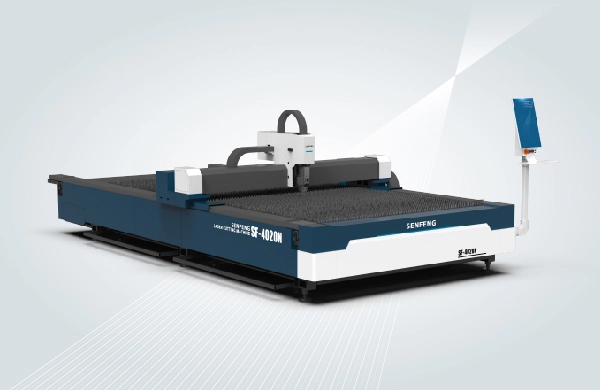
Shown as a configuration reference. Availability and the equipment offered for your project are confirmed separately.
Start with the production requirement
For stainless sheet fabrication, define the alloy and surface condition before comparing machines. Distinguish visible panels from parts that will be welded, coated or otherwise finished. Provide representative drawings with small holes, corners and long contours, plus the normal thickness distribution and largest sheet. Ask suppliers to explain how the proposed process fits that finished-part requirement.
Download equipment RFQ checklist ↗ · Discuss this application on WhatsApp ↗
Shown as a configuration reference. Availability and the equipment offered for your project are confirmed separately.
Compare the application details
| Decision | Specify | Evidence to request |
|---|---|---|
| Material | Grade, thickness range, protective film and surface condition | Trials with production-equivalent sheets |
| Edge quality | Burr, discoloration, dimensions and downstream finish | Inspected samples and agreed acceptance criteria |
| Gas supply | Proposed gas, purity, pressure and peak/average demand | Machine-specific requirements and trial consumption |
| Output | Accepted parts per shift and typical nesting mix | Complete load-to-unload job, including rejects |
| Quotation | Source/head, bed, software, extraction and installation | Exact configuration and itemized included scope |
What the published references establish
TRUMPF’s fusion-cutting description identifies nitrogen or argon as process gases that do not react with the material in the kerf. Its laser-cutting guidance also explains that gas and processing conditions influence results. These are process references; use the exact machine data and samples to establish your required edge.
Use a representative acceptance trial
Compare the same grade, thicknesses, drawings and inspection method. Count accepted parts, gas used, cycle time and any deburring or other rework. Include piercing, contours, stops and unloading in the recorded run. Inspect the features most likely to determine acceptance rather than selecting only an easy straight cut. Retain sample identity, configuration and results with the purchase scope.
Prepare a focused quotation request
- Stainless grades, thickness distribution and largest sheet
- Surface/film condition and visible-edge requirements
- Representative drawings and dimensional tolerances
- Required accepted output and shift pattern
- Agreed burr, discoloration and inspection criteria
- Available nitrogen/other proposed gas and delivery arrangements
- Electrical supply, extraction, space and loading access
- Exact source, head, software and utility scope
- Trial material, test records and acceptance responsibilities
- Destination, budget assumptions, training and service needs
For OEM / ODM requests, add the branding, packaging, configuration or engineering changes you need, initial and annual quantities, target market and sample approval criteria. Scope, feasibility and commercial terms are confirmed for the specific project.
Download equipment RFQ checklist ↗ · Discuss this application on WhatsApp ↗
Related buying decisions
- Compare 3 kW and 6 kW on your actual jobs ↗
- Build the complete laser cutter budget ↗
- Specify aluminum sheet cutting ↗
Explore the Fiber laser cutting machine buying guide and RFQ checklist ↗
Frequently asked questions
Can the same settings be assumed for 304 and 316 stainless steel?
No. Identify the actual grade, surface condition and thickness and obtain the manufacturer’s process recommendation. Use representative samples to confirm the required edge and accepted output rather than transferring an unverified setting.
Does nitrogen guarantee a perfect stainless-steel cut?
No. Nitrogen is one process input. The machine configuration, material, focus, nozzle, speed and gas supply conditions still affect the result. Set measurable acceptance criteria and inspect a representative job.
Which laser power should I buy for stainless sheet?
Use your usual thicknesses, drawings, finish and output targets to compare configurations. Occasional maximum thickness should be identified separately. Select through trial evidence rather than a universal power-to-thickness rule.
How should I budget stainless-steel cutting gas?
Ask for measured consumption on your representative job and the exact gas-supply requirements. Use local gas prices and the shift schedule, including delivery and supply equipment, rather than assuming consumption from laser output power.
Reference information
- TRUMPF — Fusion cutting
- TRUMPF — Laser cutting processes
Reference data and images explain equipment configurations. IndustryApex engineers confirm the offered model, specification and commercial scope in your project quotation.