
Choose the configuration that proves your required part quality and throughput at an acceptable total cost. Compare 3 kW and 6 kW on the same jobs.
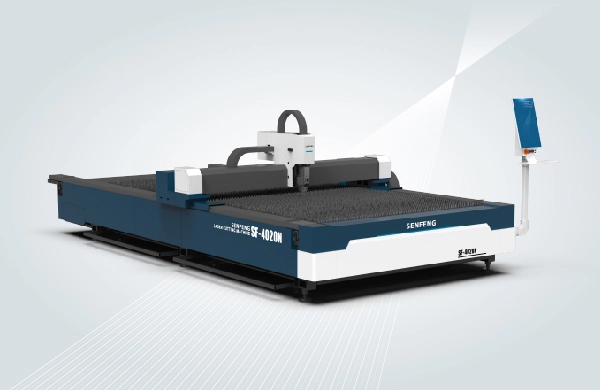
Shown as a configuration reference. Availability and the equipment offered for your project are confirmed separately.
For a small workshop comparing 3 kW and 6 kW fiber laser cutters, start with the material mix and finished-part demand. Record which thicknesses are routine and which are occasional. The useful comparison is an accepted job on each quoted configuration, including handling and utilities.
Download equipment RFQ checklist ↗ · Discuss this application on WhatsApp ↗
Shown as a configuration reference. Availability and the equipment offered for your project are confirmed separately.
There is no universal winner between a 3 kW and a 6 kW fiber laser cutter. Choose the quoted configuration that demonstrates your required part quality and production output at an acceptable installed and operating cost. Compare both using the same materials, drawings, gas conditions and inspection rules.
Prepare a representative job basket
List your regular material grades and thicknesses, then estimate their share of production. Include a demanding part and an ordinary high-volume part. Avoid making the entire decision around an occasional maximum thickness. State which dimensions and edges matter to downstream welding, painting or assembly.
The SENFENG N-series product range includes configurations spanning these power ratings. The published range provides a starting shortlist, not a material-by-material selection rule. Ask for the exact laser source, head, controls and options on each offer so that differences are visible.
Use one test plan for both machines
| Test item | Record for each configuration |
|---|---|
| Material and drawing | Grade, thickness, surface condition and file revision |
| Cutting conditions | Assist gas, pressure, nozzle and supplier-approved settings |
| Production time | Whole-nest time, piercing, handling and interruptions |
| Finished parts | Dimensions, edge condition, repeatability and required rework |
| Consumption | Measured gas and package electricity for the trial |
TRUMPF’s laser-cutting guidance identifies several interacting process parameters. This is why a faster straight cut or a higher power label cannot establish the finished-part outcome. Request retained samples and a continuous recording of the representative run. Require the manufacturer to identify test conditions that differ from the conditions available at your site.
Decide using production economics
Compare extra purchase cost against demonstrated additional useful output. Consider whether loading, unloading or downstream work would become the limiting step. If a faster cutter waits for material handling or cannot sell additional production, the trial speed alone does not establish a return on investment.
Build a simple scenario using your own figures: saleable parts per shift, available shifts, labor, gas, electricity, consumables and rework. Compare it with the installed purchase price and service arrangements. Treat any calculation as a planning scenario until measured production confirms the inputs. Do not assume a 6 kW machine uses twice the total electricity or produces twice the output.
Questions to ask suppliers
- Can both quoted configurations run our same test files?
- Which thicknesses and finishes require a different gas process?
- What total installed power and utility provisions does each need?
- What changes in source, head, consumables and service coverage?
- Can the proposed installation support the demonstrated test conditions?
Send these inquiry fields
- Material grades, thickness mix and typical sheet sizes.
- Drawings, target output, shift pattern and inspection requirements.
- Current production bottleneck and expected future work.
- Site electrical supply, gas availability, space and destination.
- Budget range, procurement date and required training support.
IndustryApex engineers can develop your equipment requirements and prepare a project-specific supply proposal. Our engineers review the proposed laser configuration with you, using representative manufacturer trials and your production and installation requirements.
Download equipment RFQ checklist ↗ · Discuss this application on WhatsApp ↗
Explore the Fiber laser cutting machine buying guide and RFQ checklist ↗
Frequently asked questions
Is a 6 kW fiber laser always better than a 3 kW machine?
No universal choice applies. Compare the quoted configurations using your material mix, inspected parts, whole-job time, utilities, installed cost and service requirements.
Can I use a maximum-thickness chart to choose power?
Use it only as a shortlist reference. Confirm practical output and finish using representative trials on the exact quoted machine, source, head and gas process.
Does twice the laser power mean twice the production?
Do not assume that relationship. Piercing, contours, handling, interruptions and downstream work affect useful production. Measure a complete representative job.
Reference information
- SENFENG: N-Series Power and Configuration Range
- TRUMPF: Parameters Influencing Laser Cutting
Reference data and images explain equipment configurations. IndustryApex engineers confirm the offered model, specification and commercial scope in your project quotation.