
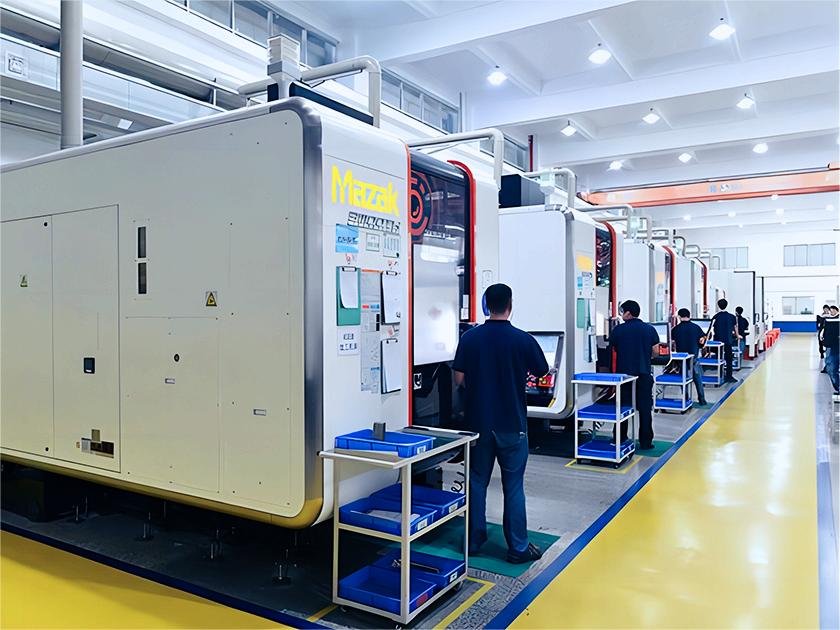
Compare turnkey production line configurations, suppliers, and integration requirements. Decision framework for industrial buyers planning factory builds.
Selecting a turnkey production line means entrusting a single provider with engineering, procurement, integration, commissioning and handover—reducing vendor coordination overhead while concentrating technical and commercial risk. The decision requires balancing scope clarity, supplier capability, integration complexity and long-term support against budget and timeline constraints. This guide helps industrial buyers evaluate configurations, compare provider qualifications and identify critical checkpoints before committing capital to a turnkey production line buying guide project.
Quick answer: A turnkey production line buying guide prioritizes supplier track record in your sector, clear scope definition covering equipment through training, verifiable integration experience with your process technology, transparent pricing including commissioning and spares, and contractual assignment of performance risk. Comparing these five dimensions across shortlisted providers reduces delays and cost overruns.
What Turnkey Production Line Delivery Actually Includes
Turnkey delivery consolidates design, procurement, installation and commissioning under a single accountability structure. The provider manages equipment sourcing, factory layout, utility integration, control system programming, operator training and performance validation. Unlike component-by-component procurement, turnkey contracts define output capacity, quality targets and handover criteria in a unified commercial framework.
A complete turnkey scope typically encompasses:
- Feasibility and engineering: Process design, capacity modeling, factory layout, utility load calculations and regulatory pathway review
- Equipment procurement: Sourcing, inspection and logistics for all production machinery, conveyors, control hardware and auxiliary systems
- Site integration: Mechanical installation, electrical interconnection, piping, HVAC coordination and safety system commissioning
- Software and controls: PLC programming, SCADA configuration, recipe management, data logging and network security
- Validation and training: Functional acceptance testing, production trial runs, operator training and documentation handover
- After-sales support: Warranty service, spare parts supply, remote diagnostics and periodic maintenance contracts
Understanding whether your provider treats each element as included, optional or excluded prevents scope creep and budget surprises during execution. When evaluating offerings within the industrial machinery sector, clarify which party assumes responsibility for site preparation, utility extensions, permits and disposal of existing equipment.

Supplier Selection Criteria That Predict Project Success
Provider capability matters more than catalog breadth. A credible turnkey integrator demonstrates sector-specific process knowledge, verifiable reference installations and engineering resources scaled to your project timeline. Three categories of capability separate effective providers from those likely to create execution risk.
Process and Technology Competence
The provider must understand your product, process constraints and quality requirements deeply enough to translate them into equipment specifications and control logic. Ask for reference projects involving similar materials, throughput rates and quality tolerances. Review whether their engineering team includes process engineers or only mechanical designers. Confirm that proposed equipment suppliers have documented performance in your application—generic machinery rarely meets specialized production requirements without costly adaptation.
Integration and Commissioning Track Record
Integration capability determines whether individual machines operate as a cohesive production system. Request detailed commissioning plans showing how the provider will test interlocks, validate material flow, tune process parameters and achieve rated capacity. Ask how they handle equipment from multiple OEMs, especially control system integration and data exchange. Providers experienced in turnkey solutions maintain libraries of proven integration patterns and commission systematically rather than troubleshooting reactively.
Commercial and Project Management Strength
Financial stability, contract transparency and realistic scheduling separate deliverable projects from stalled builds. Verify the provider's balance sheet health, especially for multi-year projects requiring staged payments. Insist on fixed-price or maximum-price contracts with clear scope boundaries and change-order procedures. Evaluate their project management methodology, communication cadence and escalation protocols. Weak project controls create cost overruns and delay production launch even when equipment performs adequately.
Configuration Decisions and Turnkey Production Line Buying Guide Priorities
Configuration choices made during specification directly affect total cost of ownership, operational flexibility and future expansion capacity. Buyers often face tension between minimizing capital outlay and preserving operational headroom. Four configuration dimensions require explicit decision-making before soliciting proposals.
Capacity and Throughput Design Margin
Specify capacity as sustained production rate under normal operating conditions, not theoretical maximum. Include design margin—typically fifteen to thirty percent—to accommodate process variability, product mix changes and future volume growth. Undersized lines operate continuously at maximum stress, reducing equipment life and increasing unplanned downtime. Oversized lines waste capital and floor space. Use demand forecasts, production calendars and maintenance windows to calculate realistic capacity targets that balance investment against operational flexibility.
Automation Level and Labor Dependency
Higher automation reduces variable labor cost but increases capital investment, technical skill requirements and control system complexity. Evaluate automation decisions by comparing labor availability, wage trends, quality consistency requirements and changeover frequency in your operating environment. Semi-automated lines with manual load/unload stations suit high-mix low-volume production and constrained capital budgets. Fully automated lines justify investment when running high volumes of standardized products in regions with labor scarcity or stringent quality requirements. Integration with industrial robots often represents the highest-return automation investment for repetitive material handling and assembly tasks.
Equipment Standardization Versus Best-of-Breed Selection
Single-vendor equipment packages simplify integration, spare parts inventory and operator training but may compromise performance in specific process steps. Multi-vendor configurations allow selecting best-performing equipment for each operation but increase integration complexity, interface risk and supplier coordination burden. Most successful projects adopt a hybrid approach: standardize ancillary equipment like conveyors and packaging while selecting specialized best-of-breed machinery for critical process steps that determine product quality or throughput bottlenecks.
Modularity and Future Expansion Provisions
Design lines with physical space, utility capacity and control system architecture that accommodate future capacity additions or process changes without major rework. Reserve floor space adjacent to bottleneck operations. Size electrical service and compressed air systems for future load growth. Specify control platforms with spare I/O capacity and network bandwidth for additional equipment. Modular design costs marginally more initially but dramatically reduces expansion cost and downtime compared to retrofitting constrained installations.
Risk Allocation and Contract Structure Considerations
Turnkey contracts assign technical and schedule risk differently than traditional equipment sales. Clear contractual definition of acceptance criteria, payment milestones, warranty coverage and change-order procedures protects both parties and establishes accountability. Four contractual elements deserve explicit negotiation and legal review before signing.
| Contract Element | Buyer-Favorable Position | Seller-Favorable Position | Balanced Approach |
|---|---|---|---|
| Acceptance Criteria | Sustained production at rated capacity and quality for defined period | Mechanical completion and functional equipment operation | Staged acceptance: mechanical completion, then performance validation over trial production period |
| Payment Structure | Retain majority until final acceptance and warranty period | Progress payments aligned with cost incurrence | Balanced milestone payments with 10-15% retention until performance acceptance |
| Warranty Scope | Performance guarantee covering throughput, yield and uptime for 2+ years | Equipment defects only, excluding consumables and wear items | Equipment warranty plus performance guarantee during defined ramp period with measurable targets |
| Change Orders | Fixed scope with changes only for regulatory or safety requirements | Changes priced individually with schedule impact | Defined contingency allowance for minor changes; formal approval process for scope modifications |
Explicitly assign responsibility for site conditions, utility availability, permit delays and force majeure events. Define how the parties will handle design changes requested after contract signature, discovered site constraints and equipment delivery delays beyond the integrator's control. Ambiguous risk allocation creates disputes during execution when both parties face pressure to maintain schedule and budget.
Integration Complexity and Interface Management
Integration challenges cause more turnkey project delays than equipment performance issues. Material flow coordination, control system interoperability, utility distribution and safety system integration require deliberate engineering and testing. Buyers should evaluate how providers approach four common integration challenges.
Material handling and buffer management: Conveyor speeds, accumulation zones and transfer mechanisms must match upstream and downstream process rates while providing buffer capacity that prevents line starvation or blocking. Inadequate buffer sizing propagates minor stoppages throughout the line, reducing overall equipment effectiveness.
Control system architecture: Distributed control with equipment-level PLCs coordinated by line-level SCADA provides flexibility and fault isolation. Monolithic control with all logic in one controller simplifies programming but creates single points of failure and complicates future expansion. Clarify communication protocols, data structures and cybersecurity provisions, especially when integrating equipment from multiple suppliers.
Utility distribution and conditioning: Electrical power quality, compressed air purity, process water temperature and HVAC stability affect equipment performance and product quality. Specify utility requirements at each process step and verify that site infrastructure provides adequate capacity and conditioning. Under-specified utilities create intermittent faults that are difficult to diagnose and expensive to remediate after installation.
Safety system integration: Emergency stops, light curtains, interlocks and lockout/tagout provisions must protect operators while minimizing nuisance trips that reduce productivity. Integrate safety devices into a unified safety PLC that enforces consistent logic across the line and simplifies compliance documentation. For facilities incorporating packaging machinery or other downstream operations, coordinate safety zones and interlock logic across production stages.
Testing, Commissioning and Performance Validation Phases
Structured commissioning following a defined test protocol reduces startup time and documents baseline performance. Effective commissioning proceeds through five sequential phases, each with measurable completion criteria before advancing.
- Pre-commissioning inspection: Verify mechanical installation, electrical connections, utility supplies and safety device function before energizing equipment
- Equipment-level functional testing: Operate each machine independently to confirm basic function, parameter ranges and alarm responses
- Integration and interlock testing: Verify material transfers, communication links, interlocks and coordinated sequence operation across the line
- Process parameter optimization: Tune speeds, temperatures, pressures and timing to achieve target quality and throughput using representative production materials
- Performance acceptance testing: Run sustained production over a defined period to demonstrate rated capacity, quality consistency and reliability targets
Document test results, parameter settings and any deviations from specification. This documentation becomes the baseline for warranty claims, troubleshooting and future optimization work. Insist that the provider deliver operation manuals, maintenance procedures, spare parts lists and electrical/mechanical as-built drawings before final payment.

Practical Buyer Checklist Before Requesting Quotations
Prepare detailed specifications and decision criteria before contacting potential providers. Clear requirements enable accurate proposals and reduce negotiation cycles. Use this checklist to confirm readiness:
- Define product specifications, production volumes, quality targets and operating schedule with sufficient detail for capacity calculations
- Confirm available floor space, ceiling height, floor loading capacity and access for equipment delivery and future maintenance
- Document existing electrical service, compressed air capacity, process water supply, HVAC and waste handling capabilities
- Identify applicable regulatory standards, safety requirements, environmental permits and product certifications needed for your market
- Establish budget range, financing approach, project timeline and internal approval process before soliciting proposals
- Specify contract preferences for payment terms, warranty scope, training requirements and after-sales support expectations
- Designate internal project champion with authority to make technical and commercial decisions during execution
Share this information with shortlisted providers during initial discussions to ensure proposals address your actual requirements rather than generic capabilities. Buyers exploring options for complementary automation may benefit from reviewing considerations in resources like robotic welding cell cost analysis to understand parallel investment decisions.
After-Sales Support and Long-Term Partnership Considerations
Production line performance depends on responsive technical support, spare parts availability and periodic maintenance for years after commissioning. Evaluate provider capabilities that determine long-term support quality beyond the initial warranty period.
Confirm that the provider maintains in-region technical service personnel or authorized service partners who can respond within acceptable timescales when issues arise. Verify spare parts inventory practices, lead times for critical components and obsolescence management for control system hardware with limited production lifecycles. Request references from customers operating similar lines for three or more years to assess actual support responsiveness.
Negotiate maintenance contracts, remote monitoring services and periodic performance optimization visits as part of the initial commercial discussion rather than as afterthoughts. Providers offering comprehensive support packages demonstrate commitment to customer success beyond equipment delivery. For complex installations, consider requiring the integrator to maintain technical documentation, parameter backups and configuration files in escrow arrangements that protect against provider business failure.
Frequently Asked Questions
What project timeline should I expect for a typical turnkey production line?
Engineering and equipment procurement typically require four to eight months depending on machinery complexity and lead times. Installation and commissioning add another two to four months. Total project duration from contract signature to production handover commonly ranges from six to twelve months for moderate-complexity lines. Highly specialized equipment, extensive facility modifications or compressed schedules may extend timelines or require premium pricing for expedited delivery.
How do I compare proposals from providers offering different equipment configurations?
Normalize proposals to equivalent capacity, automation level and scope boundaries before comparing price. Request itemized breakdowns showing equipment cost, engineering, installation, commissioning and training separately. Evaluate proposals against weighted criteria including technical capability, commercial terms, reference strength and support infrastructure rather than lowest price alone. Create a comparison matrix scoring each provider across defined evaluation dimensions to support objective decision-making.
Should I include factory acceptance testing at the supplier's facility?
Factory acceptance testing allows identifying integration issues before shipping and reduces on-site commissioning time, especially for complex lines or international projects where on-site troubleshooting is expensive. Budget for travel costs and engineering time to witness testing. FAT is most valuable when the provider can assemble and test major portions of the line in their facility before disassembly and shipment, verifying interfaces and control logic before final installation.
What financial protection should I require from the turnkey provider?
Request performance bonds or parent company guarantees covering the provider's contractual obligations through warranty expiration. Verify adequate insurance coverage for professional liability, equipment damage during installation and worker safety. For large projects, consider requiring the provider to escrow technical documentation and source code that would allow another integrator to complete the project if the original provider fails to perform. Financial due diligence protects against mid-project provider insolvency that would strand your capital investment.
How should I handle intellectual property for custom equipment and control software?
Clarify IP ownership for custom mechanical designs, control logic, recipes and process parameters developed during the project. Standard practice assigns equipment design IP to the provider while granting the buyer perpetual licenses for software, documentation and source code needed to operate and modify the installed system. Negotiate explicit rights to modify control programs, share operational data with third parties and reverse-engineer interfaces if needed for future expansion or integration with other systems.
What contingency budget should I include for a turnkey production line project?
Reserve ten to twenty percent of the base contract value for site preparation, scope clarifications, change orders and unforeseen integration issues discovered during commissioning. Additional contingency may be warranted for first-of-a-kind installations, untested process technology or constrained project schedules. Track contingency consumption throughout execution and escalate quickly when depletion threatens budget targets, allowing time to secure additional funding or reduce scope before exhausting reserves.
Conclusion: Moving From Evaluation to Execution
A disciplined turnkey production line buying guide process balances technical capability, commercial protection and long-term support considerations against project constraints. Successful buyers invest time in clear scope definition, thorough provider evaluation and explicit risk allocation before committing capital. The difference between efficient commissioning and expensive delays lies in selecting providers with demonstrable integration capability, realistic project planning and transparent commercial terms. Contact qualified integrators early to discuss application-specific requirements and refine your specifications before formal procurement begins.
Sources
- Fairchild Precision Parts: Build-to-Print Manufacturing and Turnkey Solutions Overview
- Uyarli Synergy: Complete Guide to Turnkey Food Production Line Setup 2025
- VKS: Turnkey Manufacturing Process and Implementation Framework