

Understand robotic welding cell cost drivers—robot size, tooling, integration, and hidden expenses—to evaluate total ownership costs accurately.
Understanding robotic welding cell cost requires looking beyond the upfront price. Total cost of ownership includes the robot, peripherals, integration, facility modifications, training, and ongoing maintenance. The full investment typically ranges from $85,000 for basic pre-engineered systems to over $350,000 for custom multi-station cells, with operating costs continuing throughout the system's 10-15 year life.
Quick answer: Robotic welding cell cost varies from $85,000 to $350,000+ depending on robot payload, reach, welding process, fixturing complexity, safety integration, and whether you select a pre-engineered package or custom-engineered solution. Ongoing costs include consumables, maintenance, utilities, and operator training. Total cost of ownership should be evaluated against throughput gains, quality improvements, and labor savings over the system's operational lifespan.
Core Components That Determine Robotic Welding Cell Cost
Every robotic welding cell comprises several integrated subsystems. The robot arm itself is only one element. A complete system includes the industrial robot, welding power source, torch and cable assembly, part positioner or fixture, safety fencing, control cabinet, and programming interface. Each component influences both capital cost and operational performance.
The 6-axis industrial robot forms the mechanical foundation. Robots are categorized by payload capacity (typically 6 kg to 20 kg for welding) and reach (1.4 m to 2.8 m). Larger payload and reach increase cost but enable handling heavier torches, longer cable assemblies, and access to larger parts. Robot brands from Fanuc, ABB, KUKA, and Yaskawa dominate the market, with prices influenced by delivery lead times and regional support networks.
The welding power source must match the intended process—MIG, TIG, or flux-cored arc welding. Modern inverter-based power supplies with digital waveform control cost more than conventional transformer units but deliver better arc stability, lower spatter, and easier integration with robot controllers. Synergic pulsed MIG systems add $3,000-$8,000 to the power source cost but reduce rework and consumable waste.
Part positioning equipment accounts for a significant cost share in multi-part production. A simple drop-center two-axis turntable costs $15,000-$30,000. Headstock-tailstock positioners for cylindrical parts range from $25,000 to $60,000. Servo-driven five-axis positioners used in aerospace and heavy fabrication exceed $80,000. The positioner must handle the part weight, provide necessary rotational access, and integrate with the robot controller for coordinated motion.
Safety infrastructure is not optional. A basic perimeter fence with light curtains and interlocked gates costs $8,000-$15,000. Cells requiring frequent operator access may use collaborative robot configurations or advanced area scanners, increasing safety system costs to $20,000-$35,000. Compliance with ISO 10218 (robot safety) and ISO 9241 (control system safety) is mandatory in most jurisdictions.
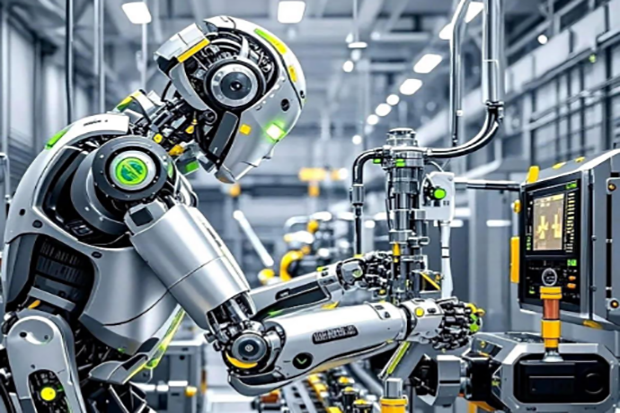
Pre-Engineered vs Custom Robotic Welding Cells
Manufacturers choose between pre-engineered cells and custom-engineered solutions based on part variety, production volume, and process complexity. Each approach carries different cost structures and implementation timelines.
Pre-engineered cells are standardized configurations offered by system integrators and robot manufacturers. They include a robot, positioner, safety fence, and basic fixturing designed for common part geometries. Prices start around $85,000 for compact single-station systems with limited reach and simple two-axis positioners. Mid-range pre-engineered cells with dual-station configurations and automatic part shuttling cost $120,000-$180,000. These systems suit high-volume production of parts with consistent geometry, such as frames, brackets, and tube assemblies.
Custom-engineered cells are designed for specific part families and production workflows. Engineering hours, specialized fixturing, vision-guided seam tracking, and multi-robot coordination increase costs. A custom cell for medium-complexity parts typically costs $180,000-$280,000. Heavy fabrication cells with overhead gantry robots, large positioners, and integrated part handling exceed $350,000. Custom systems are justified when part mix changes frequently, weld access is challenging, or throughput targets cannot be met with standard configurations.
Deployment time also differs. Pre-engineered systems ship in 8-12 weeks and require 2-4 weeks onsite for installation and commissioning. Custom cells need 12-20 weeks for design, fabrication, and factory acceptance testing, plus 4-8 weeks for site installation and production validation. Delayed production during installation is a hidden cost that affects total project economics.
Hidden Costs in Robotic Welding System Integration
Capital equipment pricing rarely includes every expense required to bring a robotic welding cell into production. Integration costs cover facility modifications, utilities, material handling, programming, and workforce training.
Facility modifications include floor reinforcement for cell weight, electrical service upgrades for welding power and robot controllers, and ventilation or fume extraction systems. Electrical work alone costs $5,000-$15,000 depending on distance from the main panel and local code requirements. Fume extraction for MIG welding adds $8,000-$20,000 for ducting, filters, and exhaust fans. These expenses are project-specific and not included in standard cell quotations.
Material handling integration is often underestimated. Parts must be presented to the cell, and finished assemblies must be removed. Manual loading is labor-intensive and limits throughput. Conveyor integration costs $10,000-$30,000. Automated guided vehicles or cobot-assisted part shuttling systems add $40,000-$80,000. If existing fixtures cannot be adapted, new tooling design and fabrication costs $5,000-$25,000 per fixture set.
Programming and process development take time. While robot manufacturers provide offline programming software, translating CAD models into optimized weld paths requires skilled personnel. Initial programming for a new part family takes 20-60 hours. If the system integrator provides this service, expect $8,000-$20,000 in engineering charges. Alternatively, training internal staff on robot programming costs $3,000-$6,000 per person for a week-long course, plus ongoing time for program refinement.
Workforce training extends beyond robot operation. Maintenance staff need training on robot mechanics, servo drives, and welding power sources. Operators require instruction on fixture loading, program selection, and quality inspection. A comprehensive training package costs $5,000-$12,000 and should be included in project budgeting.

Ongoing Operating Costs and Maintenance
Total cost of ownership includes expenses that accumulate over the system's working life. Robotic welding cells operate 10-15 years with proper maintenance, and annual operating costs range from 8-12% of the initial capital investment.
Consumable costs include welding wire, shielding gas, contact tips, nozzles, and anti-spatter spray. A cell running two shifts consumes $12,000-$25,000 in welding materials annually depending on wire feed rates and duty cycle. Contact tips and nozzles require replacement every 40-80 hours of arc time, adding $2,000-$4,000 per year. Gas costs vary by region and welding process, with argon-CO₂ blends costing $8-$15 per cylinder.
Preventive maintenance is essential for uptime. Robot manufacturers recommend lubrication and inspection every 2,000-3,000 operating hours. Annual maintenance contracts cost $4,000-$8,000 and include onsite visits, firmware updates, and priority parts access. Without a service contract, unplanned downtime and emergency repair costs can exceed $15,000 per incident.
Utility consumption includes electrical power for the robot, welding power source, positioners, and fume extraction. A typical cell draws 30-50 kW during operation. At industrial electricity rates of $0.08-$0.12 per kWh, annual energy costs are $6,000-$12,000 for two-shift operation. Compressed air for torch cleaning and gas valves adds $500-$1,200 annually.
Software licensing and updates are often overlooked. Offline programming software requires annual subscriptions of $1,500-$3,000 per seat. Advanced features like collision detection, adaptive welding, and production monitoring may require additional license fees of $2,000-$5,000 per year.
Calculating Return on Investment
Justifying robotic welding cell cost requires comparing total investment against measurable operational improvements. ROI calculations should include labor savings, throughput gains, quality improvements, and reduced rework.
Labor savings are the most direct benefit. A robotic cell replaces 1-2 welders per shift depending on part loading requirements. At an average welder cost of $55,000-$75,000 per year including benefits and overhead, a two-shift cell saves $110,000-$150,000 annually. However, one operator is typically required for part loading and supervision, reducing net labor savings to $80,000-$120,000 per year.
Throughput improvements come from higher arc-on time and faster travel speeds. Manual welders achieve 20-35% arc-on time due to setup, positioning, and fatigue. Robotic cells achieve 60-75% arc-on time. For applications with 30 seconds of weld time per part, a robot can produce 60-80 parts per hour compared to 25-35 parts manually. Increased output supports revenue growth or eliminates outsourcing costs.
Quality improvements reduce scrap and rework. Consistent travel speed, wire feed, and torch angle deliver repeatable penetration and bead appearance. Rework rates drop from 5-10% to under 2%. For high-value assemblies, eliminating one rejected part per week saves $15,000-$40,000 annually depending on material and labor content.
Payback periods typically range from 18 months to 36 months. High-volume applications with expensive manual labor see faster returns. Low-volume job shops with frequent changeovers may require 3-5 years to recover investment, making turnkey solutions that include process optimization more economically viable.
How Robot Size and Welding Process Affect Cost
Robot selection is a trade-off between capability and cost. Payload capacity, reach, and process-specific features directly influence pricing.
A compact robot with 6 kg payload and 1.4 m reach costs $35,000-$50,000. These robots suit light-duty MIG welding of thin sheet metal parts with simple fixturing. A mid-range robot with 10 kg payload and 1.8-2.0 m reach costs $45,000-$65,000 and handles most general fabrication work. Heavy-duty robots with 20 kg payload and 2.4-2.8 m reach cost $65,000-$90,000 and are required for large assemblies or dual-torch configurations.
Welding process requirements add specific features. TIG welding demands high path accuracy and smooth motion, requiring robots with advanced servo tuning and vibration damping. These process-optimized robots cost 10-15% more than standard models. Laser welding integration requires precise beam alignment and high-speed communication with the laser source, adding $8,000-$15,000 to robot controller costs.
Collaborative robots (cobots) are gaining adoption in welding applications with frequent part changes and limited floor space. Cobots operate without full safety fencing when speed and force are limited, reducing cell footprint and installation costs. However, cobot welding systems still cost $80,000-$150,000 due to specialized torch designs, safety-rated control systems, and process-specific software.
| System Type | Typical Cost Range | Best Suited For |
|---|---|---|
| Pre-engineered single station | $85,000 - $140,000 | High-volume, simple geometry |
| Pre-engineered dual station | $140,000 - $220,000 | Medium volume, standard parts |
| Custom single station | $150,000 - $280,000 | Complex parts, frequent changes |
| Custom multi-station | $280,000 - $450,000+ | High-mix, large assemblies |
Evaluating Suppliers and System Integrators
Supplier selection affects not only upfront robotic welding cell cost but also long-term support, parts availability, and system performance. Buyers should evaluate integrator experience, regional service networks, and post-sale support capabilities.
System integrators vary widely in specialization. Some focus exclusively on welding and offer deep process knowledge. Others provide broad automation services across multiple applications. Integrators with dedicated welding engineering staff deliver better fixture designs, optimized weld parameters, and faster troubleshooting. Ask for references in your specific industry and part type.
Regional service availability is critical for minimizing downtime. Integrators with local technicians respond faster to breakdowns and provide onsite training. International suppliers may offer lower equipment costs but longer lead times for spare parts and higher travel expenses for service calls. Balance equipment price against total lifecycle support costs.
Warranty terms and post-sale support differ significantly. Standard warranties cover 12-18 months on robot hardware and 90 days on integration labor. Extended warranties and service contracts add 3-5% annually to the total system cost but guarantee response times and parts availability. Evaluate support packages based on internal maintenance capabilities and production criticality.
When sourcing from international suppliers, factor in logistics, customs, and localization requirements. Equipment from Chinese manufacturers often costs 20-30% less than European or North American brands but requires careful attention to electrical standards, control system languages, and local after-sales support networks. IndustryApex supplies industrial equipment and complete production systems from China, with professional engineers reviewing selection, integration and project delivery requirements.
Buyer Checklist: Evaluating Robotic Welding Cell Cost
- Define part geometry, material thickness, weld length, and required throughput before requesting quotations
- Include facility modifications, utilities, material handling, and training in total project budget
- Request itemized quotations that separate robot, peripherals, integration labor, and commissioning
- Evaluate pre-engineered vs custom options based on part variety and production volume
- Verify integrator experience with your welding process and part type through customer references
- Assess regional service availability and spare parts lead times for ongoing support
- Calculate total cost of ownership including consumables, maintenance, and utilities over 10 years
- Compare labor savings, throughput gains, and quality improvements against total investment for ROI analysis
- Confirm compliance with safety standards (ISO 10218) and local electrical codes
- Plan for operator and maintenance training as part of project implementation
Frequently Asked Questions
What is the typical lifespan of a robotic welding cell?
Industrial welding robots operate reliably for 10-15 years with proper preventive maintenance. The robot arm and controller represent the longest-lived components. Welding power sources typically last 8-12 years. Positioners and fixtures may require refurbishment or replacement at 7-10 years depending on duty cycle. Software and control systems may need upgrades every 5-7 years to maintain compatibility with production management systems. Total lifecycle costs should account for major component replacement and technology refresh.
Can a robotic welding cell handle multiple part types?
Yes, but part changeover efficiency depends on fixture design and programming flexibility. Pre-engineered cells with fixed tooling suit 1-3 similar part families. Custom cells with modular fixtures and offline programming support 5-15 part types with changeover times of 15-60 minutes. High-mix applications benefit from quick-change fixture systems, which add $12,000-$30,000 to cell cost but reduce setup time. Vision-guided systems with seam tracking can adapt to part variations without fixture changes, adding $15,000-$40,000 to integration costs.
What ongoing training is required for robotic welding systems?
Operators need initial training on fixture loading, program selection, and basic troubleshooting, typically 2-5 days. Maintenance staff require robot-specific training on mechanical systems, servo drives, and welding equipment, usually 5-10 days. Programmers need offline programming software training, 5-7 days, plus hands-on experience with path optimization. Annual refresher training and updates for new features take 1-2 days per role. Many integrators include initial training in the project cost, but ongoing education requires budget allocation of $2,000-$5,000 per year.
How does robotic welding cell cost compare to manual welding over time?
A robotic cell with $200,000 capital cost and $20,000 annual operating expenses totals approximately $400,000 over 10 years. Manual welding with two welders at $65,000 each per year costs $1,300,000 over the same period, excluding benefits and overhead. However, the robot requires upfront capital investment, facility modifications, and ongoing maintenance. ROI is positive when labor savings, throughput gains, and quality improvements exceed total lifecycle costs, typically within 18-36 months for high-volume applications.
What factors increase robotic welding cell cost the most?
Custom fixturing and part positioning equipment are the largest cost drivers beyond the robot itself, often accounting for 30-40% of total system cost. Multi-axis servo positioners, quick-change tooling, and vision-guided seam tracking each add $15,000-$50,000. Facility modifications including electrical upgrades, fume extraction, and material handling integration add another 15-25%. Integration labor for programming, testing, and commissioning represents 10-20% of total cost. Off-the-shelf pre-engineered cells minimize these variables but offer less flexibility.
Are used or refurbished robotic welding cells a viable option?
Used systems can reduce capital costs by 40-60% but carry risks. Robot mechanical components wear over time, and older controllers lack modern features like Ethernet connectivity and advanced motion planning. Spare parts for robots over 10 years old become scarce and expensive. Refurbished systems with updated controllers and rebuilt mechanical assemblies offer a middle path, costing 20-30% less than new. Evaluate used equipment based on documented operating hours, maintenance history, and availability of integrator support. For production-critical applications, new equipment with full warranty provides greater long-term value.
Conclusion
Robotic welding cell cost reflects the complexity and capability required for your specific application. Total investment includes not only the robot and peripherals but also integration, facility modifications, training, and ongoing maintenance. Pre-engineered systems starting at $85,000 suit high-volume production with consistent part geometry, while custom cells exceeding $300,000 provide the flexibility needed for complex assemblies and frequent changeovers. Accurate cost evaluation requires itemizing all components, understanding hidden integration expenses, and calculating total cost of ownership over the system's 10-15 year operational life. Return on investment is driven by labor savings, throughput gains, and quality improvements that justify the upfront capital commitment. For buyers navigating the complexities of international sourcing, equipment selection, and project implementation, working with experienced partners simplifies the process and ensures long-term success. Reach out through our contact page to discuss your robotic welding requirements and work directly with our professional engineers on the equipment configuration, integration requirements and project supply proposal.