
An inline inspection system needs a measurable acceptance rule, representative good and defective samples, controlled presentation and a reliable reject or hold process. IndustryApex engineers review imaging or test methods, line timing, identification and data interfaces to define the inspection boundary. Performance must be demonstrated on the agreed product mix.
Which production problem should this system solve?
Consider this route when missing components, incorrect assembly, unreadable codes, fill variation or visible defects create rework and customer complaints. Start by separating the defects that must be detected from normal product variation. Record how the present inspection makes a decision and what happens to a failed item. A camera specification or an AI label does not define the detection task. Product finish, lighting, motion, access and the smallest relevant feature all affect the proposed method.
Define the equipment and integration boundary
The supply boundary may include part presentation, illumination, optics, camera or sensor, processing, triggering, identification, reject handling and data exchange. Some defects require another method, such as weighing, leak testing or dimensional measurement. Specify who owns the defect catalogue, test samples, production recipes and host-system interface so an inspection result can be acted on and traced.
Compare the system routes for your application
| Route | Application fit | Decision to verify |
|---|---|---|
| Rule-based machine vision | A measurable feature, presence check or code requirement with controlled presentation. | Prove lighting, field of view, normal variation and the decision threshold. |
| Learning-based visual inspection | Appearance variation where a reviewed sample set can support model development. | Separate training from validation samples and record missed defects and false rejects. |
| Combined inspection and traceability | A product needs multiple checks and a record tied to its identifier. | Define identifier uniqueness, result association, reject confirmation and exception handling. |
Equipment modules and buying guides
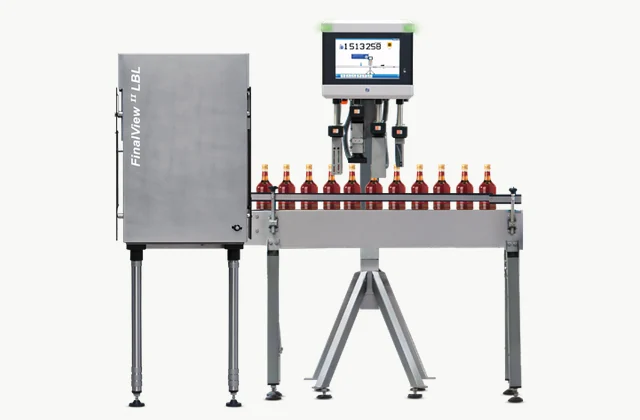
Packaging vision inspection system
Review the equipment boundary and configuration questions.
Reference: HEUFT FinalView II LBL

Industrial checkweigher
Review the equipment boundary and configuration questions.
Reference: Techik IXL-H high-speed checkweigher family

Barcode verifier
Review the equipment boundary and configuration questions.
Reference: Axicon 15500 barcode verifier
Actual manufacturer reference images show individual equipment modules, not an IndustryApex installation or a complete offered line. The project quotation confirms the equipment supplied.
How should the complete system be accepted?
Agree an independent validation set before the acceptance run. Record results by defect type, missed defects, false rejects and unclassified cases rather than one unexplained accuracy number. Repeat checks under relevant production variation, including position, surface finish and lighting changes. Challenge the reject device and identifier association as well as the inspection algorithm. Define how recipes and thresholds are approved after a product change.
Compare the complete project economics
Estimate value from the documented cost of scrap, rework, escapes and inspection effort. Avoid counting the same defect cost twice. Include sample preparation, lighting and fixtures, system integration, recipe maintenance, calibration or verification and data infrastructure. An estimated reduction in defects is an assumption until trials demonstrate it on an agreed sample population.
Use the procurement cost tools to organize explicit assumptions. Your own measured inputs and confirmed quotations determine the project budget.
Prepare your engineering project brief
- Defect catalogue with agreed acceptance and rejection examples
- Representative good, bad and borderline samples
- Product size, finish, variation and presentation at the station
- Line speed, spacing, triggers and available inspection time
- Required reject or hold action and confirmation method
- Existing PLC, barcode and manufacturing-system interfaces
- Record content, retention, permissions and retrieval needs
- Destination, installation environment and responsible quality personnel
Frequently asked questions
Does AI inspection remove the need for samples?
No. A reviewed sample set and clear defect definitions are still needed. Include normal variation and keep independent validation samples separate from model development where applicable.
Can a camera inspect every defect?
The method must match the physical defect and available access. Some requirements need weighing, leak testing, metrology or another technique instead of, or alongside, imaging.
Which performance figures should a quotation state?
Define the defect types, sample population, product mix and operating conditions, then state the required detection and false-reject criteria and how each will be tested.
Can results connect to our existing production system?
Submit the identifier structure, required records, protocols and exception rules. The quotation should state the interface deliverables and who owns the host-system work.
Can the system support OEM and ODM requirements?
IndustryApex reviews branding, documentation, tooling, controls and functional changes for the project. Feasibility, engineering work, validation, price and delivery are confirmed in the specific proposal.
What should I send to request an engineering assessment?
Send the application, representative product or process information, required output, site conditions, destination and planned timing. Our engineers use these inputs to define the next technical questions and proposed supply boundary.
Reference basis and project evidence
The following reference material informs the selection questions. It does not establish an IndustryApex project, a brand authorization or a performance promise.
- Cognex TestRun validation documentation
- Cognex image acquisition documentation
Request the technical evidence, sample tests and acceptance records for your proposed configuration. Reviewed 2026-10-22.
Explore all engineering solution areas ↗ · Browse the equipment catalogue ↗
Specify the complete production result.
Explore 1000 advanced equipment and system families across assembly, inspection, energy, resource recovery, precision processes and production lines.
Explore advanced systems ↗