

Compare CO2 laser configurations, integration requirements and supplier risks before buying a packaging laser cutting system for your production line.
Industrial buyers purchasing a packaging laser cutting system face a critical choice: select a configuration matched to production volume and material diversity, or accept underutilized capacity, format limitations and premature obsolescence. Most specification errors occur during the initial scoping phase, when buyers prioritize laser power or working area without evaluating automation compatibility, material throughput or the supplier's technical support infrastructure.
This packaging laser cutting system buying guide explains the selection criteria that determine long-term operational performance in packaging production environments. It addresses laser system configurations, CO2 source selection, integration requirements, component verification and supplier evaluation so procurement teams can issue requests for quotation based on production requirements rather than promotional claims.
Why Packaging Applications Require Specialized Laser Cutting System Configurations
Packaging laser cutting systems operate in production environments where material variety exceeds metal fabrication shops. A single shift may process 3mm acrylic for display stands, 0.8mm wood veneer for luxury box inlays, polyester textiles for bag prototypes and 400gsm paperboard for folding carton samples. Each material responds differently to laser wavelength, power density and assist gas selection.
CO2 lasers dominate packaging applications because the 10.6-micron wavelength is efficiently absorbed by organic materials. Fiber lasers, standard in metal cutting, reflect from non-conductive surfaces and deliver inconsistent edge quality on wood, acrylic and textiles. Buyers evaluating a packaging laser cutting system must confirm CO2 source type—sealed tube or RF-excited—and rated service life, which ranges from 6,000 hours for entry-level sealed tubes to 30,000+ hours for industrial RF units.
Working area selection depends on substrate format. Prototype shops cutting acrylic panels for point-of-purchase displays require 1300×900mm beds to handle full sheets without repositioning. Contract packagers producing short-run textile samples operate efficiently with 600×900mm formats that reduce floor space and initial investment. Buyers must calculate material utilization rates and changeover frequency before specifying bed dimensions.
Material Compatibility and Edge Quality Requirements
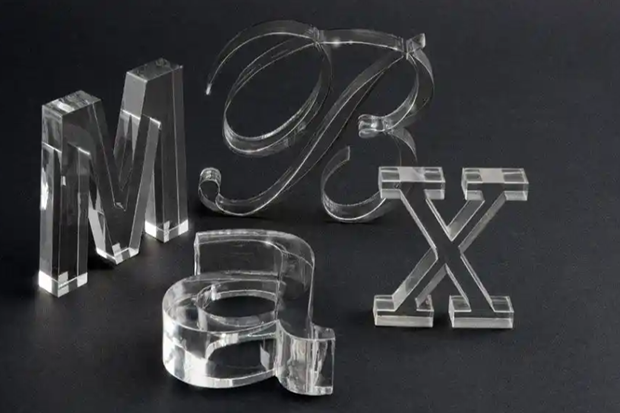
Edge finish drives configuration decisions in packaging production. Acrylic cutting for display applications demands flame-polished edges with minimal re-work, requiring higher power density and controlled feed rates. Acrylic processing systems typically operate at 80-100W with air assist to prevent discoloration. Wood veneer cutting for box inlays tolerates slight char but requires precision kerf control to maintain joint fit, usually achieved at 60-80W with nitrogen assist.
Textile cutting introduces additional variables. Synthetic fabrics melt rather than vaporize, requiring precise power modulation to prevent edge fusion. Natural fibers char at lower thresholds, demanding exhaust systems capable of removing particulate without losing cut quality. Buyers must request material test cuts on their actual production substrates, not generic samples, to verify achievable edge quality and throughput.
Core Selection Criteria for Packaging Laser Cutting System Procurement
Industrial procurement teams evaluate packaging laser cutting systems across six technical dimensions: laser source specifications, motion control architecture, exhaust and fume extraction capacity, control software compatibility, automation integration options and supplier technical support infrastructure. Each dimension affects operational cost and production flexibility.
Laser Source and Power Selection
CO2 laser power for packaging applications typically ranges from 40W for paper and thin textiles to 150W for thick acrylic and dense hardwoods. Power selection follows material thickness and production volume requirements. A 60W sealed CO2 tube cuts 3mm acrylic at 15-20mm/s, suitable for prototype shops processing 20-30 parts daily. A 100W RF-excited CO2 laser cuts the same material at 35-50mm/s, supporting production runs of 200+ parts per shift.
Sealed CO2 tubes cost less initially but require replacement every 6,000-10,000 operating hours. RF-excited CO2 lasers carry higher capital cost but deliver 30,000+ hour service life with stable power output. Buyers must calculate total cost of ownership over a 5-year production horizon, including tube replacement labor, recalibration downtime and power stability impact on scrap rates. For detailed CO2 laser specifications, procurement teams should request source manufacturer documentation, not reseller datasheets.
Motion Control and Positioning Accuracy
Packaging applications demand positioning accuracy of ±0.05mm to ±0.1mm to maintain register across multi-layer cuts and ensure consistent joint fit in assembly operations. Motion systems use belt-driven, rack-and-pinion or linear motor configurations. Belt-driven systems offer adequate accuracy for prototyping and sample production at lower cost. Linear motor systems deliver superior repeatability for high-volume production but increase capital investment by 30-50%.
Buyers must verify motion control specifications during factory acceptance testing. Request cutting tests on registration targets with measured kerf width, corner radius and positional deviation across the full working area. Systems that meet specification at bed center but drift at extremes indicate insufficient mechanical rigidity or calibration problems.
Exhaust, Filtration and Fume Extraction Requirements
Organic material cutting generates combustible fumes, particulate and volatile compounds that require continuous extraction. Inadequate exhaust causes flame risk, contaminates optics and creates unsafe working conditions. Packaging laser cutting systems require exhaust flow rates of 800-1,500 cubic meters per hour depending on laser power and material type.
Filtration options include direct exhaust to exterior (requires local environmental compliance verification), activated carbon filtration for volatile organic compounds, or HEPA filtration for fine particulate. Buyers operating in urban facilities or shared manufacturing spaces must specify filtration systems capable of meeting local air quality regulations. Confirm filter replacement intervals, media cost and whether the supplier provides ongoing filter supply as part of the service agreement.
Integration, Installation and Operational Considerations
Packaging laser cutting system installation requires coordination across electrical supply, exhaust ducting, compressed air provision and control software integration. Buyers must allocate budget and lead time for site preparation beyond the machine purchase price.
Electrical and Compressed Air Requirements
Most packaging laser systems operate on single-phase 220-240V supply with 15-30A service depending on laser power. Higher-power RF systems may require three-phase supply. Compressed air at 6-8 bar provides assist gas for cutting and pneumatic actuation for motorized components. Buyers must verify existing facility capacity or budget for compressor installation, air dryer and distribution piping.
Control Software and File Format Compatibility
Packaging production requires integration with design software used by brand teams and agencies. Verify that the laser system's control software accepts common vector formats—DXF, AI, PDF—without conversion errors that alter dimensions or eliminate fine features. Request a demonstration using actual production files, not supplier-provided samples, to confirm compatibility.
Some systems include nesting software to optimize material utilization across mixed part sets. For high-volume production, this feature reduces material waste by 15-25% and should be evaluated as part of total cost of ownership. Buyers producing short-run custom work may prioritize fast job setup over automated nesting.

Decision Framework: Comparing Packaging Laser Cutting System Configurations
The table below organizes core selection criteria by production environment. Use it to identify the configuration range aligned with your material mix, volume and integration requirements before requesting detailed quotations.
| Criterion | Prototype / Sample Production | Short-Run / Custom Production | High-Volume Packaging Production |
|---|---|---|---|
| Laser Power | 40-60W sealed CO2 | 80-100W sealed or RF CO2 | 100-150W RF CO2 |
| Working Area | 600×400mm to 800×600mm | 900×600mm to 1300×900mm | 1300×900mm or larger with pass-through |
| Motion System | Belt-driven, ±0.1mm accuracy | Belt or rack-pinion, ±0.075mm | Linear motor, ±0.05mm repeatability |
| Exhaust / Filtration | Direct exhaust or portable filter | Integrated carbon + HEPA filtration | Centralized extraction with VOC control |
| Control Software | Basic vector import, manual nesting | Multi-format import, semi-auto nesting | Full CAD/CAM integration, automated nesting |
| Automation Integration | Manual load/unload | Motorized bed or conveyor option | Robotic load/unload, inline inspection |
Supplier Evaluation: Component Verification and Service Commitments
Packaging laser cutting system reliability depends on component quality and supplier technical support. Buyers must verify five areas before issuing a purchase order: laser source manufacturer and warranty terms, motion control and drive component sourcing, control system hardware and software update policy, spare parts availability and lead time, and field service response commitments.
Component Sourcing and Transparency
Request a complete bill of materials identifying the laser tube or RF source manufacturer, motion controller brand and model, stepper or servo motor specifications, and optical component suppliers. Systems using tier-one components—Coherent or Rofin laser sources, Beckhoff or Siemens motion controllers, THK or Hiwin linear guides—carry higher initial cost but lower long-term service risk. Systems using unbranded or unlabeled components create supply chain uncertainty when replacement parts are required.
Verify whether the supplier manufactures the complete system or integrates third-party subsystems. Integrated systems from established industrial machinery suppliers typically provide better component traceability and service coordination than turnkey assemblers sourcing from multiple subcontractors.
Material Test Cuts and Factory Acceptance Testing
Buyers should require material test cuts on actual production substrates before finalizing a purchase agreement. Send representative samples of acrylic, wood, textile and paperboard in the thicknesses and formats you will process. Specify required edge quality, cutting speed and tolerance targets. Evaluate test results for edge finish, dimensional accuracy, heat-affected zone width and consistency across multiple cuts.
Factory acceptance testing should include cutting accuracy verification using calibrated test targets, repeatability testing over extended run cycles and exhaust system airflow measurement. Document baseline performance metrics to establish warranty criteria and identify degradation during the equipment service life.
After-Sales Support and Training
After-sales support determines whether a packaging laser cutting system remains productive or becomes an idle asset during component failures or operational issues. Confirm the supplier's field service coverage in your region, typical response time for technical support requests and availability of spare parts with documented lead times.
Training should cover machine operation, routine maintenance procedures, optical alignment, parameter optimization for different materials and basic troubleshooting. Verify whether training is provided on-site during installation or requires travel to the supplier's facility. For multi-shift operations, request training for multiple operators and maintenance personnel to avoid single-point-of-failure knowledge gaps.
Practical Buyer Checklist for Packaging Laser Cutting System Procurement
Use this checklist during supplier evaluation and quotation review to ensure procurement specifications address operational requirements and risk factors:
- Confirm CO2 laser source manufacturer, power rating, expected service life and warranty coverage including tube replacement cost and labor
- Verify working area dimensions accommodate your largest substrates with margin for fixturing and edge clearance
- Request positioning accuracy specifications and factory acceptance test protocol with measurable performance criteria
- Evaluate exhaust system capacity, filtration options and compliance with local environmental regulations for your facility
- Confirm control software file format compatibility using actual production files from your design workflow
- Request detailed bill of materials identifying motion control, drive components and optical elements by manufacturer and model
- Obtain material test cuts on your production substrates with documented cutting speed, edge quality and dimensional accuracy
- Clarify after-sales support terms including field service response time, spare parts availability, remote diagnostic capability and training provisions
- Calculate total cost of ownership over 5 years including consumables (laser tube, optics, filtration media), maintenance labor and expected downtime
- For turnkey production integration, verify coordination protocols with your existing material handling, quality inspection and ERP systems
Frequently Asked Questions
What is the typical lead time for a packaging laser cutting system from order to installation?
Standard configurations from established suppliers typically require 8-12 weeks from purchase order to factory shipment, plus 2-4 weeks for sea freight and customs clearance for international buyers. Custom configurations with specialized working areas, integrated automation or non-standard exhaust systems may extend lead time to 16-20 weeks. Buyers should confirm current lead times during quotation review and factor installation, commissioning and operator training into project timelines.
How do I determine the correct CO2 laser power for my material mix?
Laser power selection depends on material thickness, required cutting speed and edge quality targets. As a general reference, 3mm acrylic requires 60-80W for production speeds of 15-25mm/s, 5mm acrylic requires 100-120W, and 10mm acrylic requires 130-150W. Wood processing applications follow similar power curves adjusted for density. Request material test cuts at your target production speed to verify power adequacy before specifying a system.
What maintenance is required to keep a packaging laser cutting system operational?
Daily maintenance includes cleaning protective windows and checking exhaust airflow. Weekly tasks include cleaning optics, verifying assist gas pressure and inspecting motion system lubrication. Monthly maintenance involves alignment verification, filter inspection or replacement and calibration checks. Sealed CO2 tubes require replacement every 6,000-10,000 hours; RF tubes require periodic regas every 20,000-30,000 hours. Buyers should request a maintenance schedule and consumable cost forecast during supplier evaluation.
Can a packaging laser cutting system integrate with existing production management software?
Most industrial laser systems support integration via standard protocols including TCP/IP network communication, OPC-UA for machine data exchange and file-based job transfer using shared network folders. Integration with ERP or MES systems typically requires custom middleware to translate job data, machine status and production counts between formats. Discuss integration requirements during quotation review and verify whether the supplier provides integration engineering support or relies on third-party system integrators.
What documentation should I request to verify component quality and warranty terms?
Request a detailed bill of materials identifying laser source manufacturer and model, motion controller brand, drive components and optical suppliers. Obtain the laser source warranty document specifying coverage duration, replacement terms and service obligations. Verify that motion components and control hardware carry manufacturer warranties separate from the system integrator's warranty. Confirm spare parts pricing, availability and lead time for critical components including laser tubes, optical elements, motion drives and control boards.
How do I evaluate supplier technical support capability before purchase?
Request references from existing customers operating similar systems in your region. Contact references to verify actual field service response times, parts availability experience and technical support quality. Ask whether the supplier maintains local service personnel or relies on third-party service agents. Confirm remote diagnostic capability and whether technical support is available during your production shifts. For international purchases, verify customs and import procedures for spare parts to avoid extended downtime during component replacement.
Conclusion
A packaging laser cutting system buying decision requires systematic evaluation of CO2 laser configuration, motion control precision, exhaust capacity and supplier service infrastructure. Buyers who verify component sourcing, obtain material test cuts on actual production substrates and confirm after-sales support commitments reduce operational risk and total cost of ownership. Specification decisions must align with production volume, material diversity and integration requirements rather than isolated performance metrics or promotional claims.
For assistance evaluating system configurations or coordinating factory acceptance testing, contact IndustryApex to discuss your packaging production requirements with technical specialists familiar with international industrial procurement.
Sources
- Kasu Laser — Laser Cutting Machine Buying Guide: 12 Selection Factors (referência técnica)
- GWEIKE — How to Evaluate a Laser Cutting Machine Manufacturer (referência técnica)
- The Fabricator — A guide to finding the right industrial laser cutting machine (referência técnica)
- RP Photonics — Laser Cutting: Buyer's Guide & Supplier List (referência técnica)