
Learn which CO2 laser cutting machine specifications affect capacity, quality, and integration—plus practical criteria for acceptance testing.
When you evaluate a CO2 laser cutting machine, the data sheet gives you power, bed size, and speed. But those numbers alone won't tell you whether the machine will cut 10 mm acrylic cleanly at your production rate, integrate with your ERP system, or survive three-shift operation in a humid climate. Real specification evaluation translates technical parameters into capacity, quality consistency, integration capability, and long-term operational cost.
Quick answer: CO2 laser cutting machine specifications must be assessed across five dimensions: optical and mechanical precision, thermal and gas management, control and integration capability, structural durability, and operator safety. Effective buyers verify claimed tolerances through sample cuts, map specifications to their material mix and throughput targets, and confirm that cooling, extraction, and motion systems are specified for continuous operation rather than laboratory conditions.
Core Optical and Mechanical Specifications That Define Cutting Capability
The laser source defines the upper boundary of what the machine can cut. CO2 laser power typically ranges from 40 watts for engraving-focused systems to 400 watts or more for industrial cutting. But the useful cutting capacity depends on beam quality, focus spot diameter, and motion system accuracy working together.
Laser Source Parameters
CO2 laser tubes are available in sealed metal-ceramic designs and glass tube configurations. Metal-ceramic RF-excited tubes deliver stable power over 20,000 to 40,000 hours of operation with minimal maintenance. Glass tubes cost less but require more frequent replacement and are sensitive to mounting alignment. Beam quality, expressed as M² factor, affects the minimum achievable spot size—a critical parameter for fine detail and thin material cutting.
Power stability matters more than peak power. A machine rated at 150 watts with ±3% stability will deliver more consistent edge quality than a 180-watt system with ±8% fluctuation. Verify whether the rated power is measured at the tube output or at the workpiece after all optical losses.
Motion System and Positioning Accuracy
Positioning accuracy and repeatability determine whether the machine can hold tolerances across a full shift. Industrial CO2 systems typically specify positioning accuracy between ±0.05 mm and ±0.15 mm, with repeatability one-third to one-half of that value. These figures apply to the unloaded machine at room temperature; loaded accuracy under production conditions can degrade.
Drive systems use stepper motors for economy or servo motors for higher speed and closed-loop control. Linear guide quality, belt or rack-and-pinion drive type, and frame rigidity all contribute to whether the machine maintains specification under acceleration, thermal expansion, and over time. Request test cuts that include small circles, sharp corners, and repeated geometry to assess real-world accuracy.
Thermal Management and Gas Flow Specifications
A CO2 laser generates significant heat in the tube, optics, and workpiece. Inadequate thermal management causes power drift, focal shift, and shortened component life. Gas flow—both assist gas at the cutting head and tube gas in sealed systems—directly affects cut quality and operating cost.
Cooling System Capacity
Water chillers must remove heat continuously without temperature fluctuation. Specify chiller capacity in watts or BTU/hr, and verify that it matches or exceeds the laser tube's heat load plus a 20% margin. Industrial chillers include temperature control within ±1°C, flow monitoring, and automatic shutdown if cooling fails. Systems operating in warm or dusty environments need larger radiators and sealed coolant loops.
Inadequate cooling causes the tube temperature to rise during long cuts, reducing power output and shortening tube life. If the specification lists only chiller capacity without temperature stability, request thermal performance data under sustained load.
Assist Gas and Extraction Requirements
Assist gas—compressed air, nitrogen, or oxygen—removes molten material and combustion products from the kerf. Gas type and pressure are material-dependent: air works for wood and acrylic, nitrogen prevents oxidation on acrylics and textiles, and oxygen accelerates cutting in some organic materials. The machine specification should list the required gas pressure range, flow rate, and purity level.
Fume extraction removes hazardous smoke and particulates. Extraction capacity, measured in cubic meters per hour (m³/h) or cubic feet per minute (CFM), must exceed the volume generated by your fastest cutting process. Undersized extraction degrades cut quality, fouls optics, and creates a safety hazard. Verify that the extraction connection size and recommended fan capacity match your facility's extraction infrastructure.
Control System and Integration Specifications
The controller translates design files into motion commands and laser power modulation. Modern systems use DSP (digital signal processor) controllers or integrated PC-based systems. Specification clarity around file formats, software compatibility, network connectivity, and real-time control features determines how well the machine fits into your production workflow.
File Format and Software Compatibility
Check which vector formats the controller accepts natively: DXF, AI, SVG, PDF, and proprietary CAD formats are common. Some systems require conversion through bundled software, adding a step and potential quality loss. Direct import from CorelDRAW, AutoCAD, or Adobe Illustrator speeds workflow and reduces operator error.
Controller software should run on current operating systems—Windows 10, 11, or Linux distributions—and support network file transfer, USB, or Ethernet connectivity. Proprietary USB dongles or obsolete OS requirements create support and continuity risks. For industrial laser cutting machines in integrated production lines, Ethernet connectivity and documented communication protocols are essential.
Real-Time Control and Sensing
Advanced systems include capacitive height sensing to maintain focal position on warped or stacked materials, real-time power monitoring, and cut-through detection. These features improve yield and reduce scrap but add cost and complexity. Assess whether your application—precision acrylic signage versus high-volume textile cutting—justifies the investment.
Some controllers offer on-the-fly parameter adjustment, allowing operators to change speed or power mid-job without reloading files. This capability is valuable during material testing or when running mixed-batch production. Evaluate whether the controller logs job data, run time, and error codes for maintenance planning and quality traceability.
Structural and Environmental Specifications
Machine frame rigidity, working area size, material handling features, and environmental tolerances define the physical integration into your facility and the machine's durability over its service life.
Frame Construction and Working Area
Industrial frames use welded steel construction with vibration damping and thermal stability. Light-duty frames use aluminum extrusion or sheet metal, acceptable for prototyping or low-duty-cycle work but inadequate for continuous production. Frame deflection under cutting forces causes positioning error and inconsistent edge quality.
Working area is specified in X-Y dimensions, typically 600×400 mm, 1300×900 mm, or larger. Verify whether the specification refers to maximum material size or actual cutting area after accounting for edge clearances and fixturing. Pass-through designs allow cutting of continuous materials like textiles or roll stock, but require additional extraction and safety interlocks.
Material Handling and Fixturing
Honeycomb or slat bed designs support sheet materials; pin tables, vacuum hold-down, or pneumatic clamps secure parts during cutting. For thick or heavy materials, motorized Z-axis adjustment is necessary to maintain focus position. If you plan to cut stacked materials or use jigs, confirm that the Z-clearance and bed load capacity accommodate your setup.
Automatic loading systems, rotary attachments for cylindrical engraving, and camera-based registration are available on higher-end systems. Match these features to your production volume and labor cost; a manually loaded machine may be more cost-effective for low-volume custom work.

Decision Framework: Matching Specifications to Production Requirements
A specification sheet lists what the machine can do under ideal conditions. Your procurement decision must account for your material mix, production volume, quality standards, integration constraints, and total cost of ownership. The following framework translates specifications into operational capability.
Material and Thickness Range
List every material type and thickness you will cut, including occasional or future materials. Cross-reference each against the machine's power, assist gas options, and recommended speed ranges. For example, a 100-watt CO2 laser cuts 10 mm acrylic at moderate speed, 5 mm wood quickly, and 1.5 mm fabric at high speed. Attempting to cut 15 mm acrylic will exceed the machine's capacity, resulting in poor edge quality or incomplete cuts.
Request sample cuts in your actual materials—not generic samples—before purchase. Evaluate edge finish, perpendicularity, heat-affected zone, and cutting speed. If the vendor cannot provide material-specific cutting data, consider it a gap in their process knowledge or machine capability.
Throughput and Duty Cycle
Calculate the cutting time required for your typical job mix and compare it to the machine's duty cycle rating. Duty cycle—often expressed as a percentage or hours per day—indicates how long the machine can run before requiring cooldown or maintenance. A machine rated for 50% duty cycle (12 hours per day) may overheat or wear prematurely if used continuously.
Factor in setup time, material loading, and job changeovers. A faster machine with a cumbersome file transfer process may deliver lower throughput than a moderate-speed system with streamlined workflow. For high-volume work, consider whether you need multiple machines or a single high-capacity system.
Quality and Tolerance Requirements
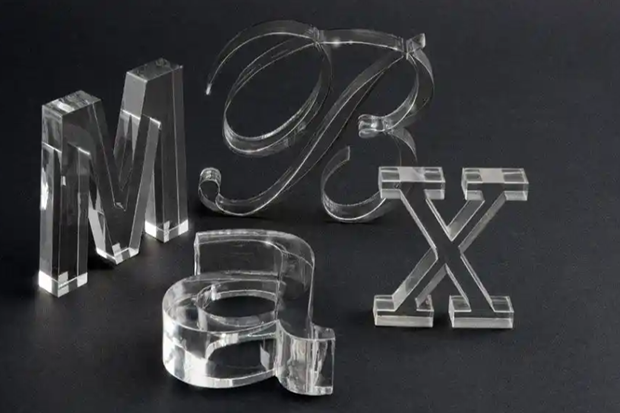
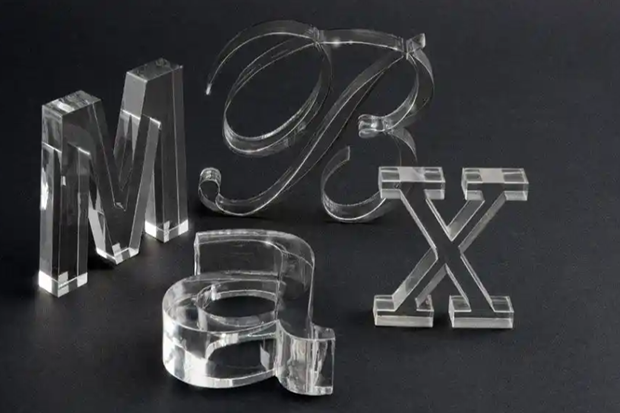
Define your acceptable tolerance envelope for dimensional accuracy, edge finish, perpendicularity, and repeatability. If your parts require ±0.05 mm tolerance, specify machines with positioning accuracy of ±0.03 mm or better to account for process variation. If edge finish is critical—such as for acrylic laser cutting in display applications—evaluate heat-affected zone and surface roughness on sample cuts.
Quality consistency over time depends on calibration procedures, wear part replacement intervals, and environmental control. Ask vendors how often the machine requires recalibration, what calibration tools are included, and whether field calibration requires vendor service or can be performed by trained operators.
Practical Buyer Checklist: Specification Validation
Use this checklist to verify that claimed specifications translate into operational capability:
- Laser source: Verify tube type (metal-ceramic or glass), rated power at workpiece, beam quality (M² factor), and expected service life with replacement cost.
- Motion system: Confirm positioning accuracy, repeatability, drive type (stepper or servo), and maximum acceleration. Request a test cut with small features and tight tolerances.
- Cooling system: Match chiller capacity to laser power, verify temperature stability (±1°C or better), and check for flow and temperature monitoring with automatic shutdown.
- Gas and extraction: List required assist gas types, pressure ranges, and flow rates. Confirm extraction capacity in m³/h or CFM and connection size.
- Controller: Verify supported file formats, OS compatibility, network connectivity, and real-time control features. Test file import and job setup workflow.
- Frame and bed: Assess frame rigidity, bed type (honeycomb, slat, vacuum), Z-clearance, and load capacity. Confirm working area dimensions account for edge clearances.
- Duty cycle: Verify rated operating hours per day and confirm it matches your production plan with a safety margin.
- Safety and compliance: Check for CE, FDA, or local regulatory marks. Verify interlocks, emergency stop function, and fume extraction compliance with local codes.
- Documentation: Request operation manual, maintenance schedule, spare parts list, and wiring diagrams in English or your preferred language.
- Training and support: Confirm initial training scope, remote support availability, spare parts lead time, and whether field service is available in your region.
Acceptance Testing and Long-Term Specification Validation
Acceptance testing verifies that the delivered machine meets specification before final payment and handover. A structured test plan protects your investment and establishes a performance baseline for warranty claims and future maintenance.
Functional and Performance Testing
Run a series of test cuts that exercise the full working area, minimum and maximum cutting speeds, and representative material types. Measure dimensional accuracy using calibrated instruments—not the machine's own readout. Check that corners are sharp, circles are round, and parallel lines remain parallel across the bed.
Test the cooling system under sustained load by running a long job and monitoring tube temperature and chiller performance. Verify that all safety interlocks—door switches, emergency stops, and extraction monitors—function correctly. Document any deviations from specification and resolve them before sign-off.
Documentation and Operator Training
Confirm that you receive complete documentation: operation manual, maintenance schedule, electrical and pneumatic schematics, controller software, and spare parts list. Documentation should be in English or your facility's working language, not machine-translated or incomplete.
Operator training should cover daily operation, routine maintenance, parameter adjustment, troubleshooting common issues, and safe handling of assist gases and fumes. For turnkey solutions, training should also include integration with upstream and downstream equipment, data logging, and production workflow.
Common Specification Pitfalls and How to Avoid Them
Several specification-related issues recur in CO2 laser procurement. Awareness helps you ask the right questions and negotiate appropriate warranties.
Optimistic Speed and Power Claims
Vendors sometimes list maximum cutting speeds or thicknesses achievable under ideal conditions—optimal material, fresh optics, and laboratory temperature control. Real production speeds are often 30-50% lower. Request speed data for your specific materials with tolerances and edge quality requirements, not theoretical maximums.
Similarly, laser power may be stated at the tube rather than at the workpiece. Optical losses through mirrors, lenses, and beam delivery reduce delivered power by 10-20%. Verify whether specifications refer to tube output or cutting head output.
Incomplete Environmental Specifications
Machines specified for 15-30°C operation may fail or perform inconsistently in hot or cold environments. Humidity affects electrical components and laser tube performance. If your facility operates outside standard laboratory conditions, request extended environmental specifications and verify that cooling and ventilation are adequate.
Ambiguous Integration and Communication Protocols
Generic statements like "Ethernet connectivity" do not guarantee compatibility with your ERP, MES, or CAM system. Request specific protocol documentation—Modbus, OPC-UA, RESTful API—and test data exchange before integration. For production environments, specify whether the controller supports job queuing, status reporting, and remote diagnostics.
Total Cost of Ownership Beyond Initial Specifications
Purchase price and headline specifications are only part of the decision. Long-term cost drivers include consumables, maintenance, energy, and downtime. A lower-cost machine with expensive or scarce replacement parts may cost more over five years than a higher-priced system with readily available consumables.
Calculate the cost per hour of operation, including laser tube replacement, optics cleaning and replacement, chiller maintenance, and assist gas consumption. Factor in the cost of training additional operators, software updates, and service contracts. For multi-shift operations, consider whether the vendor offers preventive maintenance programs and what their response time is for breakdowns.
Energy consumption varies with laser type, chiller size, and extraction fan power. A 150-watt CO2 laser system may draw 3-5 kW total when accounting for all ancillary equipment. In regions with high energy costs, this can represent a significant operating expense.
Frequently Asked Questions
What is the difference between CO2 laser tube types, and how do I choose?
Metal-ceramic RF-excited tubes offer longer life (20,000-40,000 hours), stable power, and minimal maintenance. They cost more initially but reduce long-term operating costs. Glass tubes are less expensive, suitable for light-duty or prototype work, but require more frequent replacement and careful alignment. Choose metal-ceramic for production environments and glass for low-volume or budget-constrained applications.
How do I verify that a machine's claimed accuracy matches real-world performance?
Request a test cut of your actual production geometry in your actual materials. Measure the parts with calibrated instruments—calipers, micrometers, or CMM—not the machine's software readout. Check dimensional accuracy, repeatability across the bed, and edge quality. Deviations from specification should be documented and resolved before purchase sign-off.
What cooling capacity is required for continuous operation?
Match chiller capacity in watts or BTU/hr to the laser tube's heat output plus 20% margin. Verify temperature stability within ±1°C and confirm that the chiller includes flow and temperature monitoring with automatic shutdown. Undersized or unstable cooling causes power drift, focal shift, and premature tube failure. For hot or dusty environments, specify larger radiators and sealed coolant loops.
How do I assess whether a controller will integrate with my existing systems?
Request documentation of supported file formats, communication protocols (Modbus, OPC-UA, REST API), and network connectivity options. Test file import, job setup, and data exchange with your CAM or ERP system before committing. For production lines, confirm support for job queuing, status reporting, remote diagnostics, and whether integration requires custom programming or is supported out-of-the-box.
What duty cycle rating do I need for three-shift operation?
For continuous three-shift operation, specify a duty cycle of 80-100% or a machine explicitly rated for 24/7 use. Machines rated at 50% duty cycle will overheat or wear prematurely under continuous load. Verify that cooling, motion components, and laser tube are rated for extended operation, and confirm the maintenance interval under continuous use.
What safety and compliance specifications should I verify?
Check for CE marking (Europe), FDA compliance (US), or local regulatory approvals relevant to your market. Verify that the machine includes door interlocks, emergency stop, laser safety class labeling, and fume extraction monitoring. Confirm that extraction capacity meets local occupational health and safety requirements and that the machine includes appropriate warnings and guarding for operator safety.
Conclusion
Evaluating CO2 laser cutting machine specifications requires translating data sheets into capacity, quality, and integration capability. Effective procurement goes beyond headline numbers to verify thermal management, motion accuracy, controller flexibility, and structural durability under your actual operating conditions. Sample cuts, acceptance testing, and clear documentation of environmental limits, duty cycle, and consumable costs protect your investment and ensure that the machine delivers long-term value.
Whether you are integrating a system for wood laser cutting, textile processing, or mixed-material production, specification clarity and validation reduce risk and accelerate production ramp-up. For help defining requirements, sourcing systems, or integrating laser equipment into your facility, contact our professional engineers for application assessment, equipment configuration and a project-specific supply proposal.
Sources
- Kern Laser Systems - Laser Cutting and Laser Cutter Guide: referência técnica
- ADH Machine Tool - Laser Cutting Specifications Calculation Guide: referência técnica
- Accurl - What is CO2 Laser Cutting Process, Applications, Cost and Settings: referência técnica