
Zipper pouches require opening equipment that handles the lower film section separately while keeping the zipper and seal area clean. Trial with the actual converter's bags, your product and agreed opening-failure, spill and seal-rejection rates. Request format-change records, clean-seal methods and verified bag-lot compatibility before committing to a system scope.
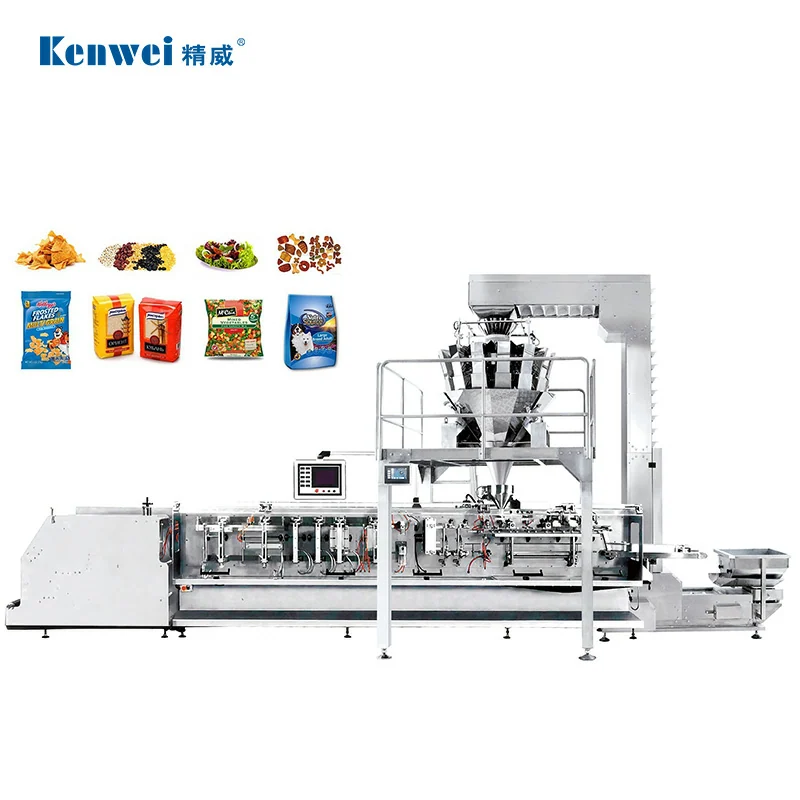
Shown as a configuration reference. Availability and the equipment offered for your project are confirmed separately.
Zipper opening changes the handling sequence
A premade zipper pouch is opened differently from a plain pouch because the upper zipper closure must remain intact while the lower film section is separated for filling. Equipment uses vacuum pads or mechanical grippers to pull the lower part of the bag while opening jaws engage the upper edge. Static, storage conditions and normal converter tolerances affect how reliably a bag separates. The zipper, notch position, material stiffness and any gusset all influence whether the machine achieves a clean opening without product contamination.
Weighing and packing systems for premade bags combine multihead weighing with horizontal pouch packaging [S1]. Format parts, opening devices and seal configurations must be confirmed for each pouch specification rather than assumed from a general category.
Trial boundary: opening, dosing and sealing together
An opening trial without product proves only part of the sequence. The full acceptance boundary includes bag pickup, opening confirmation, dosing, keeping the seal zone clean, final seal integrity and discharge without damage. Run trials with approved bag lots from the intended converter and the actual product. Record opening failures, unopened bags sent to dosing, spilled material, contaminated seal areas and finished seal performance over an agreed sample size.
Define the rejection rate that triggers a line stop or bag-lot rejection. A cosmetic opening does not establish that the seal area remains clean after filling sticky or fine material. Test the zipper function and perform the agreed seal or leak test after representative conditioning and handling. Retain sample packs, machine settings and the bag-lot identification for each accepted configuration.
Buyer input and evidence worksheet
| Input category | Buyer provides | Supplier confirms | Rejection condition |
|---|---|---|---|
| Pouch specification | Drawings, zipper type, notch, gusset, material, samples from converter | Compatible opening device, format parts, adjustment range | Bag does not open reliably or zipper is damaged during handling |
| Product characteristics | Flow, stickiness, fragility, largest pieces, bulk density, samples | Dosing method, transfer design, settling, seal-cleaning method | Product breaks, bridges, contaminates seal or spills during transfer |
| Weight and appearance | Target fill weight, tolerance, cosmetic acceptance, seal criteria | Dosing accuracy, clean-seal evidence, finished pack samples | Weight deviation, visible contamination or failed seal/leak test |
| Trial scope | Bag quantities, product shipment, trial duration, acceptance attendance | Test plan, sample retention, settings record, format-change demonstration | Opening failure rate, spill rate or seal rejection exceeds agreed limit |
| Format range | Smallest and largest pouch sizes, changeover frequency, magazine capacity | Format tooling list, adjustment records, changeover time, spare parts | Machine cannot accommodate size range or changeover exceeds target |
| Integration | Dosing equipment, feed conveyor, platform, discharge, air, power, extraction | Interface signals, layout drawing, stop/restart behavior, spill collection | Missing bag prevents product discharge or restart causes uncontrolled release |
Configuration questions to resolve before ordering
Ask how the proposed equipment confirms successful bag opening before allowing product discharge. A sensor or mechanical interlock should prevent dosing into an unopened or missing bag. Request the method for keeping the seal area clean when filling sticky, oily or fine material; options include air jets, wipers or vacuum. Clarify which parts are included for the smallest and largest pouch in your range and what additional items are sold separately.
Document how an unopened bag is rejected and where spilled product is collected during recovery. Define the bag-magazine capacity and replenishment procedure, including safe access during operation. Confirm air consumption, quality requirements and electrical supply for the actual opening and sealing options. Request the output conveyor design for unstable or heavy pouches; a hot seal can be damaged by rough handling immediately after sealing.
Compare handling options and system scope
Different machines use different opening devices. Some employ vacuum suction pads on the lower film with mechanical jaws at the top edge. Others use all-mechanical grippers. The choice affects compatibility with bag stiffness, static and manufacturing variation. Request demonstrations with your pouches rather than the manufacturer’s sample stock. Include normal converter tolerance and storage conditions in the trial rather than only fresh, ideal samples.
The complete system scope includes the bag packer, dosing equipment, product feed, working platform, air treatment, date coding, inspection and discharge conveyor at consistent definition. Add format-change parts, spare grippers, suction components, seal bars, cleaning tools, installation, trial support and training. Compare this total cost against the consumable pouch cost, rejected-bag rate from trials, changeover labor and any different material economics compared to roll-film alternatives.
Acceptance with real product and approved bag lots
Run the acceptance trial with approved pouch lots from the converter who will supply production bags, not generic samples. Use the actual product at each important weight and format. Record opening failures, spills, broken product, weight deviations, contaminated seals and finished appearance over the agreed sample size. Test zipper function where applicable and perform the defined seal or leak test after conditioning.
Include at least one bag-magazine replenishment cycle, a deliberate unopened bag to verify the interlock, and a restart after a downstream stop to confirm that the packer, dosing equipment and feed conveyor resume correctly. Verify that rejected bags are clearly identified and that spilled material is safely collected. Retain finished pack samples and machine settings for each format. An empty-bag cosmetic trial is insufficient; the final accepted result must include dosing, sealing and discharge under representative production conditions.
Customization and qualified configuration changes
Attach pouch drawings, zipper specifications, product samples, trial quantities and the line layout to your RFQ. OEM requests can include branding, operating languages and buyer-specific documentation. ODM changes to zipper opening, grippers, dosing transfer or inspection require a reviewed engineering scope, sample trials and documented acceptance criteria. Agree who owns bag-format tooling and which pouch modifications trigger new opening and sealing trials.
State the destination, local maintenance plan and required production records. Request current data sheets, included scope and relevant trial evidence for the exact proposed equipment configuration. Manufacturer references describe available features; compatibility with custom printed bags and the completed system’s performance require confirmation for the actual quoted arrangement.
For assistance with application assessment, equipment configuration and a project-specific proposal, discuss your zipper-pouch packing requirements with IndustryApex engineers.
Define your equipment requirements
Review the Premade pouch packing machine buying guide for the complete equipment scope.
Discuss this equipment project ↗ · OEM requirements · ODM requirements. Configuration and feasibility are reviewed for your application.
Explore the Premade pouch packing machine buying guide and RFQ checklist ↗
Frequently asked questions
How does zipper-pouch opening differ from plain-pouch handling?
Zipper pouches require equipment that opens the lower film section while keeping the upper zipper intact. Vacuum pads or grippers pull the lower part separately; opening jaws engage the top edge. Material stiffness, zipper type, notch position and any gusset all affect opening reliability. Trial with actual converter bags and verify that the zipper remains undamaged and functional.
What should a zipper-pouch filling trial include?
Run approved bag lots from the intended converter with real product. Record opening failures, spills, contaminated seal areas, weight deviations and finished seal performance over the agreed sample size. Test zipper function and perform the defined seal or leak test after conditioning. Include magazine replenishment, an unopened-bag interlock check and restart after a line stop.
How is the seal area kept clean when filling sticky or fine material?
Methods include air jets, wipers or vacuum systems. The equipment configuration must be confirmed for your product and pouch rather than assumed. Request demonstrations with your material and verify that the seal area remains free of contamination after filling. A clean opening does not guarantee a clean seal after dosing.
What bag inputs are needed for compatibility confirmation?
Provide pouch drawings with zipper type, notch position, gusset, material specification and samples from the converter who will supply production bags. Include normal manufacturing tolerance and storage conditions. Cosmetic compatibility does not prove reliable opening, clean filling and acceptable seal performance; trials with your product establish the full result.
What format-change parts should be included in the quotation?
Request parts for the smallest and largest pouch in your range, spare grippers, suction components, seal bars and cleaning tools. Ask for format-change records and adjustment procedures. Clarify which items are included and which are sold separately. Confirm changeover time and whether additional tooling is needed for intermediate sizes.
Can the same machine handle different zipper and gusset configurations?
It may, with the correct opening device, format parts and settings. Submit samples from each pouch variant and trial the actual range, including normal converter variation. Zipper type, notch location, gusset and material stiffness all affect handling. Request configuration confirmation and trial evidence rather than assuming broad compatibility from a category description.
Reference information
- JW-B13 Standard Premade Pouch Packing Machine for Puffy Food | Kenwei
Reference data and images explain equipment configurations. IndustryApex engineers confirm the offered model, specification and commercial scope in your project quotation.