
Injection molding scrap varies in thickness and shape. Beside-press granulators handle sprues and runners immediately; central units process mixed rejected parts. Match blade arrangement and screen openings to the thickest scrap and required particle size, then verify collection, dust control and cleanout access for the actual resin and color change frequency.
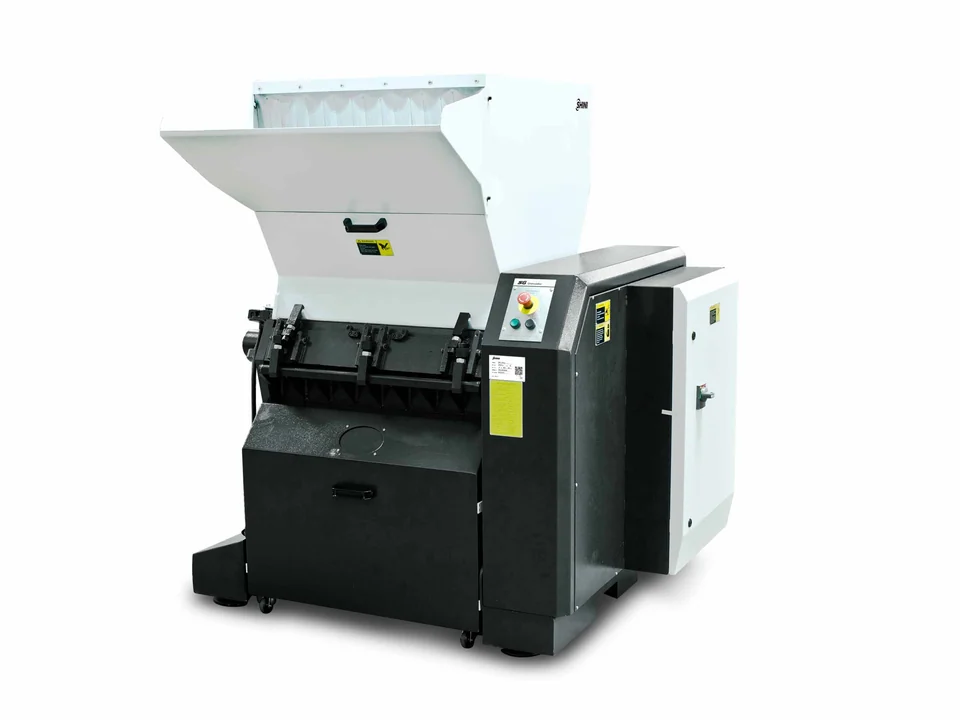
Shown as a configuration reference. Availability and the equipment offered for your project are confirmed separately.
Match granulator location to scrap presentation
Beside-press granulators sit next to individual molding machines and process sprues, runners and small parts immediately. Central granulators accept mixed rejected parts, often from multiple machines, and require manual or conveyor delivery. Beside-press placement avoids collecting and transporting bulky scrap but requires floor space at each press and dedicated collection. Central processing consolidates cutting and dust extraction in one location but needs a delivery system and storage for mixed scrap that preserves resin identity. Choose based on scrap volume per machine, floor layout, segregation requirements and whether immediate granulation simplifies material handling.
Define feed dimensions and blade arrangement
Provide the thickest wall section, largest sprue diameter and any hollow or ribbed part dimensions. Staggered blade designs decentralize cutting load and increase efficiency for varied scrap shapes [S1]. Paddle blade arrangements with increased inclination are intended for better cutting effect and lower noise [S1]. Request which rotor and blade configuration suits your thickest and toughest scrap. Verify blade material, sharpening arrangements and adjustment access for the actual scrap and contamination level rather than relying on nominal motor power.
Coordinate screen openings with regrind specifications
After materials are crushed by the blades, particles with size smaller than screen holes go through the screen and drop to the storage box [S1]. Smaller screen openings produce finer regrind but can reduce throughput, increase fines and cause heating from longer residence time. Provide the downstream molding or extrusion process’s particle size range and fines tolerance. Request representative trials with the proposed screen before accepting sustained throughput claims. Verify that the resulting regrind meets your particle distribution and fines limits at the stated rate.
Plan collection, dust extraction and resin changes
Show how granulated material will be collected—direct drop to a bin, pneumatic conveying or manual transfer. Define level alarms and interlock behavior so a full receiver stops the granulator before creating a blockage. Review dust extraction requirements, noise limits and floor access for blade and screen removal. Cleaning and color or resin changes require access to the cutting chamber and collection path under the manufacturer’s safe procedure. State electrical supply, control integration and any space reserved for maintenance. The collection system must preserve material identity; mixing resins or colors during transfer defeats an otherwise effective granulator.
Compare alternatives and request trial evidence
| Decision factor | Beside-press granulator | Central granulator | Evidence to request |
|---|---|---|---|
| Scrap source | Single machine sprues and runners | Mixed rejected parts from multiple machines | Scrap delivery method, segregation and volume per shift |
| Feed presentation | Immediate drop or short chute | Manual batch, conveyor or bin tipper | Largest piece dimensions, wall thickness and feed automation |
| Blade and rotor | Staggered or paddle design for varied thickness | Rotor for mixed and thick parts | Blade material, sharpening cycle and adjustment access for actual scrap |
| Screen and particle size | Screen matched to regrind use and fines tolerance | Screens for different resins or products | Trial regrind samples, particle distribution and fines measurement |
| Collection and dust | Dedicated bin or pneumatic line per machine | Centralized receiver and extraction system | Level alarms, interlock logic, dust control and noise at installation site |
| Cleaning and changeover | Frequent color changes, quick chamber access | Less frequent resin changes, larger cleanout volume | Chamber access procedure, purge material loss and downtime per change |
| Floor space and power | Multiple units, distributed power | Single unit, one power supply and extraction fan | Equipment footprint, electrical supply and maintenance access clearance |
Assess wear parts and lifetime cost
Include the granulator, any feeding equipment, receiver, dust extraction, controls and pneumatic conveying in the total project cost. Request blade life assumptions tied to the actual resin, thickness and contamination level rather than a universal operating-hours guarantee. Budget knife sharpening or replacement, screens, bearings and local service access. Compare accepted regrind output, fines, noise and power consumption measured during trials against the quotation. Freight, installation, training and spare parts should be included in the project scope. The lowest equipment price can become expensive if the resulting regrind requires additional processing, the blades need frequent service or maintenance access disrupts surrounding production.
Run acceptance trials with representative scrap
Acceptance should process the defined resin grades and scrap shapes, measuring accepted regrind, oversize particles, fines and contamination using agreed sampling methods. Record sustained throughput, any feed blockages, cleaning effort and material temperature where it affects reuse. Include a feed interruption and the expected resin or color change under the approved service procedure. Verify collection receiver behavior, level control response and inspect blade and screen identifiers against the offer. Retain input scrap and output regrind samples for later comparison. Processing thin sprues alone proves only one feed condition; thick or tough rejected parts need separate evidence before a combined throughput commitment is accepted.
Specify OEM and ODM requirements
Attach scrap photographs, dimensions, resin grade information and downstream regrind acceptance criteria to the inquiry. OEM requests may include branding, document languages and control panel labels. ODM work can involve special feed hoppers, custom rotor arrangements, automated scrap transfer systems or integrated collection equipment and should be reviewed through drawings and representative trials. Agree ownership of wear-part specifications and access to local blade sharpening or replacement service. Define which material or scrap changes require new trials and updated acceptance evidence. IndustryApex engineers work directly with customers on application assessment, equipment selection and configuration. Discuss the actual scrap and regrind requirements to receive a project-specific equipment solution and quotation.
For broader granulator selection guidance covering other plastic scrap types and applications, see the plastic granulator product guide. For OEM branding or ODM engineering changes, review the OEM and ODM process.
Define your equipment requirements
Review the Plastic granulator buying guide for the complete equipment scope.
Discuss this equipment project ↗ · OEM requirements · ODM requirements. Configuration and feasibility are reviewed for your application.
Explore the Plastic granulator buying guide and RFQ checklist ↗
Frequently asked questions
Should injection molding scrap be granulated beside the press or centrally?
Beside-press units handle sprues and runners immediately, avoiding scrap collection and transport. Central granulators process mixed rejected parts from multiple machines but require a delivery system and resin segregation. Choose based on scrap volume per machine, floor space, color change frequency and whether immediate cutting simplifies material handling.
Which scrap details affect blade and rotor selection?
Provide the thickest wall section, largest sprue or part dimensions, material toughness and any hollow or ribbed features. Request which blade arrangement suits your scrap and how blade material, sharpening and adjustment access match actual contamination and wear, rather than relying on motor ratings alone.
How do screen openings affect regrind quality and throughput?
Screens limit particle size by allowing crushed material through when smaller than the holes. Smaller openings produce finer regrind but can reduce throughput, increase fines and cause heating. Specify the downstream process's particle range and fines tolerance, then request trials with the proposed screen rather than accepting claimed rates without verification.
What collection and dust control interfaces need coordination?
Show how regrind will be collected—direct drop, pneumatic conveying or manual transfer. Define level alarms and stopping logic to prevent blockages. Review dust extraction, noise limits, electrical supply and floor access for blade and screen removal. The collection system must preserve resin and color identity through storage and transfer.
Which costs beyond the granulator affect the project total?
Include feeding equipment, receiver, dust extraction, controls, pneumatic conveying, blade sharpening or replacement, screens, bearings and local service. Compare accepted regrind, fines, energy and cleaning time from trials. Freight, installation, training and spare parts should be in the quotation.
What should acceptance trials measure for injection molding scrap?
Process the defined resin grades and scrap shapes, measuring accepted regrind, oversize, fines and contamination with agreed sampling. Record sustained throughput, blockages, cleaning effort and temperature where relevant. Test feed interruptions, color changes and collection behavior. Retain input and output samples. Thin sprues and thick rejected parts need separate evidence before combined throughput claims are accepted.
Reference information
- Standard Granulators | SHINI PLASTICS TECHNOLOGIES, INC
Reference data and images explain equipment configurations. IndustryApex engineers confirm the offered model, specification and commercial scope in your project quotation.