
A scroll air compressor should be selected using oil-free air demand, scroll-element staging and moisture control, with the receiving site and upstream or downstream equipment included in the discussion. Compare the proposed configuration, stated assumptions and a realistic acceptance trial together. Ask each supplier to identify exclusions, maintenance responsibilities and unresolved application questions. Define OEM branding separately from ODM integration changes so an altered machine is assessed against the same documented production requirement.
Compare scroll air compressor proposals around oil-free air demand, scroll-element staging and moisture control. Define the process boundary, supporting equipment and acceptance evidence before choosing a configuration. Send the same application details to each bidder and include project-specific OEM or ODM requirements in the initial inquiry.
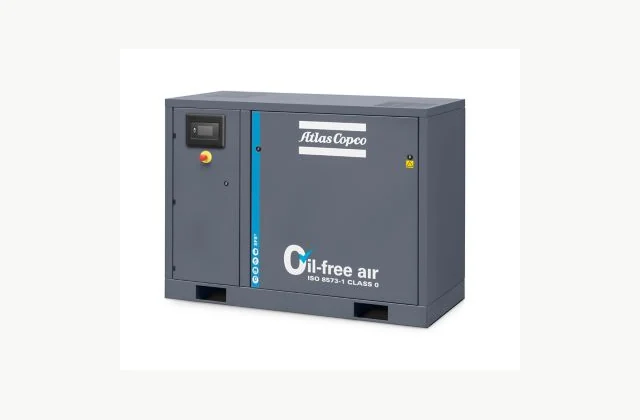
Shown as a configuration reference. Availability and the equipment offered for your project are confirmed separately.
Specify clean air at the user connection
An oil-free compression mechanism does not remove water vapor or particles from the incoming air. State the moisture, particle and oil requirements at the actual point of use, then define treatment and sampling responsibilities. Ask whether the offered scroll package includes a dryer, filters and drains. Judge the complete air train against the process rather than assuming one compressor feature guarantees every air-quality requirement.
List sensitive users separately, such as instruments or product-contact processes. Their requirements can differ from general workshop tools on the same site. Identify where air quality will be checked after distribution piping and storage, not only at the compressor discharge.
Compare delivered air and staging behavior
Build a demand profile showing simultaneous users, brief peaks and quiet periods. Ask for delivered flow at the required pressure using a stated rating basis. A multi-element scroll package can stage elements, but the useful control behavior depends on the exact arrangement. Review starting frequency, recovery after a peak and coordination with any existing compressor instead of sizing from installed motor power.
Check whether a receiver is part of the package or separately supplied. Ask the bidder to explain how its chosen storage and pressure band work with your demand sequence. Do not substitute theoretical displacement for the air that reaches operating equipment.
Identify what the enclosed package includes
Separate the compressor elements, enclosure, controls, receiver and treatment components. Confirm whether service can be performed on an element while the remaining package operates, if continuity is important. Ask which conditions or interlocks restrict that behavior. Identify common components that can still stop the whole system, including the control supply or downstream dryer, before assigning a redundancy benefit to multiple scrolls.
The Atlas Copco SF reference illustrates this product category, not an offer of that exact configuration. Match each quoted option to a model-specific schedule. A photograph of a complete cabinet does not reveal the treatment equipment or receiver included behind it.
| Decision | Requirement to state | Evidence to request |
|---|---|---|
| Capacity | Delivered flow at operating pressure | Declared rating basis and demand trial |
| Control | Peak demand and quiet periods | Observed element staging and recovery |
| Air quality | Moisture, particles and oil at user | Treatment boundary and sampling plan |
| Location | Ambient, intake and cooling routes | Installation clearances and ventilation schedule |
| Continuity | Required service availability | Model-specific isolation and common-fault review |
Check ventilation, intake air and location
Assess ambient temperature, intake cleanliness, cooling-air routes, sound requirements and maintenance access at the proposed location. An enclosed compact machine still releases heat and needs unobstructed airflow. Have the supplier define required clearances and permissible room conditions. Avoid placing an intake where it draws production dust, solvent vapors or hot exhaust from another machine.
Compare the proposed condensate route and electrical isolation arrangement with the site plan. If the compressor will serve a sensitive room, discuss vibration transmission and access during maintenance as well as the sound figure in a brochure.
Verify air delivery during a realistic demand cycle
Observe pressure and delivered air through a representative production sequence, including the largest normal simultaneous demand. Record element staging, starts and any pressure drop at a critical user. Where air quality matters, agree the sampling location and method separately. Inspect dryer operation, drains and alarms instead of treating stable unloaded pressure as proof that the entire compressed-air system is ready.
Training should include identifying an abnormal element, responding to a drain or dryer fault and obtaining approved service for the installed package. Keep the control settings and measured demand record with the handover so future production changes can be assessed sensibly.
Review OEM packaging without compromising service
OEM requests may include labels, document language and an agreed accessory package. ODM requests can involve controls, receiver integration, acoustic enclosure or a process skid. Require the compressor manufacturer or responsible integrator to review cooling, access and air-quality implications. Define responsibility for the revised package and its acceptance; branding must not obscure original component identification or service requirements.
Ask for wear-part identifiers, the element service procedure and local support arrangements for the selected configuration. Compare treatment consumables and scheduled maintenance with the same demand assumptions rather than extrapolating an advertised efficiency statement into a guaranteed operating cost.
The pictured manufacturer equipment and linked documents are technical configuration references. They do not imply authorized representation, stock availability, equivalent performance from another supplier or permission to relabel the pictured brand. Confirm the proposed equipment and commercial scope for the specific project.
What should your scroll air compressor RFQ include?
- Air users and simultaneous demand schedule
- Required user pressure and acceptable pressure variation
- Delivered flow basis and future demand assumptions
- Moisture, particle and oil requirements at the user
- Single or multi-element staging and continuity needs
- Receiver, dryer, filters and drain supply boundary
- Ambient temperature, intake contamination and cooling routes
- Electrical service, access and sound requirements
- Demand-cycle trial, sampling and service training
- OEM label or ODM enclosure, receiver and control integration review
Need OEM / ODM customization?
Submit branding, packaging, configuration or engineering requirements for this equipment. Include the target market, initial and annual quantities, required changes and acceptance criteria.
Customization feasibility, permitted branding, development responsibilities, minimum quantity, cost and lead time are reviewed for the proposed supplier and configuration before a quotation is confirmed.
Frequently asked questions
Does a scroll air compressor eliminate the need for a dryer?
An oil-free compression mechanism does not remove water vapor or particles from the incoming air. State the moisture, particle and oil requirements at the actual point of use, then define treatment and sampling responsibilities. Ask whether the offered scroll package includes a dryer, filters and drains. Judge the complete air train against the process rather than assuming one compressor feature guarantees every air-quality requirement.
How should I size a multi-scroll compressor?
Build a demand profile showing simultaneous users, brief peaks and quiet periods. Ask for delivered flow at the required pressure using a stated rating basis. A multi-element scroll package can stage elements, but the useful control behavior depends on the exact arrangement. Review starting frequency, recovery after a peak and coordination with any existing compressor instead of sizing from installed motor power.
What should a scroll compressor quotation itemize?
Separate the compressor elements, enclosure, controls, receiver and treatment components. Confirm whether service can be performed on an element while the remaining package operates, if continuity is important. Ask which conditions or interlocks restrict that behavior. Identify common components that can still stop the whole system, including the control supply or downstream dryer, before assigning a redundancy benefit to multiple scrolls.
Can a scroll compressor be installed beside production?
Assess ambient temperature, intake cleanliness, cooling-air routes, sound requirements and maintenance access at the proposed location. An enclosed compact machine still releases heat and needs unobstructed airflow. Have the supplier define required clearances and permissible room conditions. Avoid placing an intake where it draws production dust, solvent vapors or hot exhaust from another machine.
What should a scroll compressor acceptance test measure?
Observe pressure and delivered air through a representative production sequence, including the largest normal simultaneous demand. Record element staging, starts and any pressure drop at a critical user. Where air quality matters, agree the sampling location and method separately. Inspect dryer operation, drains and alarms instead of treating stable unloaded pressure as proof that the entire compressed-air system is ready.
Can a scroll air compressor support OEM or ODM requirements?
OEM requests may include labels, document language and an agreed accessory package. ODM requests can involve controls, receiver integration, acoustic enclosure or a process skid. Require the compressor manufacturer or responsible integrator to review cooling, access and air-quality implications. Define responsibility for the revised package and its acceptance; branding must not obscure original component identification or service requirements.
Reference information
- Atlas Copco: SF / SF+ scroll compressor family official product reference
- Atlas Copco official supporting product documentation
Reference data and images explain equipment configurations. IndustryApex engineers confirm the offered model, specification and commercial scope in your project quotation.