
A rubber extrusion line shapes uncured elastomer through a die and transfers the section toward cooling or curing. Compound scorch behavior, feed stability and section geometry govern the complete process window. Excessive residence or temperature can scorch compound inside the equipment. Review stoppages and cleanout as well as steady operation. Extrude the intended compound; measure section stability, surface and temperature and inspect the finished profile after the agreed cure or cooling route. OEM/ODM requests are assessed against the intended application, site interfaces and documented acceptance evidence; the reference photograph identifies a product family and does not confirm supply availability or an authorized brand relationship.
A rubber extrusion line shapes uncured elastomer through a die and transfers the section toward cooling or curing. Compound scorch behavior, feed stability and section geometry govern the complete process window.
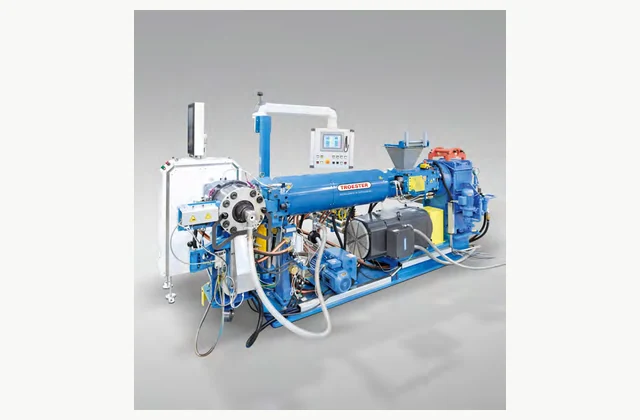
Shown as a configuration reference. Availability and the equipment offered for your project are confirmed separately.
What task does the rubber extrusion line need to perform?
A rubber extrusion line shapes uncured elastomer through a die and transfers the section toward cooling or curing. Compound scorch behavior, feed stability and section geometry govern the complete process window.
Excessive residence or temperature can scorch compound inside the equipment. Review stoppages and cleanout as well as steady operation.
How should compound and screw be specified?
Specify elastomer, viscosity, temperature sensitivity and feed form. Hot-feed, cold-feed and vented arrangements have different preparation and thermal-control boundaries.
Separate a proven operating case from options that still require development. Supply representative samples or site information and ask the bidder to explain how the proposed design addresses the difficult conditions and the intended process interfaces.
Which configuration choices affect die and downstream?
Provide the target section, tolerances and reinforcement requirements. Die swell, haul-off and cure shrinkage mean the die opening alone cannot establish finished dimensions.
| Decision | Evidence to compare | What the offer should clarify |
|---|---|---|
| Compound and screw | Specify elastomer, viscosity, temperature sensitivity and feed form. Hot-feed, cold-feed and vented arrangements have different preparation and thermal-control boundaries. | Included tools, input limits and the configuration needed for the stated duty. |
| Die and downstream | Provide the target section, tolerances and reinforcement requirements. Die swell, haul-off and cure shrinkage mean the die opening alone cannot establish finished dimensions. | Supporting services, process interfaces and any excluded development work. |
| Application acceptance | Extrude the intended compound; measure section stability, surface and temperature and inspect the finished profile after the agreed cure or cooling route. | Test method, inspection records, responsibility and treatment of deviations. |
What should be prepared before installation?
Provide compound feed, cooling or temperature-control services, guarded handling and alignment with curing or take-off equipment.
Include installation and service access in the quotation review. Confirm the working envelope and local connections against the real site, then agree the sequence for assembly, protective checks, training and first operation.
What evidence should establish application acceptance?
Extrude the intended compound; measure section stability, surface and temperature and inspect the finished profile after the agreed cure or cooling route.
Document the conditions needed for repeatability, including preparation and operator actions. Agree how unresolved defects are handled and which site checks must be repeated before the buyer signs off the complete application.
How should service and repeatability be planned?
Inspect screw, barrel, dies, seals and thermal circuits; retain compound-specific startup, shutdown and cleaning procedures.
Preserve setup, maintenance and verification records with the serial-number file. Training should cover safe cleaning, wear assessment and recovery, with responsibilities clear for any supporting equipment supplied by another party.
What can be customized through OEM or ODM?
Screws, dies, feed and downstream interfaces may be engineered; new formulations require extrusion and cure trials.
Submit the requested changes with the rubber extrusion line application, drawings and acceptance requirements. Distinguish standard options from new engineering and agree design ownership, validation, documentation and spare-part support before release. The illustrated manufacturer example is a technical reference; it does not establish stock, agency or permission to reproduce protected designs.
How should the quotation boundary be recorded?
Use the rubber extrusion line inquiry to list base equipment, tooling, auxiliary services, commissioning and training separately. Record unresolved assumptions about compound and screw and die and downstream before comparing prices. Keep the final configuration and accepted evidence together so later changes can be reviewed against a clear scope.
What should your rubber extrusion line RFQ include?
- Rubber extrusion line application and required finished result
- Compound and screw: Specify elastomer, viscosity, temperature sensitivity and feed form. Hot-feed, cold-feed and vented arrangements have different preparation and thermal-control boundaries.
- Die and downstream: Provide the target section, tolerances and reinforcement requirements. Die swell, haul-off and cure shrinkage mean the die opening alone cannot establish finished dimensions.
- Representative input variation and difficult operating conditions
- Application risks and exclusions: Excessive residence or temperature can scorch compound inside the equipment. Review stoppages and cleanout as well as steady operation.
- Site and supporting services: Provide compound feed, cooling or temperature-control services, guarded handling and alignment with curing or take-off equipment.
- Acceptance method and retained evidence: Extrude the intended compound; measure section stability, surface and temperature and inspect the finished profile after the agreed cure or cooling route.
- Maintenance and support scope: Inspect screw, barrel, dies, seals and thermal circuits; retain compound-specific startup, shutdown and cleaning procedures.
- OEM/ODM changes requested: Screws, dies, feed and downstream interfaces may be engineered; new formulations require extrusion and cure trials.
- Destination, local installation conditions and documentation language
- Drawings, samples, tooling ownership and revision control
- Operating sequence, changeovers, training and commissioning responsibilities
Need OEM / ODM customization?
Submit branding, packaging, configuration or engineering requirements for this equipment. Include the target market, initial and annual quantities, required changes and acceptance criteria.
Customization feasibility, permitted branding, development responsibilities, minimum quantity, cost and lead time are reviewed for the proposed supplier and configuration before a quotation is confirmed.
Frequently asked questions
What defines a suitable application for rubber extrusion line?
A rubber extrusion line shapes uncured elastomer through a die and transfers the section toward cooling or curing. Compound scorch behavior, feed stability and section geometry govern the complete process window. Excessive residence or temperature can scorch compound inside the equipment. Review stoppages and cleanout as well as steady operation.
What should the buyer specify about compound and screw?
Specify elastomer, viscosity, temperature sensitivity and feed form. Hot-feed, cold-feed and vented arrangements have different preparation and thermal-control boundaries. Include representative variation and ask the bidder to identify restrictions before selecting the offered configuration.
How should die and downstream be compared?
Provide the target section, tolerances and reinforcement requirements. Die swell, haul-off and cure shrinkage mean the die opening alone cannot establish finished dimensions. Confirm which tools, supporting services and operating conditions are included; require evidence for the actual application rather than an unloaded demonstration.
What acceptance test should be agreed for rubber extrusion line?
Extrude the intended compound; measure section stability, surface and temperature and inspect the finished profile after the agreed cure or cooling route. Agree the method, records and decision criteria before ordering, then retain the setup and results for repeatability checks after installation.
Which installation and service provisions need confirmation?
Provide compound feed, cooling or temperature-control services, guarded handling and alignment with curing or take-off equipment. Inspect screw, barrel, dies, seals and thermal circuits; retain compound-specific startup, shutdown and cleaning procedures. Allocate local preparations and specialist service to named parties before delivery.
Can the rubber extrusion line be customized through OEM or ODM?
Screws, dies, feed and downstream interfaces may be engineered; new formulations require extrusion and cure trials. Submit the requested changes and drawings for feasibility review. New engineering requires agreed validation and documentation; the reference image does not establish a supply or brand relationship.
Reference information
- Official technical document
- Extruded Profiles | TROESTER
Reference data and images explain equipment configurations. IndustryApex engineers confirm the offered model, specification and commercial scope in your project quotation.