
A rubber vulcanizing press should be selected from the compound, mold and finished-part requirements. Provide part dimensions, tolerances and the properties needed after curing, together with the compound supplier's processing information. Compression molding, transfer and injection molding are different process arrangements and should not be treated as interchangeable names for one press. State batch sizes, cavity count and how parts are loaded and removed. A press's nominal force does not establish cure quality.
Establish the rubber compound and curing objective
A rubber vulcanizing press should be selected from the compound, mold and finished-part requirements. Provide part dimensions, tolerances and the properties needed after curing, together with the compound supplier’s processing information. Compression molding, transfer and injection molding are different process arrangements and should not be treated as interchangeable names for one press. State batch sizes, cavity count and how parts are loaded and removed. A press’s nominal force does not establish cure quality. Temperature, pressure, venting and the actual mold sequence must be reviewed together to produce accepted seals, gaskets or other specified rubber parts.
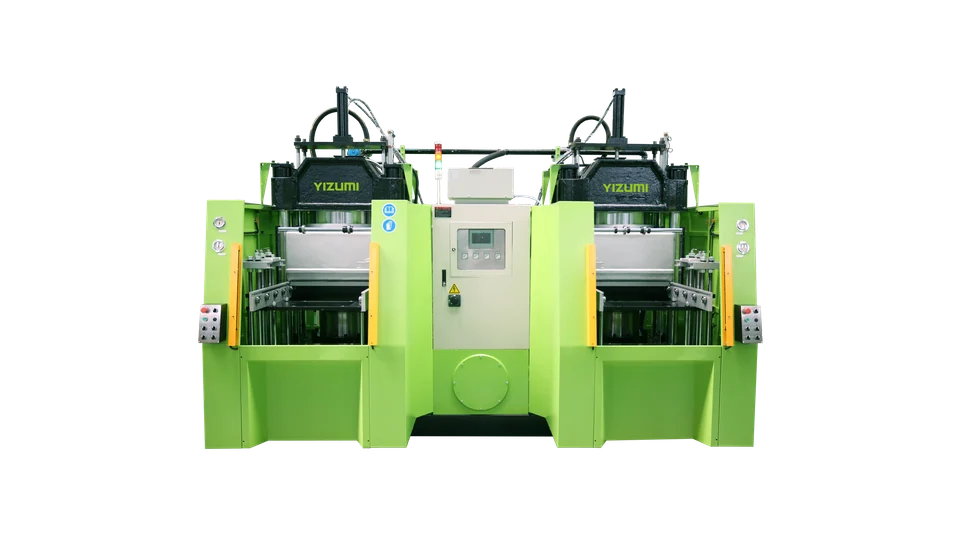
Shown as a configuration reference. Availability and the equipment offered for your project are confirmed separately.
Match platen, force and mold movement
The proposed platen dimensions, stroke, daylight and clamp force should suit the complete mold stack and load pattern. Ask for the heating arrangement and the method of demonstrating temperature uniformity at the defined operating condition. Vacuum or venting features may be relevant to the mold and compound and should be justified through trials. Define ejectors, demolding plates and tooling transfer rather than assuming manual removal is acceptable for every part. Multi-station presses need a clear sequence and separate responsibilities for each mold. Include recipe access and measurement points so process settings can be reproduced without relying on a single displayed temperature.
Plan tooling, handling and the hot work area
Show mold handling, loading, demolding, cooling and product inspection within the cell layout. Reserve access for tool changes and hydraulic or heating maintenance under the manufacturer’s safe procedure. State electrical supply, heating demand and any extraction or other site control identified by the responsible project review. Define interfaces with feeders, demolding equipment and downstream conveyors. Operators should have an agreed working position and controlled access to the pressing area. A bare press footprint cannot describe the space needed for hot molds, uncured material and completed parts awaiting inspection or cooling before handling.
Compare tooling and accepted-part economics
Include press, molds, heating, vacuum where quoted, demolding aids, controls and installation in the commercial comparison. Budget trial compound, startup losses, mold cleaning and wear components such as seals, heaters and sensors. Calculate good-part output from the validated cure and handling sequence, rather than substituting a faster machine movement for curing time. Ask for local hydraulic and electrical support and replacement-part identifiers. Tool ownership and repair responsibilities should be explicit. A lower press price may add labor or increase tool-change time, so compare the whole molding task with the required finished-part properties.
Verify the curing process with approved molds
Acceptance should run the intended compound and mold under the agreed process window. Check dimensional, appearance and functional requirements with the defined sampling and conditioning procedures. Record temperatures at the agreed points, pressure or force evidence, cure sequence and accepted output over a representative run. Include restart and recipe change where they form part of normal operation. Inspect demolding and tooling handling as well as the press motion. Keep material identifiers, sample parts and settings. Heating an empty platen or closing the mold once provides commissioning information, but cannot demonstrate that the buyer’s rubber part has cured to specification.
Request custom mold interfaces and controls
Attach compound data, part and mold drawings, cure targets and a cell layout to the RFQ. OEM requirements may cover branding, languages and project manuals. ODM scope can include custom platens, mold transfer, demolding, vacuum or coordinated stations and requires design review and part trials. Agree ownership of molds, recipes and special fixtures and how future compounds are validated. Identify destination installation and maintenance responsibilities. Manufacturer references illustrate press families; the exact offered machine should be assessed against the actual compound, mold and finished-part acceptance rather than a general tonnage claim.
Manufacturer configuration references
Review the linked manufacturer information as configuration references. Request the current sheet, included scope and relevant evidence for the exact proposed equipment; these references do not establish an IndustryApex supply relationship.
What should you include in your RFQ?
- Rubber compound and cure data
- Part drawing dimensions and tolerances
- Mold size mass cavities and stack
- Required clamp force pressure and travel
- Platen size temperature and uniformity
- Vacuum venting and demolding needs
- Curing cycle and accepted output
- Loading tooling and operator workflow
- Power heat extraction and floor layout
- Hydraulic service and spare heaters
- Tool ownership local installation and review
- OEM controls and acceptance protocol
For OEM / ODM requests, include the branding, packaging, configuration or engineering changes you need, initial and annual quantities, target market, sample approval and acceptance requirements. Feasibility and commercial scope are confirmed for the specific project.
Need OEM / ODM customization?
Submit branding, packaging, configuration or engineering requirements for this equipment. Include the target market, initial and annual quantities, required changes and acceptance criteria.
Customization feasibility, permitted branding, development responsibilities, minimum quantity, cost and lead time are reviewed for the proposed supplier and configuration before a quotation is confirmed.
Frequently asked questions
What should determine a rubber vulcanizing press?
Select from compound, cure data, mold geometry, cavity count and finished-part requirements. Assess temperature, pressure, venting and handling together; nominal press force does not establish accepted curing or substitute for the compound and tool review.
How do platen and mold details affect selection?
Platen size, daylight, travel and force must fit the whole mold and load pattern, with heating measured at agreed points. Define cooling, vacuum/venting and demolding interfaces and prove the proposed temperature uniformity under the specified operating condition.
What site and demolding interfaces need review?
Plan mold loading, demolding, cooling, inspection and tool changes, including safe maintenance access. Assign power, heating and any extraction needs for the compound/process, and coordinate feeders or transfer stations through a defined control sequence.
What belongs in complete rubber-press cost?
Include press, mold, heat/vacuum options, demolding, controls, utilities and commissioning. Add compound trials, mold cleaning, wear parts and local support. Compare accepted output from the validated cure-and-handling cycle rather than faster mechanical motion alone.
How should curing performance be accepted?
Run approved compound and mold, checking conditioned dimensions, appearance and the required functional properties. Record agreed temperatures, force/pressure evidence, cure sequence, yield and restart behavior. Retain samples and material identities rather than accepting an empty-platen demonstration.
Can a rubber press support custom molds and recipes?
Yes. Custom platens, mold transfer, demolding, vacuum, stations and recipes can be requested with tool and compound data. Separate OEM presentation from ODM engineering and agree tool ownership, process trials and validation of future compound changes.
Reference information
- YIZUMI: YL-VV compression press series
- YIZUMI: Rubber molding selection FAQ
Reference data and images explain equipment configurations. IndustryApex engineers confirm the offered model, specification and commercial scope in your project quotation.