
A radial drilling machine positions a drilling head along a swiveling arm while the heavy workpiece remains supported. It serves large-part hole making where moving the tool is more practical than repositioning the component. Choose the configuration by reach height and clamping and drilling tapping and spindle feed. Drill representative holes at demanding arm positions and inspect location, diameter and perpendicularity. Demonstrate clamp repeatability, tapping if specified, and controlled recovery from a stalled or interrupted cut. OEM/ODM requirements are reviewed against the intended process, site interfaces and acceptance evidence; the reference image identifies a product family and does not establish supply availability or an authorized brand relationship.
A radial drilling machine positions a drilling head along a swiveling arm while the heavy workpiece remains supported. It serves large-part hole making where moving the tool is more practical than repositioning the component. Positions a drilling spindle over stationary large workpieces; define reach and tool feed.
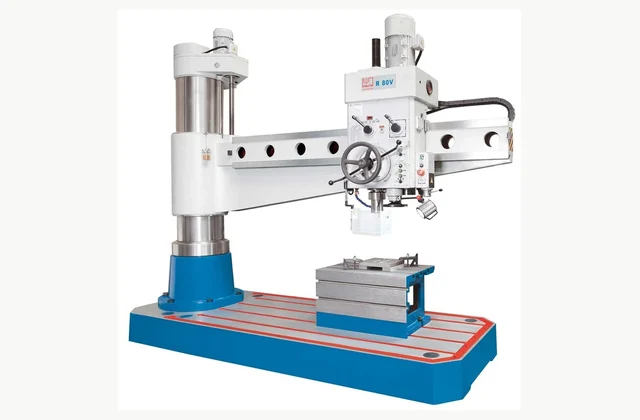
Shown as a configuration reference. Availability and the equipment offered for your project are confirmed separately.
What is the application scope for radial drilling machine?
A radial drilling machine positions a drilling head along a swiveling arm while the heavy workpiece remains supported. It serves large-part hole making where moving the tool is more practical than repositioning the component.
Positions a drilling spindle over stationary large workpieces; define reach and tool feed. The same drilling operation can behave differently near the column and at the far end of the arm. Test the demanding reach and workpiece height with the actual tool and fixture. Clamp stiffness and workpiece restraint are central to both accuracy and safe operation. A maximum drilling capacity stated for one material does not establish tapping performance or stable repeated cutting on every large casting.
How should reach height and clamping be specified?
Provide hole locations, workpiece height, mass and fixture arrangement. Arm reach and column clearance must be checked with the intended drill, holder and safe clamping space included.
The RFQ should make reach height and clamping a separate review item. Describe the expected variation, not only the easiest operating case, and ask the bidder to identify restrictions that affect the intended production mix.
What configuration evidence should be compared?
State hole diameters, depths, material and required thread operations. Compare spindle torque, quill feed and reversal behavior; maximum drilling capacity in one material is not a universal production guarantee.
| Decision | Evidence to compare | Procurement consequence |
|---|---|---|
| Reach height and clamping | Provide hole locations, workpiece height, mass and fixture arrangement. Arm reach and column clearance must be checked with the intended drill, holder and safe clamping space included. | Defines the input and work envelope to be included in the offer. |
| Drilling tapping and spindle feed | State hole diameters, depths, material and required thread operations. Compare spindle torque, quill feed and reversal behavior; maximum drilling capacity in one material is not a universal production guarantee. | Determines configuration, supporting equipment and exclusions. |
| Production acceptance | Drill representative holes at demanding arm positions and inspect location, diameter and perpendicularity. Demonstrate clamp repeatability, tapping if specified, and controlled recovery from a stalled or interrupted cut. | Establishes the agreed demonstration and inspection records. |
What must be prepared for installation?
Confirm floor support, access for heavy-part lifting, coolant drainage and safe arm-swing clearance. The fixture must resist cutting torque without relying on an operator to restrain it.
Keep the accepted arm positions, clamping procedure, tool holders and inspection results with the machine. Operators should reproduce the clamp and alignment check after moving the head or servicing the arm and use a reviewed fixture for new large-part shapes.
How should production acceptance be demonstrated?
Drill representative holes at demanding arm positions and inspect location, diameter and perpendicularity. Demonstrate clamp repeatability, tapping if specified, and controlled recovery from a stalled or interrupted cut.
Inspect the result over a meaningful operating cycle rather than accepting a brief unloaded demonstration. Record setup effort and adjustments alongside output so the buyer can assess the staffing and skill needed to reproduce it.
Which service provisions protect repeatability?
Check arm and head clamps, quill play, column lubrication and feed mechanisms. Preserve alignment verification and safe clamping procedures for recurring large-part setups.
Keep maintenance traceability to the serial number and installed options. Agree the route for technical assistance and the minimum local skills needed, including the evidence to collect before requesting remote troubleshooting.
What can be customized through OEM or ODM?
OEM box tables and fixtures may be supplied; ODM extended-reach setups require stiffness and load review at the farthest drilling position.
Submit the proposed changes with the radial drilling machine duty and acceptance plan. Separate a purchased option from new engineering, and agree drawings, validation responsibility, documentation and spare-part support before design release. The manufacturer example is a technical reference only; customization does not imply permission to copy protected designs or use a brand.
What should your radial drilling machine RFQ include?
- Radial drilling machine application and required process result
- Reach height and clamping: Provide hole locations, workpiece height, mass and fixture arrangement. Arm reach and column clearance must be checked with the intended drill, holder and safe clamping space included.
- Drilling tapping and spindle feed: State hole diameters, depths, material and required thread operations. Compare spindle torque, quill feed and reversal behavior; maximum drilling capacity in one material is not a universal production guarantee.
- Representative input variation and difficult production cases
- Required acceptance evidence: Drill representative holes at demanding arm positions and inspect location, diameter and perpendicularity. Demonstrate clamp repeatability, tapping if specified, and controlled recovery from a stalled or interrupted cut.
- Site and utility scope: Confirm floor support, access for heavy-part lifting, coolant drainage and safe arm-swing clearance. The fixture must resist cutting torque without relying on an operator to restrain it.
- Service provision: Check arm and head clamps, quill play, column lubrication and feed mechanisms. Preserve alignment verification and safe clamping procedures for recurring large-part setups.
- OEM/ODM engineering scope: OEM box tables and fixtures may be supplied; ODM extended-reach setups require stiffness and load review at the farthest drilling position.
- Upstream preparation and downstream handling interfaces
- Destination country and applicable installation requirements
- Production schedule, changeover mix and operator availability
- Drawings, samples, inspection method and rejected-output criteria
Need OEM / ODM customization?
Submit branding, packaging, configuration or engineering requirements for this equipment. Include the target market, initial and annual quantities, required changes and acceptance criteria.
Customization feasibility, permitted branding, development responsibilities, minimum quantity, cost and lead time are reviewed for the proposed supplier and configuration before a quotation is confirmed.
Frequently asked questions
What defines the application boundary for radial drilling machine?
A radial drilling machine positions a drilling head along a swiveling arm while the heavy workpiece remains supported. It serves large-part hole making where moving the tool is more practical than repositioning the component. Positions a drilling spindle over stationary large workpieces; define reach and tool feed. Define the intended production result before comparing nominal ratings, and ask for evidence using the actual input conditions.
What should the radial drilling machine RFQ state about reach height and clamping?
Provide hole locations, workpiece height, mass and fixture arrangement. Arm reach and column clearance must be checked with the intended drill, holder and safe clamping space included. Send the representative inputs and the difficult cases together, then require the supplier to state any restrictions or preparation steps needed to repeat the proposed result.
How should drilling tapping and spindle feed be checked?
State hole diameters, depths, material and required thread operations. Compare spindle torque, quill feed and reversal behavior; maximum drilling capacity in one material is not a universal production guarantee. Ask the bidder to document the selected arrangement and exclusions against the real duty. Confirm which supporting components and setup work are included in the commercial scope.
What acceptance test is appropriate for radial drilling machine?
Drill representative holes at demanding arm positions and inspect location, diameter and perpendicularity. Demonstrate clamp repeatability, tapping if specified, and controlled recovery from a stalled or interrupted cut. Agree the sampling method and rejection criteria before the trial, and keep configuration and inspection records for the later site-acceptance comparison.
What installation and service details should be confirmed?
Confirm floor support, access for heavy-part lifting, coolant drainage and safe arm-swing clearance. The fixture must resist cutting torque without relying on an operator to restrain it. Check arm and head clamps, quill play, column lubrication and feed mechanisms. Preserve alignment verification and safe clamping procedures for recurring large-part setups. Allocate local preparations and specialist support to named parties before shipment so commissioning and subsequent maintenance have a clear owner.
Can radial drilling machine configurations be customized through OEM or ODM?
OEM box tables and fixtures may be supplied; ODM extended-reach setups require stiffness and load review at the farthest drilling position. Supply drawings and operating conditions for feasibility review. Engineering changes require agreed validation and documentation; a reference brand image does not establish an authorized supply or manufacturing relationship.
Reference information
- Radial Drilling Machines | Radial Arm Drills | KNUTH Machine Tools
- R-V Series - Radial Drilling Machines | KNUTH Machine Tools
Reference data and images explain equipment configurations. IndustryApex engineers confirm the offered model, specification and commercial scope in your project quotation.