
Modular compressed air piping system should be selected using network demand, modular fitting compatibility and future expansion layout, with the receiving site and upstream or downstream equipment included in the discussion. Compare the proposed configuration, stated assumptions and a realistic acceptance trial together. Ask each supplier to identify exclusions, maintenance responsibilities and unresolved application questions. Define OEM branding separately from ODM integration changes so an altered machine is assessed against the same documented production requirement.
Compare modular compressed air piping system proposals around network demand, modular fitting compatibility and future expansion layout. Define the process boundary, supporting equipment and acceptance evidence before choosing a configuration. Send the same application details to each bidder and include project-specific OEM or ODM requirements in the initial inquiry.
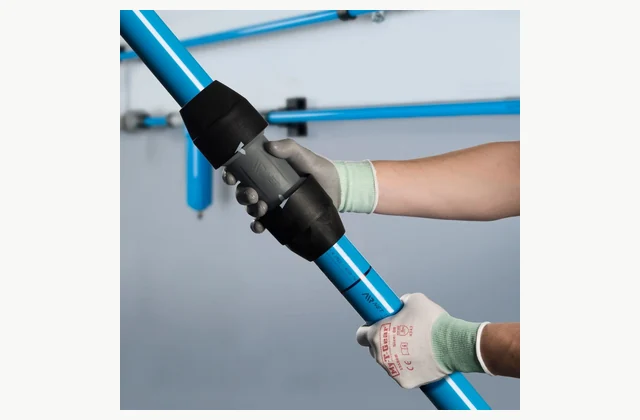
Shown as a configuration reference. Availability and the equipment offered for your project are confirmed separately.
Map users and pressure loss before selecting pipe size
Provide the factory layout, compressor location, air-user positions, flow profiles and required pressure at the users. Include peak simultaneous demand and planned expansion. A pipe diameter selected from total compressor power alone is an incomplete network design. Ask the responsible designer to assess the route, fittings, branches and pressure losses as one system rather than buying straight pipe by length.
Identify sensitive air users and points where distribution contamination or hose restrictions matter. A central ring and a long isolated branch can behave differently. Keep measurement at the operating equipment in the design requirement so a good compressor-room pressure does not hide a distant supply problem.
Select materials around environment and air quality
No. Review pressure, temperature, environment, air quality and the manufacturer’s intended service for the proposed material and seals. Aluminum, stainless steel and other modular options can serve different conditions. Ask which components form an approved matched system. Do not assume that a similar-looking fitting from another brand is compatible or that replacing pipe alone verifies the required air quality at the user.
The Atlas Copco AIRnet reference illustrates a modular piping family with several material ranges. Confirm the actual material and connections in the offer. Keep the pictured system’s identity separate from another supplier’s generic modular pipe and its engineering or documentation requirements.
Compare branches, drops and expansion interfaces
Itemize straight pipe, fittings, branches, drops, isolation, supports, flexible connections and any condensate-management features required by the design. Identify transitions to existing pipe and the terminal connection at each user. A low price per pipe length does not describe the complete network. Include spare expansion points and explain how future changes are reviewed without assuming unlimited capacity or cross-brand interchangeability.
Ask for a marked drawing and component schedule tied to one revision. Show local restrictions such as small hoses or quick couplings. Their effect should be considered separately from the main header, because an enlarged ring does not remove every bottleneck downstream of a drop.
| Decision | Requirement to state | Evidence to request |
|---|---|---|
| Demand | Simultaneous flows and user pressures | Layout-linked demand profile |
| Material | Environment, service and seals | Matched-system application review |
| Scope | Branches, drops, supports and transitions | Drawing-linked component schedule |
| Expansion | Spare points and future flows | Defined reviewed growth allowance |
| Result | User pressure under production demand | Installed network verification record |
Allocate supports and installation responsibilities
Provide building support locations, access height, movement joints, temperature exposure and routes around production equipment. Have responsible installers and designers define mounting, expansion accommodation and pressure-system requirements under the manufacturer’s instructions. Clarify ownership of lifts, penetrations and shutdown work. A quick-assembly product description does not replace a reviewed installed layout and responsibility for the complete pressurized network.
Plan serviceable isolation zones and access to drains or transition fittings. Protect routes from mechanical damage appropriate to the site. Record any existing network condition that remains outside the new installation so later leaks or contamination are not incorrectly attributed to a new pipe section.
Verify the installed network at the working users
Use the responsible commissioning and pressure-system verification procedure, then observe pressure at critical users during representative simultaneous demand. Record network configuration, compressor operation and the measurement locations. Check identified connection and isolation functions under qualified supervision. A pressure reading at idle or a supplier’s smooth-pipe claim does not establish the actual installed network’s leakage, pressure loss or useful delivery during production.
Retain as-built drawings and component identity with the handover. Have the receiving team locate isolation zones and approved expansion points. If production changes, update the demand assessment and drawing before extending the system rather than relying on the original pipe diameter as proof of spare capacity.
Define OEM labeling and ODM layout work separately
OEM requests may concern approved labels, documentation and a traceable component kit. ODM work can involve network layout, skids, interfaces, monitoring or custom mounting. Require review of materials, fitting compatibility, support and pressure boundaries. Define who owns the as-built design and validates changes; private labeling does not transfer another manufacturer’s system warranty, approvals or compatibility evidence to a mixed-component network.
Request approved replacement and installation information for the delivered material range. Keep component restrictions accessible to future maintenance staff. A useful expandable network is one whose configuration and demand assumptions remain documented when the factory adds another machine or relocates an air user.
The pictured manufacturer equipment and linked documents are technical configuration references. They do not imply authorized representation, stock availability, equivalent performance from another supplier or permission to relabel the pictured brand. Confirm the proposed equipment and commercial scope for the specific project.
What should your modular compressed air piping system RFQ include?
- Factory layout and compressor/user locations
- Normal/peak simultaneous demand and required user pressure
- Planned expansion and machine relocation assumptions
- Pressure, temperature, environment and air-quality requirements
- Matched pipe, fitting, seal and transition material range
- Branches, drops, isolation and terminal connection scope
- Supports, movement allowance and access-height conditions
- Installation shutdowns, commissioning and pressure-system responsibility
- User-pressure verification and as-built handover
- OEM component kit or ODM network/monitoring design review
Need OEM / ODM customization?
Submit branding, packaging, configuration or engineering requirements for this equipment. Include the target market, initial and annual quantities, required changes and acceptance criteria.
Customization feasibility, permitted branding, development responsibilities, minimum quantity, cost and lead time are reviewed for the proposed supplier and configuration before a quotation is confirmed.
Frequently asked questions
What should I specify for modular compressed air piping?
Provide the factory layout, compressor location, air-user positions, flow profiles and required pressure at the users. Include peak simultaneous demand and planned expansion. A pipe diameter selected from total compressor power alone is an incomplete network design. Ask the responsible designer to assess the route, fittings, branches and pressure losses as one system rather than buying straight pipe by length.
Does every modular piping material suit the same application?
No. Review pressure, temperature, environment, air quality and the manufacturer's intended service for the proposed material and seals. Aluminum, stainless steel and other modular options can serve different conditions. Ask which components form an approved matched system. Do not assume that a similar-looking fitting from another brand is compatible or that replacing pipe alone verifies the required air quality at the user.
What should a modular air-piping quotation include?
Itemize straight pipe, fittings, branches, drops, isolation, supports, flexible connections and any condensate-management features required by the design. Identify transitions to existing pipe and the terminal connection at each user. A low price per pipe length does not describe the complete network. Include spare expansion points and explain how future changes are reviewed without assuming unlimited capacity or cross-brand interchangeability.
What site details matter for modular piping installation?
Provide building support locations, access height, movement joints, temperature exposure and routes around production equipment. Have responsible installers and designers define mounting, expansion accommodation and pressure-system requirements under the manufacturer's instructions. Clarify ownership of lifts, penetrations and shutdown work. A quick-assembly product description does not replace a reviewed installed layout and responsibility for the complete pressurized network.
How should a modular air network be accepted?
Use the responsible commissioning and pressure-system verification procedure, then observe pressure at critical users during representative simultaneous demand. Record network configuration, compressor operation and the measurement locations. Check identified connection and isolation functions under qualified supervision. A pressure reading at idle or a supplier's smooth-pipe claim does not establish the actual installed network's leakage, pressure loss or useful delivery during production.
Can modular compressed air piping support OEM or ODM?
OEM requests may concern approved labels, documentation and a traceable component kit. ODM work can involve network layout, skids, interfaces, monitoring or custom mounting. Require review of materials, fitting compatibility, support and pressure boundaries. Define who owns the as-built design and validates changes; private labeling does not transfer another manufacturer's system warranty, approvals or compatibility evidence to a mixed-component network.
Reference information
- Aluminium piping systems for industrial reliability - AIRnet
- Air Piping Systems - AIRnet
Reference data and images explain equipment configurations. IndustryApex engineers confirm the offered model, specification and commercial scope in your project quotation.