
A lumber grading scanner measures timber and detects features used for sorting or cutting decisions. Optical defect detection and structural strength grading are different scopes; the selected sensing and approval route must match the buyer's intended decision. Choose the configuration by species defects and grading rules and transport sensing and downstream decisions. Use a blinded sample set representing production variation and compare machine decisions with the agreed reference grading. Report missed defects and unnecessary rejection separately, including dirty or poorly presented boards. OEM/ODM requirements are reviewed against the intended process, site interfaces and acceptance evidence; the reference image identifies a product family and does not establish supply availability or an authorized brand relationship.
A lumber grading scanner measures timber and detects features used for sorting or cutting decisions. Optical defect detection and structural strength grading are different scopes; the selected sensing and approval route must match the buyer's intended decision. Inspects lumber to inform grading and cutting decisions; defect definitions and traceable validation distinguish the process.
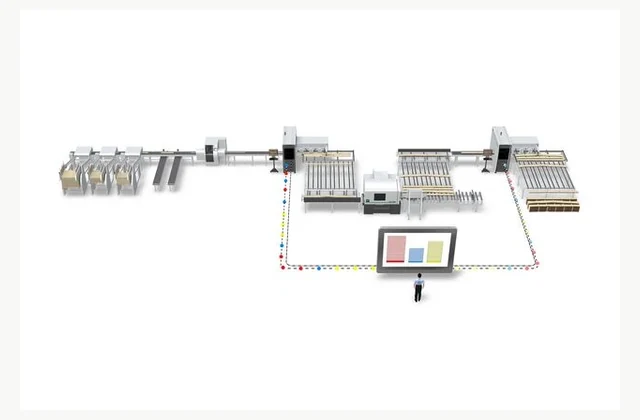
Shown as a configuration reference. Availability and the equipment offered for your project are confirmed separately.
What is the application scope for lumber grading scanner?
A lumber grading scanner measures timber and detects features used for sorting or cutting decisions. Optical defect detection and structural strength grading are different scopes; the selected sensing and approval route must match the buyer's intended decision.
Inspects lumber to inform grading and cutting decisions; defect definitions and traceable validation distinguish the process. Detection accuracy can be distorted by testing only clear, uniform boards. Include ambiguous knots, surface contamination and defects near edges, then measure the cost of false rejection as well as missed defects. A visual scanner does not automatically establish structural strength. If strength grading is required, identify the measured physical properties and the relevant approval route for that species and destination.
How should species defects and grading rules be specified?
Provide species, moisture range, dimensions and an annotated set of acceptable and rejected defects. Knots, resin pockets, wane and color variation need decision rules rather than a generic claim of visual recognition.
The RFQ should make species defects and grading rules a separate review item. Describe the expected variation, not only the easiest operating case, and ask the bidder to identify restrictions that affect the intended production mix.
What configuration evidence should be compared?
Compare surface coverage, scanning orientation, feed stability and the interface to crosscut or sorting equipment. Detection is useful only if the resulting cut or grade assignment remains associated with the correct board.
| Decision | Evidence to compare | Procurement consequence |
|---|---|---|
| Species defects and grading rules | Provide species, moisture range, dimensions and an annotated set of acceptable and rejected defects. Knots, resin pockets, wane and color variation need decision rules rather than a generic claim of visual recognition. | Defines the input and work envelope to be included in the offer. |
| Transport sensing and downstream decisions | Compare surface coverage, scanning orientation, feed stability and the interface to crosscut or sorting equipment. Detection is useful only if the resulting cut or grade assignment remains associated with the correct board. | Determines configuration, supporting equipment and exclusions. |
| Production acceptance | Use a blinded sample set representing production variation and compare machine decisions with the agreed reference grading. Report missed defects and unnecessary rejection separately, including dirty or poorly presented boards. | Establishes the agreed demonstration and inspection records. |
What must be prepared for installation?
Provide stable board transport, clean sensor access, suitable lighting and dust management. Establish how scans, labels and downstream board positions stay synchronized during stops and restarts.
Retain the agreed validation boards or their traceable images with grade decisions and model versions. Document how a sensor-cleaning intervention, transport change or software update triggers a calibration check and a repeat of the critical challenge samples.
How should production acceptance be demonstrated?
Use a blinded sample set representing production variation and compare machine decisions with the agreed reference grading. Report missed defects and unnecessary rejection separately, including dirty or poorly presented boards.
Inspect the result over a meaningful operating cycle rather than accepting a brief unloaded demonstration. Record setup effort and adjustments alongside output so the buyer can assess the staffing and skill needed to reproduce it.
Which service provisions protect repeatability?
Maintain lighting, camera cleanliness, calibration and grading-model versions. Review changed species or customer grading rules before treating an existing setup as qualified.
Keep maintenance traceability to the serial number and installed options. Agree the route for technical assistance and the minimum local skills needed, including the evidence to collect before requesting remote troubleshooting.
What can be customized through OEM or ODM?
OEM sorting and cut optimization may be integrated; ODM recognition models need labeled samples, independent validation and any required structural-grading approval.
Submit the proposed changes with the lumber grading scanner duty and acceptance plan. Separate a purchased option from new engineering, and agree drawings, validation responsibility, documentation and spare-part support before design release. The manufacturer example is a technical reference only; customization does not imply permission to copy protected designs or use a brand.
What should your lumber grading scanner RFQ include?
- Lumber grading scanner application and required process result
- Species defects and grading rules: Provide species, moisture range, dimensions and an annotated set of acceptable and rejected defects. Knots, resin pockets, wane and color variation need decision rules rather than a generic claim of visual recognition.
- Transport sensing and downstream decisions: Compare surface coverage, scanning orientation, feed stability and the interface to crosscut or sorting equipment. Detection is useful only if the resulting cut or grade assignment remains associated with the correct board.
- Representative input variation and difficult production cases
- Required acceptance evidence: Use a blinded sample set representing production variation and compare machine decisions with the agreed reference grading. Report missed defects and unnecessary rejection separately, including dirty or poorly presented boards.
- Site and utility scope: Provide stable board transport, clean sensor access, suitable lighting and dust management. Establish how scans, labels and downstream board positions stay synchronized during stops and restarts.
- Service provision: Maintain lighting, camera cleanliness, calibration and grading-model versions. Review changed species or customer grading rules before treating an existing setup as qualified.
- OEM/ODM engineering scope: OEM sorting and cut optimization may be integrated; ODM recognition models need labeled samples, independent validation and any required structural-grading approval.
- Upstream preparation and downstream handling interfaces
- Destination country and applicable installation requirements
- Production schedule, changeover mix and operator availability
- Drawings, samples, inspection method and rejected-output criteria
Need OEM / ODM customization?
Submit branding, packaging, configuration or engineering requirements for this equipment. Include the target market, initial and annual quantities, required changes and acceptance criteria.
Customization feasibility, permitted branding, development responsibilities, minimum quantity, cost and lead time are reviewed for the proposed supplier and configuration before a quotation is confirmed.
Frequently asked questions
What defines the application boundary for lumber grading scanner?
A lumber grading scanner measures timber and detects features used for sorting or cutting decisions. Optical defect detection and structural strength grading are different scopes; the selected sensing and approval route must match the buyer's intended decision. Inspects lumber to inform grading and cutting decisions; defect definitions and traceable validation distinguish the process. Define the intended production result before comparing nominal ratings, and ask for evidence using the actual input conditions.
What should the lumber grading scanner RFQ state about species defects and grading rules?
Provide species, moisture range, dimensions and an annotated set of acceptable and rejected defects. Knots, resin pockets, wane and color variation need decision rules rather than a generic claim of visual recognition. Send the representative inputs and the difficult cases together, then require the supplier to state any restrictions or preparation steps needed to repeat the proposed result.
How should transport sensing and downstream decisions be checked?
Compare surface coverage, scanning orientation, feed stability and the interface to crosscut or sorting equipment. Detection is useful only if the resulting cut or grade assignment remains associated with the correct board. Ask the bidder to document the selected arrangement and exclusions against the real duty. Confirm which supporting components and setup work are included in the commercial scope.
What acceptance test is appropriate for lumber grading scanner?
Use a blinded sample set representing production variation and compare machine decisions with the agreed reference grading. Report missed defects and unnecessary rejection separately, including dirty or poorly presented boards. Agree the sampling method and rejection criteria before the trial, and keep configuration and inspection records for the later site-acceptance comparison.
What installation and service details should be confirmed?
Provide stable board transport, clean sensor access, suitable lighting and dust management. Establish how scans, labels and downstream board positions stay synchronized during stops and restarts. Maintain lighting, camera cleanliness, calibration and grading-model versions. Review changed species or customer grading rules before treating an existing setup as qualified. Allocate local preparations and specialist support to named parties before shipment so commissioning and subsequent maintenance have a clear owner.
Can lumber grading scanner configurations be customized through OEM or ODM?
OEM sorting and cut optimization may be integrated; ODM recognition models need labeled samples, independent validation and any required structural-grading approval. Supply drawings and operating conditions for feasibility review. Engineering changes require agreed validation and documentation; a reference brand image does not establish an authorized supply or manufacturing relationship.
Reference information
- SOLID SCAN+ S
- SOLID SCAN T 2000 R
Reference data and images explain equipment configurations. IndustryApex engineers confirm the offered model, specification and commercial scope in your project quotation.