
A log band sawmill should be selected using log mix, hydraulic handling and accepted lumber recovery, with the receiving site and upstream or downstream equipment included in the discussion. Compare the proposed configuration, stated assumptions and a realistic acceptance trial together. Ask each supplier to identify exclusions, maintenance responsibilities and unresolved application questions. Define OEM branding separately from ODM integration changes so an altered machine is assessed against the same documented production requirement.
Compare log band sawmill proposals around log mix, hydraulic handling and accepted lumber recovery. Define the process boundary, supporting equipment and acceptance evidence before choosing a configuration. Send the same application details to each bidder and include project-specific OEM or ODM requirements in the initial inquiry.
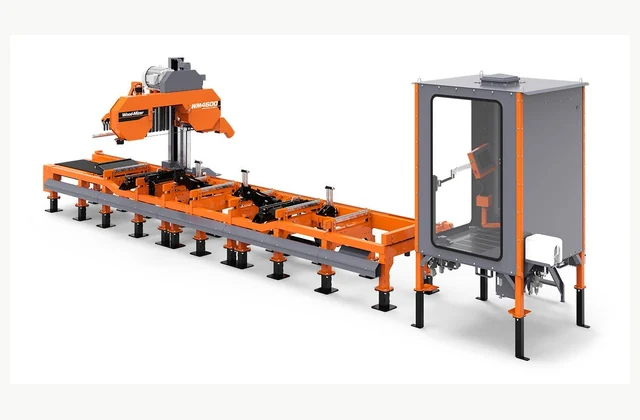
Shown as a configuration reference. Availability and the equipment offered for your project are confirmed separately.
Build the specification around the log supply
Provide species, diameter and length distribution, taper, sweep and typical bark or dirt condition. State the intended lumber products and grade rules. A maximum log diameter describes only one limit; it does not show how efficiently the mill handles the normal mix. Include irregular but acceptable logs in the review rather than defining the purchase around one large straight demonstration log.
Explain seasonal moisture and storage practices where they affect incoming stock. Identify the shortest and heaviest logs that the handling system must accommodate. Keep the source-log profile linked to the desired lumber dimensions so bidders can discuss a realistic breakdown strategy.
Compare log manipulation with cutting capability
Loading, turning, leveling and clamping can occupy a substantial part of the sawmilling sequence. Review the proposed log deck, turners, supports and controls on the actual size mix. A cutting head’s speed does not establish accepted lumber per shift. Ask how the operator changes the log position to follow the chosen breakdown and grade-recovery method without losing reliable support.
Distinguish a standalone headrig from an integrated sawmill system. The Wood-Mizer WM4500 reference shows an industrial band sawmill category with hydraulic log handling options. Confirm which deck, return and off-feed components are included in the exact offered configuration.
Review blades and setworks against lumber dimensions
Define the target board dimensions and allowance for drying or planing before choosing an inspection method. Ask how blade guidance, tension, preparation and setworks support that result across representative logs. Inspect thickness variation along recovered boards and the cut surface. A positioning repeatability claim is not the same as finished lumber consistency when blade condition, log movement and wood stress vary.
Clarify whether the operator selects each cut or follows a stored cutting schedule. Test how a normal correction is made when a log reveals an unexpected defect. Software convenience should support the sawyer’s actual decisions rather than hide adjustments needed to recover usable lumber.
| Decision | Requirement to state | Evidence to request |
|---|---|---|
| Logs | Species, dimensions, sweep and dirt | Identified normal-supply batch |
| Products | Lumber sizes and grade rules | Accepted output and dimensional report |
| Handling | Loading, turning and clamping | Complete log breakdown sequence |
| Blade | Preparation, guidance and setworks | Recorded tooling and board variation |
| Line | Boards, slabs, cants and sawdust | Material-flow layout and allocated options |
Plan the route for boards, slabs and sawdust
Allocate log loading, board return, slab and cant handling, sawdust extraction and finished-board collection. Show the routes for both usable lumber and waste before fitting the mill into the yard. Confirm electrical and hydraulic requirements for the proposed options. A long bed that fits the building can still leave an impractical workstation if boards or slabs have no unobstructed removal route.
Include access to blade wheels, guides and drive components. Check delivery and lifting arrangements for the actual machine. If further edging or resawing follows, coordinate the handoff height and orientation instead of allowing loose manual handling to become an unexamined line interface.
Count accepted lumber from an identified log batch
Agree the log batch, target lumber sizes and grade rules before the demonstration. Record input logs, useful boards, slabs, rejected pieces and operator interventions. Include loading, turning, clamping, cutting and unloading in the observation. Measure board dimensions after removal. A selected cut speed or a single clean log cannot establish recovery or labor requirements across the normal supply mix.
Record blade condition and changes during the trial. Have the receiving operator demonstrate basic setworks use after training. Keep the output report tied to input-log identification so a claimed recovery percentage cannot be detached from the wood quality and product schedule that produced it.
Define custom handling and controls as ODM scope
OEM requests may include approved labels, manuals and a blade package. ODM work can involve loading side, log deck, board return, sorting or control integration. Require the responsible supplier to assess handling loads, blade access and the revised production sequence. Define drawings, software responsibilities and acceptance on the modified system rather than assuming a standard headrig test validates the entire custom sawmill layout.
Request a blade preparation and service plan, guide wear-part identifiers and training for log positioning. Establish who checks alignment after installation. Production recovery depends on these routine practices as well as the selected machine’s nominal log envelope.
The pictured manufacturer equipment and linked documents are technical configuration references. They do not imply authorized representation, stock availability, equivalent performance from another supplier or permission to relabel the pictured brand. Confirm the proposed equipment and commercial scope for the specific project.
What should your log band sawmill RFQ include?
- Log species, diameter and length distribution
- Sweep, taper, bark, dirt and seasonal condition
- Desired lumber sizes, grades and finishing allowances
- Heaviest/shortest log handling requirements
- Log deck, turners, leveling and clamping scope
- Blade preparation, guidance and setworks configuration
- Board return, slabs, cants and sawdust handling
- Power, hydraulics, delivery and service access
- Identified log-batch recovery and dimension trial
- OEM manuals or ODM loading, sorting and controls review
Need OEM / ODM customization?
Submit branding, packaging, configuration or engineering requirements for this equipment. Include the target market, initial and annual quantities, required changes and acceptance criteria.
Customization feasibility, permitted branding, development responsibilities, minimum quantity, cost and lead time are reviewed for the proposed supplier and configuration before a quotation is confirmed.
Frequently asked questions
What log details matter for a band sawmill?
Provide species, diameter and length distribution, taper, sweep and typical bark or dirt condition. State the intended lumber products and grade rules. A maximum log diameter describes only one limit; it does not show how efficiently the mill handles the normal mix. Include irregular but acceptable logs in the review rather than defining the purchase around one large straight demonstration log.
Why does log handling affect sawmill output?
Loading, turning, leveling and clamping can occupy a substantial part of the sawmilling sequence. Review the proposed log deck, turners, supports and controls on the actual size mix. A cutting head's speed does not establish accepted lumber per shift. Ask how the operator changes the log position to follow the chosen breakdown and grade-recovery method without losing reliable support.
How should band sawmill accuracy be compared?
Define the target board dimensions and allowance for drying or planing before choosing an inspection method. Ask how blade guidance, tension, preparation and setworks support that result across representative logs. Inspect thickness variation along recovered boards and the cut surface. A positioning repeatability claim is not the same as finished lumber consistency when blade condition, log movement and wood stress vary.
What equipment belongs around an industrial band sawmill?
Allocate log loading, board return, slab and cant handling, sawdust extraction and finished-board collection. Show the routes for both usable lumber and waste before fitting the mill into the yard. Confirm electrical and hydraulic requirements for the proposed options. A long bed that fits the building can still leave an impractical workstation if boards or slabs have no unobstructed removal route.
How can I evaluate a band sawmill production claim?
Agree the log batch, target lumber sizes and grade rules before the demonstration. Record input logs, useful boards, slabs, rejected pieces and operator interventions. Include loading, turning, clamping, cutting and unloading in the observation. Measure board dimensions after removal. A selected cut speed or a single clean log cannot establish recovery or labor requirements across the normal supply mix.
Can a log band sawmill support OEM or ODM?
OEM requests may include approved labels, manuals and a blade package. ODM work can involve loading side, log deck, board return, sorting or control integration. Require the responsible supplier to assess handling loads, blade access and the revised production sequence. Define drawings, software responsibilities and acceptance on the modified system rather than assuming a standard headrig test validates the entire custom sawmill layout.
Reference information
- Wood-Mizer: WM4500 official product reference
- Wood-Mizer official supporting product documentation
Reference data and images explain equipment configurations. IndustryApex engineers confirm the offered model, specification and commercial scope in your project quotation.