
Connect industrial power using a compatible plug, socket or cable connector selected for the electrical system, cable and environment. Compare the complete mating arrangement and installation scope, with exact ratings, coding and termination requirements defined by the responsible electrical design. Prioritize circuit, mating, cable. Use the checkpoints to build a consistent equipment scope and confirm the intended trial or installation evidence. The official image is a product reference; it does not establish availability or an authorized supplier relationship. Submit OEM/ODM changes for application-specific feasibility review.
Connect industrial power using a compatible plug, socket or cable connector selected for the electrical system, cable and environment. Compare the complete mating arrangement and installation scope, with exact ratings, coding and termination requirements defined by the responsible electrical design.
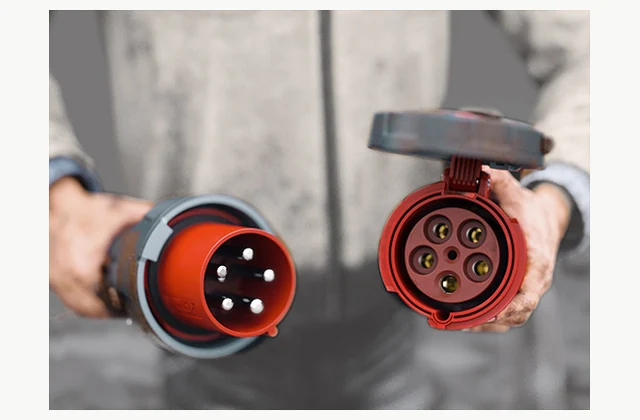
Shown as a configuration reference. Availability and the equipment offered for your project are confirmed separately.
Identify the connector family and circuit
Industrial power connections include different formats and must be selected for the intended circuit. State voltage, frequency, current, phase and conductor arrangement through the responsible design. The MENNEKES PowerTOP Xtra reference illustrates an industrial plug and cable-connector family, not a rectangular modular data connector. A broad industrial-connector label is insufficient. Identify the intended mating system and exact part arrangement before comparing housing size, grip or apparent ruggedness.
Match coding and mating compatibility
Pole arrangement, coding, contact position and rating identify which products can mate as designed. Similar appearance or color alone does not establish compatibility. Obtain the exact plug and socket or connector specifications and check the complete pair. Do not force a substitute into the design because it fits a mounting position. Where existing outlets are involved, identify them from their markings and documentation rather than rely on a photograph without readable configuration details.
Check cable entry and conductor termination
Provide cable outside diameter, core count, conductor size and form. The connector’s terminal and entry arrangement must support the selected cable and installation method. A suitable electrical rating does not prove that an oversized jacket or different conductor construction can be terminated appropriately. Identify seals, glands or strain-relief components and the applicable assembly instructions. Include all accessories in the offer so the installed connection is not completed with unspecified substituted parts.
| Selection issue | Information to specify |
|---|---|
| Circuit | Voltage, frequency, current and conductor arrangement. |
| Mating | Exact format, poles, coding and compatible pair. |
| Cable | Outside diameter, cores and conductor termination requirements. |
| Environment | Exposure and protection conditions of the assembled connection. |
| Functions | Any separate switching, interlocking or isolation requirement. |
| Records | Part identity, instructions and completed-installation evidence. |
Assess environment and complete installed protection
Describe indoor or outdoor use, moisture, cleaning, contamination, impact and temperature. Protection performance can depend on the mating and assembly conditions and should be assessed for the intended state, not transferred from an isolated housing description. Check covers, locking and sealing arrangements for the exact parts. The buyer needs evidence for the selected assembly and its use, rather than assume every product shown in a power-connector family has identical environmental characteristics.
Define switching and access requirements separately
Connecting power and performing a controlled switching or isolation function are different requirements. If the application needs an interlocked outlet, switching device or other protective arrangement, specify it through the electrical design. Do not infer those functions from a plug’s appearance or current rating. Consider operator access, cable routing and mechanical support at the installation. The purchase scope should show how the connection fits the circuit rather than treat it as a complete distribution or protective system.
Verify parts and retain installation records
Inspection should confirm exact part numbers, ratings, coding and supplied entry components against the approved design. Assembly and verification belong with competent personnel using the applicable instructions. Keep cable and termination details and the relevant installed-system records. A replacement with the same general color or approximate size may have different contacts, entry range or ratings. Traceable identification supports maintenance and avoids unassessed changes to a working power connection.
Bound OEM/ODM to a documented power assembly
Marking, cable lengths, mounting and selected connection organization can be reviewed. Changes to contacts, insulation, seals or electrical behavior require engineering and appropriate evidence. Provide circuit and cable information with the brief and identify the party responsible for the completed assembly’s assessment. Private labeling cannot establish compatibility or transfer a reference manufacturer’s ratings. A customized package should retain component identity and instructions for its own mating and termination arrangement.
What should your industrial power connector RFQ include?
- Circuit: Voltage, frequency, current and conductor arrangement.
- Mating: Exact format, poles, coding and compatible pair.
- Cable: Outside diameter, cores and conductor termination requirements.
- Environment: Exposure and protection conditions of the assembled connection.
- Functions: Any separate switching, interlocking or isolation requirement.
- Records: Part identity, instructions and completed-installation evidence.
- Destination, site conditions and delivery access
- Installation boundary, utilities and connection drawings
- Acceptance procedure, documentation and training scope
- OEM/ODM changes: interface, material, branding or new design; written engineering feasibility required
Need OEM / ODM customization?
Submit branding, packaging, configuration or engineering requirements for this equipment. Include the target market, initial and annual quantities, required changes and acceptance criteria.
Customization feasibility, permitted branding, development responsibilities, minimum quantity, cost and lead time are reviewed for the proposed supplier and configuration before a quotation is confirmed.
Frequently asked questions
Does matching color prove two industrial power connectors are compatible?
No. Check exact ratings, poles, coding and contact arrangement using markings and manufacturer information. Similar appearance is insufficient. Identify both halves of the intended pair and assess the complete mating system rather than assume a color or approximate housing size establishes compatibility.
What cable information is needed for connector selection?
Provide outside diameter, number of cores, conductor size and conductor form. Check terminals and entry components for the exact cable and assembly instructions. An appropriate current rating alone does not show that the connector can retain, seal and terminate every cable used on that circuit.
Does a connector rating establish a complete enclosure or circuit rating?
No automatic transfer should be assumed. Mating state, cable entry, assembly and the wider installation affect the result. Review applicable conditions for the exact parts and retain installed-system evidence rather than treat an isolated housing description as proof of the complete connection.
Can a plug replace a switching or isolation device?
These are different requirements and must be assessed through the electrical design. If interlocking, switching or isolation is needed, specify the appropriate arrangement separately. A plug’s shape or electrical rating does not establish every control or protective function required by the installation.
How should existing outlets be identified for replacement?
Use readable markings, part information and the documented circuit arrangement, including coding and ratings. A photograph alone may omit important details. The replacement should be assessed as a complete mating and cable-entry arrangement rather than selected only because its color and mounting appearance look similar.
Can connector-and-cable packages be customized through OEM/ODM?
Marking, mounting and cable organization can be reviewed. Contact, insulation or sealing changes require engineering and evidence. Supply circuit and cable details and preserve component identity and assembly instructions so the customized package has support for its own compatibility and installed performance.
Reference information
- MENNEKES PowerTOP Xtra plug and connector family official product reference
- MENNEKES PowerTOP Xtra design and connection-family overview
Reference data and images explain equipment configurations. IndustryApex engineers confirm the offered model, specification and commercial scope in your project quotation.