
A industrial gas booster should be selected using gas identity, inlet-pressure variation and booster delivery under flow, with the receiving site and upstream or downstream equipment included in the discussion. Compare the proposed configuration, stated assumptions and a realistic acceptance trial together. Ask each supplier to identify exclusions, maintenance responsibilities and unresolved application questions. Define OEM branding separately from ODM integration changes so an altered machine is assessed against the same documented production requirement.
Compare industrial gas booster proposals around gas identity, inlet-pressure variation and booster delivery under flow. Define the process boundary, supporting equipment and acceptance evidence before choosing a configuration. Send the same application details to each bidder and include project-specific OEM or ODM requirements in the initial inquiry.
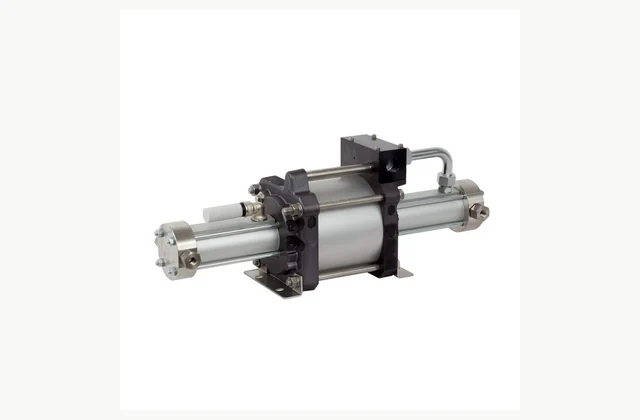
Shown as a configuration reference. Availability and the equipment offered for your project are confirmed separately.
Identify the gas and service before selecting a booster
State the gas identity, composition, purity and intended service before discussing pressure ratio. A booster suitable for one gas is not automatically suitable for oxygen, hydrogen, corrosive or contaminated service. Ask the manufacturer to review wetted materials, seals, cleanliness and the proposed application. Include the source-gas condition and any required contamination limits at the point of use.
Distinguish cylinder transfer, pressure testing and continuous process supply. These duties impose different flow and cycling expectations. Treat a hazardous-gas application as an engineered system review with responsible specialists, rather than selecting a generic booster from its maximum pressure rating.
Compare flow throughout the inlet supply range
Stall pressure describes a limiting condition rather than useful delivery throughout a filling or production cycle. Provide the inlet-pressure range, required outlet pressure, desired flow and the amount of gas to transfer. Ask for performance at the lowest expected inlet condition. For an air-driven booster, include available drive-air pressure and consumption in the comparison because the plant must supply that energy source.
If the source is a cylinder, explain how its pressure changes during use. Request a realistic transfer or fill-time assessment with the assumed temperature and control method stated. Do not extend a single favorable flow point to the whole duty cycle.
Separate the booster mechanism from the gas station
Itemize the booster, inlet conditioning, isolation, instrumentation, outlet control and any storage or manifolds. Ask which components are supplied for the named gas and which remain the integrator’s responsibility. The MAXIMATOR DLE 30 image identifies a booster mechanism reference, not a complete station with every protective function. Confirm the assembled system boundary and gas-service review before comparing equipment prices.
Review whether leakage collection, venting, purging or separation between drive air and process gas is required for the application. The responsible designer should define those provisions. A small physical booster can still require extensive surrounding engineering and documented installation responsibilities.
| Decision | Requirement to state | Evidence to request |
|---|---|---|
| Gas | Composition, purity and intended service | Manufacturer compatibility and cleanliness review |
| Duty | Inlet range, outlet demand and cycle | Application-specific useful delivery assessment |
| Drive | Available air and consumption | Performance assumptions and utility schedule |
| Station | Controls, vents, manifolds and protection | Allocated gas-system boundary |
| Acceptance | Test medium and final-service differences | Agreed specialist-led verification record |
Document cleanliness and site interfaces
Provide the location, gas source, outlet user, drive-air supply and environmental conditions. Have the responsible designers define pressure boundaries, vent destinations and protection measures for the gas service and destination. Request material and connection identification for the offered assembly. Allocate cleaning, testing and installation responsibilities explicitly instead of treating ordinary shop-air hose and fittings as universally suitable gas-service components.
Discuss compression heat and the permitted duty with the manufacturer. If a package will be enclosed, cooling and access need review. Keep gas identification and service restrictions visible on the final drawings, operating information and maintenance record, including any components changed during integration.
Verify the required gas-transfer duty safely
Agree a manufacturer-led acceptance method appropriate to the gas and application, with qualified responsible parties controlling the test. Evaluate useful delivery across the stated inlet and outlet conditions, instrumentation response and the declared system boundary. Record the test medium and any difference from final service. A successful demonstration with another gas does not independently verify cleanliness, compatibility or performance for your process.
For a repetitive duty, review temperature behavior and recovery under the intended sequence. Retain the configuration and connection schedule with the report. Ask who resolves a shortfall caused by the booster, drive-air supply, source cylinder or downstream regulator so system faults have a clear ownership route.
Treat custom gas skids as engineered projects
OEM requests may cover approved labels, document language and packaging without removing original component identity. ODM requests can involve manifolds, controls, enclosures or gas-service changes. Require the responsible manufacturer and integrator to review compatibility, cleanliness, pressure protection and acceptance. Do not assume that a general private-label request authorizes a branded booster to be relabeled or used with an unreviewed gas.
Request seal-kit identification and a qualified service route for the exact gas configuration. Keep restrictions on replacement materials and cleaning methods in the maintenance documentation. A commercially convenient substitute component should not enter the gas circuit without the responsible engineering review.
The pictured manufacturer equipment and linked documents are technical configuration references. They do not imply authorized representation, stock availability, equivalent performance from another supplier or permission to relabel the pictured brand. Confirm the proposed equipment and commercial scope for the specific project.
What should your industrial gas booster RFQ include?
- Gas identity, composition, purity and contamination limits
- Gas source and complete inlet-pressure range
- Outlet pressure, useful flow and transfer quantity
- Continuous or intermittent duty and thermal conditions
- Drive-air pressure, quality and available capacity
- Wetted materials, seals and cleanliness review
- Instrumentation, vents, manifolds and protective boundary
- Location, connection standards and responsible integrator
- Gas-specific acceptance method and qualified service route
- OEM documents or ODM gas-skid feasibility and ownership
Need OEM / ODM customization?
Submit branding, packaging, configuration or engineering requirements for this equipment. Include the target market, initial and annual quantities, required changes and acceptance criteria.
Customization feasibility, permitted branding, development responsibilities, minimum quantity, cost and lead time are reviewed for the proposed supplier and configuration before a quotation is confirmed.
Frequently asked questions
What must be stated for an industrial gas booster?
State the gas identity, composition, purity and intended service before discussing pressure ratio. A booster suitable for one gas is not automatically suitable for oxygen, hydrogen, corrosive or contaminated service. Ask the manufacturer to review wetted materials, seals, cleanliness and the proposed application. Include the source-gas condition and any required contamination limits at the point of use.
Why is stall pressure insufficient for gas booster selection?
Stall pressure describes a limiting condition rather than useful delivery throughout a filling or production cycle. Provide the inlet-pressure range, required outlet pressure, desired flow and the amount of gas to transfer. Ask for performance at the lowest expected inlet condition. For an air-driven booster, include available drive-air pressure and consumption in the comparison because the plant must supply that energy source.
What belongs in a gas booster system quotation?
Itemize the booster, inlet conditioning, isolation, instrumentation, outlet control and any storage or manifolds. Ask which components are supplied for the named gas and which remain the integrator's responsibility. The MAXIMATOR DLE 30 image identifies a booster mechanism reference, not a complete station with every protective function. Confirm the assembled system boundary and gas-service review before comparing equipment prices.
What installation information does a gas booster supplier need?
Provide the location, gas source, outlet user, drive-air supply and environmental conditions. Have the responsible designers define pressure boundaries, vent destinations and protection measures for the gas service and destination. Request material and connection identification for the offered assembly. Allocate cleaning, testing and installation responsibilities explicitly instead of treating ordinary shop-air hose and fittings as universally suitable gas-service components.
How should an industrial gas booster be accepted?
Agree a manufacturer-led acceptance method appropriate to the gas and application, with qualified responsible parties controlling the test. Evaluate useful delivery across the stated inlet and outlet conditions, instrumentation response and the declared system boundary. Record the test medium and any difference from final service. A successful demonstration with another gas does not independently verify cleanliness, compatibility or performance for your process.
Can an industrial gas booster support OEM or ODM?
OEM requests may cover approved labels, document language and packaging without removing original component identity. ODM requests can involve manifolds, controls, enclosures or gas-service changes. Require the responsible manufacturer and integrator to review compatibility, cleanliness, pressure protection and acceptance. Do not assume that a general private-label request authorizes a branded booster to be relabeled or used with an unreviewed gas.
Reference information
- MAXIMATOR: DLE 30 official product reference
- MAXIMATOR official supporting product documentation
Reference data and images explain equipment configurations. IndustryApex engineers confirm the offered model, specification and commercial scope in your project quotation.