
A hinge boring machine should be selected using hinge cup pattern, door references and hardware-specific drilling tools, with the receiving site and upstream or downstream equipment included in the discussion. Compare the proposed configuration, stated assumptions and a realistic acceptance trial together. Ask each supplier to identify exclusions, maintenance responsibilities and unresolved application questions. Define OEM branding separately from ODM integration changes so an altered machine is assessed against the same documented production requirement.
Compare hinge boring machine proposals around hinge cup pattern, door references and hardware-specific drilling tools. Define the process boundary, supporting equipment and acceptance evidence before choosing a configuration. Send the same application details to each bidder and include project-specific OEM or ODM requirements in the initial inquiry.
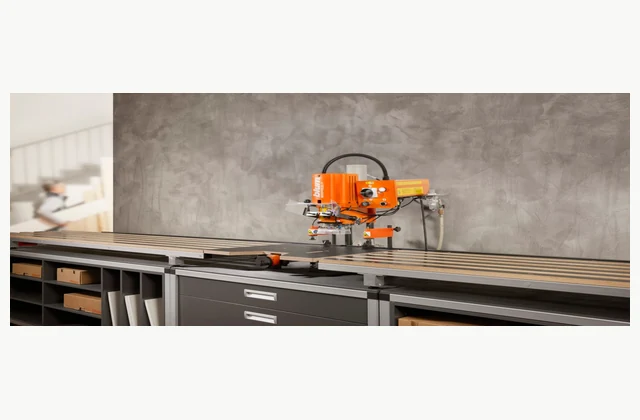
Shown as a configuration reference. Availability and the equipment offered for your project are confirmed separately.
Begin with the actual hinge and door construction
Provide the hinge manufacturer’s drawing, cup and fixing-hole pattern, door thickness and material. State the reference edge, setback and permitted remaining material behind the cup. Similar-looking hinges can use different drilling or insertion details. Ask the machine supplier to review the exact hardware rather than assuming a general hinge-boring name proves compatibility with every furniture hinge on the market.
Include coated, veneered or profiled doors in the sample set if used in production. Identify the visible face and permissible clamp marks. A clean hole in a plain board is insufficient evidence for a decorative door that must arrive at assembly without surface repair.
Match drilling heads and insertion tooling
Some boring and insertion machines support hardware insertion with dedicated tooling, while others only prepare holes. Confirm the exact head, drill pattern and insertion ram for your hinge. Ask whether the selected hardware is within the manufacturer’s intended-use scope. A reference machine designed for one hardware family should not be presented as universally interchangeable merely because another hinge has a similar cup diameter.
The Blum MINIPRESS reference illustrates hardware-specific boring and insertion equipment. Treat the brand and tooling as an identifiable reference configuration. A generic alternative requires its own joint and hardware trial; the pictured machine does not establish authorization to copy or relabel its system.
Compare depth stops and repeat-position setting
Review how drilling depth, edge setback and hinge spacing are set, read and repeated. Include left- and right-hand door references and any required stops along the panel. Ask the receiving operator to reset a common job after training. Repeatability depends on the locating method and material support, not only the motion of the drilling head or the motor’s power rating.
Clarify which settings are manual and which use digital assistance. If a positioning system is quoted, test the actual hardware and door data. Confirm whether fences, extensions and stops are included rather than interpreting a long support rail in a photograph as standard equipment.
| Decision | Requirement to state | Evidence to request |
|---|---|---|
| Hardware | Cup and fixing-hole drawing | Exact hinge and revision |
| Door | Material, thickness and visible face | Production-door sample |
| Tooling | Boring head and insertion ram | Included hardware-specific tool schedule |
| Setup | Depth, setback and spacing | Operator reset and mirrored-position trial |
| Assembly | Door alignment and hinge operation | Finished mating cabinet check |
Plan door support and chip removal
Show the largest door, loading orientation and support needed to keep its reference edge stable. Allocate clamps, stops, extraction and any pneumatic supply for the proposed model. Check tool-change and depth-adjustment access. A compact machine still needs enough supported space to prevent a long door from tipping or shifting while the cup and fixing holes are machined.
Discuss chip evacuation from blind holes and the condition of the support surface beneath a cosmetic face. If drilling and insertion share a station, identify how loose chips are managed before hardware is pressed into place. Keep these details within the accepted work sequence.
Inspect hinge operation on a finished door
Drill production door material using the intended hinge tooling, then inspect cup depth, pattern location, breakout and surface marks. Fit the actual hinge and assemble a representative door to its mating cabinet component. Check the resulting alignment and operation under the product owner’s criteria. A dimensionally plausible hole pattern is not complete acceptance if the installed hardware cannot achieve the intended door fit.
Include a reset between door sizes and mirrored positions. Record bit and insertion-tool identification with the sample. Ask the receiving operator to repeat the setup so the result reflects an everyday locating method rather than a one-time supplier adjustment.
Define customized stops without assuming hardware rights
OEM requests may cover approved labels, documents and an agreed tooling package. ODM work can involve stops, door supports, digital positioning or a custom hardware pattern. Require review of tool clearance, clamping and the exact hinge assembly. Define ownership of custom fixtures and acceptance samples; a customization request does not grant rights to another brand’s hardware designs or branded assembly machine.
Request drill and ram identifiers plus a service route for the offered station. Keep the selected hardware revision visible in the operating information. Review a changed hinge separately instead of treating the previously accepted machine setup as proof for all future fittings.
The pictured manufacturer equipment and linked documents are technical configuration references. They do not imply authorized representation, stock availability, equivalent performance from another supplier or permission to relabel the pictured brand. Confirm the proposed equipment and commercial scope for the specific project.
What should your hinge boring machine RFQ include?
- Hinge brand/model drawing and revision
- Cup, fixing-hole and insertion requirements
- Door core, coating, thickness and profile
- Reference edge, setback and hinge spacing
- Cup-depth and remaining-material acceptance
- Boring head, bits and insertion ram scope
- Door supports, stops and clamping-mark limits
- Extraction, power and pneumatic service where applicable
- Finished-door hardware trial and setup training
- OEM tooling package or ODM supports and positioning review
Need OEM / ODM customization?
Submit branding, packaging, configuration or engineering requirements for this equipment. Include the target market, initial and annual quantities, required changes and acceptance criteria.
Customization feasibility, permitted branding, development responsibilities, minimum quantity, cost and lead time are reviewed for the proposed supplier and configuration before a quotation is confirmed.
Frequently asked questions
What should I specify for a hinge boring machine?
Provide the hinge manufacturer's drawing, cup and fixing-hole pattern, door thickness and material. State the reference edge, setback and permitted remaining material behind the cup. Similar-looking hinges can use different drilling or insertion details. Ask the machine supplier to review the exact hardware rather than assuming a general hinge-boring name proves compatibility with every furniture hinge on the market.
Can a hinge boring machine also insert the hinge?
Some boring and insertion machines support hardware insertion with dedicated tooling, while others only prepare holes. Confirm the exact head, drill pattern and insertion ram for your hinge. Ask whether the selected hardware is within the manufacturer's intended-use scope. A reference machine designed for one hardware family should not be presented as universally interchangeable merely because another hinge has a similar cup diameter.
What affects repeatability on a hinge boring station?
Review how drilling depth, edge setback and hinge spacing are set, read and repeated. Include left- and right-hand door references and any required stops along the panel. Ask the receiving operator to reset a common job after training. Repeatability depends on the locating method and material support, not only the motion of the drilling head or the motor's power rating.
What supporting equipment does a hinge boring machine need?
Show the largest door, loading orientation and support needed to keep its reference edge stable. Allocate clamps, stops, extraction and any pneumatic supply for the proposed model. Check tool-change and depth-adjustment access. A compact machine still needs enough supported space to prevent a long door from tipping or shifting while the cup and fixing holes are machined.
How should hinge boring acceptance be tested?
Drill production door material using the intended hinge tooling, then inspect cup depth, pattern location, breakout and surface marks. Fit the actual hinge and assemble a representative door to its mating cabinet component. Check the resulting alignment and operation under the product owner's criteria. A dimensionally plausible hole pattern is not complete acceptance if the installed hardware cannot achieve the intended door fit.
Can a hinge boring machine support OEM or ODM?
OEM requests may cover approved labels, documents and an agreed tooling package. ODM work can involve stops, door supports, digital positioning or a custom hardware pattern. Require review of tool clearance, clamping and the exact hinge assembly. Define ownership of custom fixtures and acceptance samples; a customization request does not grant rights to another brand's hardware designs or branded assembly machine.
Reference information
- Blum: MINIPRESS P boring and insertion machine official product reference
- Blum official supporting product documentation
Reference data and images explain equipment configurations. IndustryApex engineers confirm the offered model, specification and commercial scope in your project quotation.