
Specify an air jet spinning project from the accepted yarn and downstream application. Confirm raw-material suitability and the required preparation route before comparing machine performance. Use representative trials to examine quality, usable output, waste, package behavior and utility demand under recorded conditions. Include plant layout, changeovers, consumables and destination support in the complete scope. OEM/ODM requests should define integration or development work and its acceptance evidence; manufacturer examples are references rather than commercial performance commitments.
Evaluate air jet spinning around the yarn, fiber preparation and downstream fabric requirements. Compare witnessed material trials, usable output, package behavior, compressed air demand and mill integration, then define changeover, maintenance and project-specific OEM or ODM responsibilities in the RFQ.
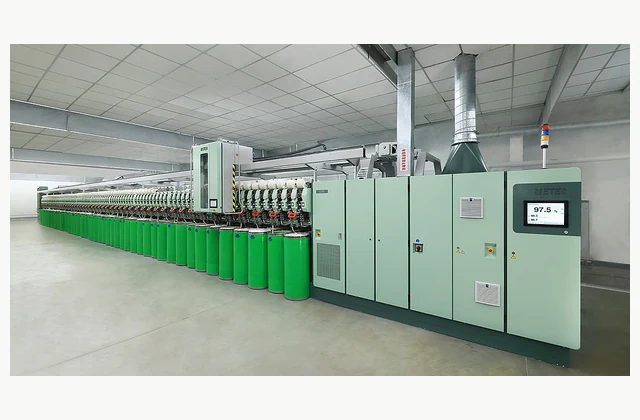
Shown as a configuration reference. Availability and the equipment offered for your project are confirmed separately.
Specify the yarn and downstream fabric before the machine
An air jet spinning machine uses controlled air flow to form staple fibers into yarn. A useful inquiry begins with the yarn that a customer will actually use: fiber composition, count range, quality requirements and the intended knitting or weaving process. Include the properties that matter in the finished fabric, rather than selecting machinery from a maximum delivery-speed headline.
Provide representative fiber or sliver information and describe the current yarn route if a mill is replacing another spinning method. Air jet yarn structure and processing behavior should be assessed in the target application. Ask for a trial plan that produces enough relevant yarn for downstream evaluation, with the preparation route and test conditions recorded alongside the results.
Match raw material and preparation quality to the spinning process
Fiber length distribution, cleanliness, blending consistency and preparation quality influence the result. Give the proposed supplier available raw-material test information and explain how it varies between lots. The suitability of cotton, cellulosic fibers or blends must be confirmed for the specific machine and yarn specification; a general family description is not an approval for every composition.
Review the route from fiber opening through carding, drawing and any required combing. The spinning machine cannot be evaluated independently of the sliver supplied to it. Ask which preparation changes are required and whether existing equipment can deliver the agreed input. Separate the cost and acceptance criteria of those changes from the spinning-machine quotation so that a partial project is not mistaken for a complete production solution.
Compare stable usable output with an agreed trial protocol
Define accepted yarn quality, test methods and the period or production conditions used for evaluation before the trial starts. Measure usable output and record interruptions, quality cuts, waste and interventions together. A short demonstration at favorable settings does not establish performance across every planned fiber lot and count.
Request the same evidence structure from competing suppliers. Include downstream unwinding and fabric checks when they affect acceptance. The following table connects purchasing questions to the records needed for a meaningful comparison, without presenting an assumed yield or production guarantee.
| Purchasing question | Trial condition to define | Evidence to retain |
|---|---|---|
| Will the material run? | Representative fiber and preparation route | Input characterization and settings |
| Is the yarn acceptable? | Agreed count and quality test methods | Independent or witnessed test results |
| What output is usable? | Quality limits and observed operating conditions | Accepted output, waste and interruptions |
| Will packages unwind? | Target winding format and downstream process | Unwinding and fabric trial records |
| What does operation require? | Utility metering and staffing boundaries | Measured inputs and recorded interventions |
Include compressed air, climate and layout in the proposal
Ask for a utility schedule covering the exact proposed machine arrangement and operating conditions. Compressed air quality, supply stability, electrical power, extraction and room conditions should be reviewed with the mill utility team. Compare measured demand using the same production boundary, including equipment added to support the spinning route.
Check the complete layout, not just the machine footprint. Sliver-can delivery, package removal, service access and material segregation need workable routes through the mill. Review floor conditions, installation access and the plan for connecting new machinery while existing production continues. A clear division of responsibilities for foundations, utility distribution, installation and commissioning reduces uncertainty before the machine arrives.
Plan changeovers, maintenance and production evidence
Discuss how yarn recipes and technology components are managed between products. Identify the cleaning, inspection and adjustment tasks expected after material or count changes. Ask for a demonstration of the operator workflow and record which interventions need specialist assistance. Include consumable specifications and a practical stock plan for the destination.
Acceptance should cover the agreed yarn applications, data records and operating procedures, rather than relying on a factory photograph. Request operator and maintenance training, configuration backups, spare-parts documentation and responsibilities for remote or local support. The Rieter J 70 image is an official factory reference of a real air jet installation; it is not evidence of a proposed supplier’s delivery history or a guarantee of equivalent performance.
Define OEM and ODM work around the yarn process
Customization requests may cover installation layout, information interfaces, package handling, instruction languages or integration into an existing spinning line. Specify whether the objective is a standard configured system, an OEM branding request or an ODM development project. Any branding proposal must be confirmed by the actual manufacturer rather than inferred from the reference model.
For process changes, provide the intended materials, sample availability and measurable acceptance criteria. Ask the responding supplier to identify the trials, engineering responsibility and documentation required before quoting a result. Begin the inquiry with the target yarn list, current preparation route, available utilities and destination. This allows a practical assessment of configuration, plant integration and development feasibility.
What should your air jet spinning machine RFQ include?
- Target fiber compositions and representative material test data
- Yarn count range, quality targets and downstream applications
- Existing opening, carding, drawing and combing route
- Sliver supply conditions and expected raw-material variation
- Sample quantities and witnessed yarn/fabric trial plan
- Package format, unwinding behavior and material-handling interfaces
- Compressed air, electrical, extraction and room-condition availability
- Mill layout, service access and installation sequence
- Changeover procedures, consumables, training and acceptance records
- OEM documentation/branding or ODM process/interface integration request
Need OEM / ODM customization?
Submit branding, packaging, configuration or engineering requirements for this equipment. Include the target market, initial and annual quantities, required changes and acceptance criteria.
Customization feasibility, permitted branding, development responsibilities, minimum quantity, cost and lead time are reviewed for the proposed supplier and configuration before a quotation is confirmed.
Frequently asked questions
What fiber information is needed for an air jet spinning RFQ?
Provide fiber composition, available length and cleanliness information, expected lot variation, target yarn counts and the preparation route. Include sample availability and downstream quality requirements. The supplier should confirm suitability for the exact proposed machine and application rather than relying on a general statement about material compatibility.
Can air jet yarn directly replace existing ring-spun yarn?
Evaluate the change in the intended fabric and downstream process. Yarn structure, processing behavior and finished appearance can differ even when the nominal count is similar. Request representative yarn, unwinding and fabric trials, then agree acceptance criteria with the customer or technical team before committing the production route.
Why must sliver preparation be included in the machine comparison?
The spinning result depends on the consistency and condition of the incoming sliver. Review opening, carding, drawing and any required combing with the supplier. Identify changes needed to existing preparation equipment and price them separately, with their own input-quality and commissioning responsibilities clearly recorded.
How should spinning output and energy claims be checked?
Use recorded operating conditions and an agreed boundary for the comparison. Retain accepted yarn output, quality results, interruptions, waste and measured utility inputs together. Include compressed air and supporting equipment where applicable. A maximum catalog delivery speed alone does not establish usable mill output or unit production cost.
What should an air jet spinning acceptance trial include?
Include the agreed fiber lots and yarn applications, documented machine settings, quality testing and package evaluation. Record interventions, waste, utilities and downstream results as required by the project. Acceptance should also verify the delivered documentation, training, consumables list and responsibilities for resolving performance deviations.
Which OEM or ODM requests are useful for a spinning project?
Describe line layout, material handling, package requirements, data interfaces and documentation needs. Changes affecting the spinning process require trials and defined acceptance evidence. Ask the actual manufacturer or integrator to separate configuration, branding feasibility and development scope; a reference machine image does not establish private-label availability.
Reference information
- Rieter automated air-jet spinning machine J 70
- Rieter air-jet spinning system and preparation scope
Reference data and images explain equipment configurations. IndustryApex engineers confirm the offered model, specification and commercial scope in your project quotation.