
Choose a wet receiver location when the project needs storage before treatment to support compressor-side buffering or the drying stage. Choose a downstream dry receiver location when treated-air continuity or user pressure support is required. Before procurement, the buyer must trace the demand event through the complete air path, identify how existing vessels and distribution restrictions interact with the proposal, and require a revision-controlled system diagram with location-specific rejection conditions.
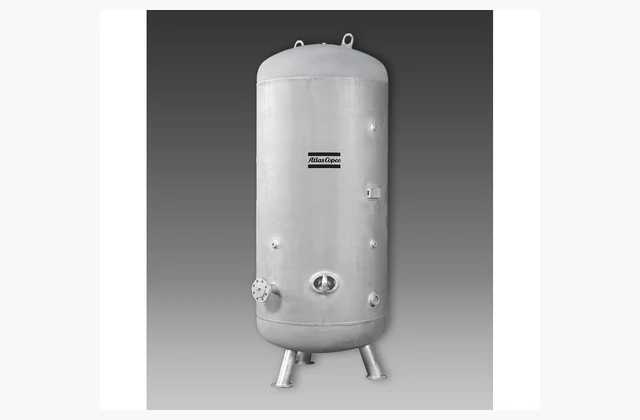
Shown as a configuration reference. Availability and the equipment offered for your project are confirmed separately.
When does a wet versus dry air receiver location make the most sense?
The receiver should be placed relative to the treatment equipment according to the demand event and the air condition required at the relevant user. Consider an upstream wet receiver when the stated purpose is compressor-side buffering or support for the treatment stage. Consider a downstream dry receiver when the stated purpose is continuity or pressure support for users of treated air. The position should not be selected from a typical drawing or because one proposal offers more storage.
Atlas Copco describes wet air receivers as installed between the compressor and air dryer, where they store untreated compressed air [S2]. Dry air receivers are described as storing treated compressed air and being placed after the compressor and air dryer [S2]. Atlas Copco also describes the receiver’s main purpose as temporary storage for demand peaks and plant operating efficiency [S2]. These manufacturer descriptions establish reference terminology; they do not prove that either location is suitable for the project.
This guide addresses only the location decision. Use the compressed air receiver product guide for the broader equipment scope. For quotation fields, evidence collection and acceptance records, use the compressed air receiver RFQ checklist and quotation review.
How should wet and dry receiver alternatives be compared?
| Decision condition | Upstream wet-location proposal | Downstream dry-location proposal | Evidence required for comparison |
|---|---|---|---|
| Demand event to resolve | Show whether the event occurs on the compressor side of treatment and whether the proposed vessel is intended to buffer the compressor or support the treatment stage. | Show whether the event occurs on the treated-air side and which users require support from stored treated air. | Demand description, repeat pattern, allowed user pressure drop and proposed observation point. |
| Treatment relationship | Identify the dryer and filters affected by the vessel location and withdrawal pattern. | Identify the dryer, filters, sensitive users and any existing downstream storage on the same system diagram. | Revision-controlled system diagram and written explanation of the proposed boundary. |
| Condensate and service route | Define the expected condensate collection and removal point, isolation arrangement and access route. | Define drainage, isolation and the proposed controls against moisture entering through piping, drains or connections. | Drain details, service-access drawing, discharge route and assigned maintenance responsibility. |
| Existing storage and network | Show how the proposed vessel interacts with existing receivers and compressor control. | Show how the proposed vessel interacts with existing receivers, filters, users and distribution restrictions. | Existing-system drawings, operating records and identified unresolved interfaces. |
| Condition for returning the proposal | Return it when the treatment relationship, condensate route or demand basis remains undefined. | Return it when the required user air condition is missing or storage is being used to conceal unresolved distribution restrictions. | Written responses against the same project requirement revision. |
Which project condition changes the location recommendation?
Where the demand event occurs relative to treatment
Mark the demand event on the system diagram before comparing vessel positions. If the event is upstream of treatment, ask whether the intended result is compressor-side buffering or treatment-stage support. If it is downstream, ask whether storage should support the users receiving treated air. The event’s location and the required result must point toward the same side of the system.
The air condition required at the user
Identify which users receive untreated, dried or otherwise treated air. For an upstream proposal, request an explanation of how moisture removal and treatment performance are assessed. For a downstream proposal, request the proposed measures for maintaining the stated air condition and for addressing moisture ingress. Treat these as proposed project checks rather than evidence that either arrangement guarantees a particular result.
Existing storage and distribution restrictions
Show every existing receiver and identify its position relative to the proposed vessel, dryer and relevant users. Record filters, control devices and other restrictions between the receiver and the user. Require the bidder to explain how the vessels and compressor control interact rather than treating each receiver as an independent buffer.
Access, drainage and service responsibility
Define where condensate will be collected, how the drain will be isolated and how it will be serviced. Show whether the location provides safe access for inspection and maintenance without obstructing production routes. Assign responsibility for the drain, discharge route and routine vessel inspection in the quotation.
Which buyer inputs should drive the comparison?
| Buyer input | Question for the bidder | Rejection condition |
|---|---|---|
| Compressor delivered flow and control pressure band | How does the proposed location interact with compressor control and the documented demand? | The response does not address the actual control arrangement. |
| Demand event, repeat interval and allowed user pressure drop | Which side of treatment contains the event, and where will the result be evaluated? | No agreed event, user location or observation point is identified. |
| Receiver purpose and proposed wet or dry location | Why does this position address the stated event better than the opposite treatment-side alternative? | The purpose is described only as additional storage. |
| Existing storage and distribution restrictions | How does the vessel interact with existing receivers and the route to the relevant user? | Existing interfaces are omitted from the comparison. |
| Vessel design conditions and environment | Which exact vessel, drawings, accessories and documentation responsibilities are included? | The offer contains only a generic vessel description without traceable configuration evidence. |
What evidence should cause a location proposal to be rejected?
Return an upstream proposal when the drawing does not identify the dryer relationship, the condensate and isolation arrangement is undefined, or the response does not connect the demand event to the treatment equipment.
Return a downstream proposal when the required air condition at the relevant users is absent, moisture-protection measures are not addressed, service access is impractical, or the proposal treats storage as a substitute for resolving distribution restrictions.
For either alternative, request the exact vessel identity, design conditions, material and coating assumptions, connection drawing, accessories, protective devices, anchoring basis and documentation responsibility. Applicable pressure-equipment requirements remain destination-specific, and responsible local parties must confirm the governing obligations. Do not infer compliance from a reference product.
How should the two proposals be evaluated?
Give each bidder the same system diagram, demand information, user air-quality requirement and site constraints. Record the proposed location, affected equipment, included accessories, site interfaces, exclusions, commissioning responsibilities and commercial scope in separate columns. A bare vessel description cannot be compared fairly with a complete receiver-station proposal unless the omitted scope is identified.
Agree installed-site acceptance evidence with qualified responsible personnel before ordering. The record should identify the approved configuration, observation location, agreed method, decision criteria, deviations and sign-off responsibility. Use configuration-specific manufacturer instructions and the applicable site safety plan; this guide does not prescribe pressure settings, operating procedures or a universal test.
How to request a project-specific solution
Send IndustryApex engineers the completed input table, system diagram and required result. Ask for a project-specific equipment solution or quotation that distinguishes the offered vessel, proposed location, accessories, site work, documentation and unresolved engineering questions. Any OEM or ODM changes should remain subject to project-specific engineering review and an agreed quotation scope.
Define your equipment requirements
Review the Compressed air receiver buying guide for the complete equipment scope.
Discuss this equipment project ↗ · OEM requirements · ODM requirements. Configuration and feasibility are reviewed for your application.
Explore the Compressed air receiver buying guide and RFQ checklist ↗
Frequently asked questions
Can IndustryApex review a location proposed by another supplier?
Yes. IndustryApex engineers can review the application data, proposed diagram and equipment scope, identify missing information and develop a project-specific equipment solution or quotation. Commercial and engineering commitments remain subject to the agreed project scope.
When should a receiver be placed before the air dryer?
Consider an upstream wet receiver when the defined demand event is on the compressor side of treatment and the stated objective is compressor-side buffering or treatment-stage support. Require a system diagram showing the dryer relationship, condensate route and interaction with existing storage.
When should a receiver be placed after the air dryer?
Consider a downstream dry receiver when the stated objective is continuity or pressure support for users receiving treated air. Require the proposal to identify the required user air condition, moisture-control measures, service access and interaction with existing vessels and distribution restrictions.
What can make an otherwise plausible receiver location unacceptable?
Return the proposal when the demand event, user observation point, treatment relationship or condensate route is undefined. A downstream proposal can also require revision when user air-quality requirements are missing, moisture protection is not addressed or storage is being used to conceal unresolved distribution restrictions.
What should be agreed before comparing receiver quotations?
Issue the same requirement revision to each bidder. Require responses against the system diagram, demand event, user air condition, existing storage, vessel design conditions, accessories, site interfaces, commissioning responsibility, exclusions and commercial scope.
Reference information
- What is an Air Receiver? - Atlas Copco UK
Reference data and images explain equipment configurations. IndustryApex engineers confirm the offered model, specification and commercial scope in your project quotation.