
Vacuum ejector compressed air demand depends on supply pressure, nozzle diameter, duty cycle and workpiece leakage. Energy-saving modes cut air supply when vacuum is reached but may cycle excessively on porous parts. Measure actual pickup time, vacuum holding period, release duration and any idle waiting with the real workpiece and agreed supply pressure to estimate consumption, then compare continuous and regulated operation under representative leakage conditions before sizing the compressor.
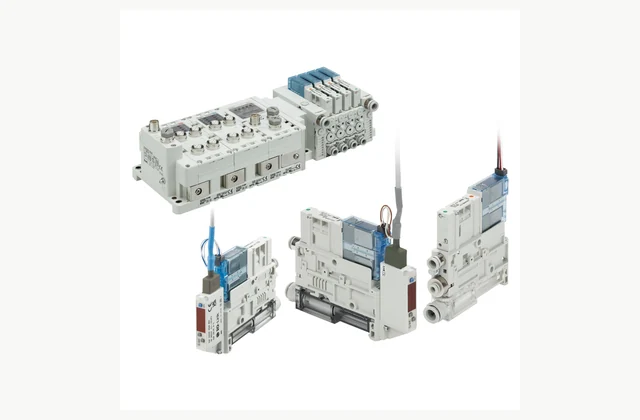
Shown as a configuration reference. Availability and the equipment offered for your project are confirmed separately.
When does air consumption determine ejector selection?
Air demand matters when compressor capacity is constrained, when multiple ejectors run simultaneously, when utility cost justifies energy-saving investment, or when portable equipment limits available supply. A single small ejector on an unrestricted plant air system rarely presents a consumption problem, but a bank of large-nozzle ejectors operating continuously can exceed available flow or drive up operating cost. Compare consumption against compressor capacity, peak simultaneous demand and the cost per unit of compressed air at the agreed supply pressure.
Consumption depends on nozzle diameter, supply pressure, duty cycle and whether the ejector runs continuously or uses air-saving regulation. Energy-saving control cuts off air supply after vacuum is reached [S1]. Actual savings depend on your part’s leakage, required vacuum level and cycle timing.
How supply pressure and nozzle size affect consumption
Larger nozzles and higher supply pressures increase both suction flow and air consumption. Choose the smallest nozzle that meets evacuation time and leakage compensation requirements, and operate at the minimum pressure that achieves the target vacuum and pickup speed.
Verify consumption at the actual installed supply pressure rather than catalog rated pressure. A system designed for one pressure but supplied at a higher value will consume more air than specified. Measure supply pressure at the ejector inlet under load, accounting for any pressure drop through filters, regulators and distribution piping.
Continuous versus energy-saving operation
Standard ejectors consume air continuously while energized. Energy-saving models monitor vacuum level and close a supply valve when the set threshold is reached, eliminating consumption during the holding phase [S1]. Savings depend on the ratio of evacuation time to total cycle time and on workpiece leakage during holding.
On a sealed part with a short pickup and long hold, air-saving regulation can substantially reduce consumption. On a porous carton or a gasketed joint that leaks continuously, the supply valve must reopen frequently to maintain vacuum, reducing or eliminating savings. Test the actual workpiece under production conditions before assuming catalog savings figures apply. Record achieved vacuum, valve cycling frequency and consumption during a representative cycle.
Measure actual duty cycle and leakage
Consumption estimates require realistic duty cycle data: pickup time, hold duration, release time and any idle waiting. A conservative estimate assumes continuous operation, but many applications spend significant time between pickups or with air supply off. Measure several cycles and use the worst-case or typical cycle as appropriate for capacity planning.
Leakage compensation dominates consumption on porous or irregularly sealed surfaces. A corrugated carton, wood panel or curved metal pressing may require continuous suction to maintain grip. Smooth, sealed plastic or glass allows the ejector to reach vacuum quickly and hold with minimal airflow. Characterize leakage by observing vacuum decay with the ejector off and the part held stationary, or by measuring the airflow required to maintain steady vacuum.
Size compressed-air supply capacity
Sum the consumption of all ejectors that operate simultaneously, including any other pneumatic loads on the same system. Include peak demand during simultaneous pickup attempts, not just steady-state holding. Add a margin for future expansion, peak load variation and compressor maintenance intervals. Verify that supply piping, filters and regulators can deliver the required flow without excessive pressure drop.
Compare supply options: dedicated compressor for the vacuum system, connection to existing plant air, or portable compressor for mobile equipment. Assess compressor duty rating, storage receiver size, and whether intermittent duty is acceptable. For energy-saving ejectors, verify that the reduced average consumption still provides adequate margin during the evacuation phase when all ejectors draw full flow.
Consumption estimation worksheet
| Parameter | Buyer input | Measurement or source |
|---|---|---|
| Nozzle diameter | Selected ejector size | Manufacturer specification |
| Supply pressure at ejector | Measured inlet pressure under load | Pressure gauge at installed location |
| Rated consumption per ejector | Catalog value at supply pressure | Manufacturer flow table or curve |
| Evacuation time per cycle | Measured with real part and hose | Vacuum switch timing or logged cycle |
| Holding time per cycle | Production cycle observation | Machine PLC log or manual timing |
| Cycles per hour or shift | Production rate requirement | Target output or historical average |
| Simultaneous ejector count | Gripper layout or machine count | Pneumatic circuit drawing |
| Energy-saving mode behavior | On/off cycling observed on real part | Logged valve state and vacuum trace |
| Total peak demand | Sum of all simultaneous ejectors | Add margin for future expansion |
Request consumption data for the proposed configuration
Ask the supplier for consumption figures at your actual supply pressure, including valve and fitting losses. Request the test conditions that produced any claimed savings percentage: workpiece type, vacuum threshold, cycle timing and whether the part was sealed or porous. Confirm whether the quoted consumption includes exhaust silencer flow or only the ejector nozzle.
For energy-saving models, request valve response time, minimum cycle duration to avoid excessive switching, and the vacuum threshold adjustment range. Verify that the control strategy suits your part leakage and cycle requirements. Some systems require electrical power for the solenoid valve; others use pilot air. Clarify what is included in the quoted consumption and what requires separate evaluation.
Compare operating cost over the project life
Calculate annual consumption from estimated cycles, measured duty and energy-saving efficiency. Multiply total air volume by your utility cost per unit of compressed air. Compare compressor power requirement against your facility’s energy rate to estimate operating cost.
Compare the operating cost difference between standard and energy-saving ejectors against the price premium for the saving feature. A higher initial cost may be justified by reduced consumption on high-cycle applications, but a low-duty or sealed-part application may not recover the investment. Request a written consumption comparison using your duty cycle and leakage assumptions rather than a generic savings claim.
For procurement guidance on vacuum ejector configuration, suction cup matching and acceptance testing, review the vacuum ejector buying guide. For complete RFQ preparation, see the vacuum ejector RFQ checklist. IndustryApex engineers can review your application requirements, propose an ejector configuration with estimated consumption, and provide a project-specific equipment quotation.
Define your equipment requirements
Review the Vacuum ejector buying guide for the complete equipment scope.
Discuss this equipment project ↗ · OEM requirements · ODM requirements. Configuration and feasibility are reviewed for your application.
Frequently asked questions
How do I estimate air consumption for a vacuum ejector installation?
Identify nozzle diameter and supply pressure from the manufacturer specification, then measure actual evacuation time, holding duration and cycles per hour with the real workpiece. Multiply rated consumption by the fraction of time the ejector draws air, accounting for energy-saving valve operation if applicable. Sum consumption for all simultaneous ejectors and add a margin for peak demand and future expansion.
What determines whether energy-saving regulation reduces consumption?
Savings depend on workpiece leakage and the ratio of evacuation time to total cycle time. A sealed part with a long hold allows the supply valve to remain closed for most of the cycle, achieving substantial savings. A porous or gasketed part that leaks continuously forces frequent valve cycling to maintain vacuum, reducing or eliminating the benefit. Test the actual part under production conditions to measure savings.
How does supply pressure affect vacuum ejector air consumption?
Higher supply pressure increases both suction flow and air consumption roughly in proportion. Operate at the minimum pressure that achieves the required vacuum level and evacuation speed. Measure pressure at the ejector inlet under load to account for distribution losses, and request consumption data at that actual pressure rather than catalog rated pressure.
What information do I need to size compressed-air supply for vacuum ejectors?
Record the number of ejectors operating simultaneously, their nozzle sizes, measured supply pressure, evacuation and holding times, and cycles per hour. Calculate peak flow during simultaneous evacuation and average flow including holding or idle periods. Verify compressor capacity, receiver size and distribution piping can deliver the required flow with acceptable pressure drop and duty margin.
Should I compare operating cost when selecting a vacuum ejector?
Yes, when utility cost is significant or duty cycle is high. Calculate annual air consumption from measured cycle data and energy-saving efficiency, then multiply by your cost per unit of compressed air or compressor power. Compare the operating cost difference against any price premium for energy-saving features to determine whether the investment is justified for your application.
Reference information
- WEB Catalog |SMC CORPORATION
Reference data and images explain equipment configurations. IndustryApex engineers confirm the offered model, specification and commercial scope in your project quotation.