
Choose an ATC CNC router from representative parts, materials, tooling and production requirements. Ask suppliers to confirm the complete magazine, spindle, workholding and software arrangement for those jobs. Compare written configuration evidence and the full quotation scope. Agree safe, project-specific verification with qualified personnel before ordering, and record unresolved interfaces and OEM / ODM responsibilities.
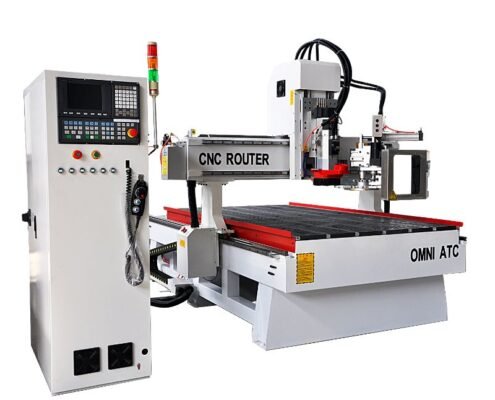
Shown as a configuration reference. Availability and the equipment offered for your project are confirmed separately.
Start with a representative job matrix
Select an ATC CNC router around the parts you intend to make. Prepare representative drawings, material descriptions, stock dimensions, required features, finish expectations and production demand. Separate recurring work from occasional jobs. A machine proposed for a familiar panel job still needs a suitability review when the material, workholding or component geometry changes.
Use a job matrix to make supplier proposals comparable. For each part family, describe the operations, proposed tooling, setup requirements and evidence you want the supplier to provide. Record the assumptions behind any cycle-time estimate. A published spindle rating or magazine capacity does not establish the quality, output or cost of your finished parts.
Choose the tool-changing arrangement from the job
The OMNI manufacturer reference describes both linear and carousel ATC arrangements [S3]. Treat these as configurations to compare for your application. Ask each supplier to identify the actual magazine, usable positions, permitted tooling envelope and tool-change sequence in its proposed machine. Confirm which options are included in the quotation.
Build the proposed tool list from the operations in your job matrix, including any reserve tooling you need. Ask the supplier to explain how that list fits the magazine and machine layout. Do not choose capacity from a generic tool-count recommendation for “cabinet work” or “sign making”. Request a configuration review when a large tool, special holder or accessory changes the intended arrangement.
Confirm the complete tooling and software interface
Request written identification of the spindle, toolholder interface, retention system, collets and permitted tooling. Have the supplier confirm compatibility for the actual combination. Similar interface names or a product-family description should not be treated as confirmation that components can be exchanged.
The OMNI reference lists Aspire, VCarve and Fusion software compatibility for its control systems [S3]. That listing is a useful starting point for questions about the exact controller, software version and post-processor. Ask for a demonstration using your intended file workflow and approved representative job. Agree who supplies, configures and supports the required software interfaces.
Review workholding and site requirements together
Send the supplier the intended stock sizes, material forms, component shapes and setup sequence. Ask it to explain the proposed workholding arrangement and its limitations for those jobs. Keep unresolved questions visible, especially where small parts, irregular stock or a change of material affects the proposed process. Do not infer suitability from an empty-table demonstration.
Prepare a site brief covering available space, access, electrical supply, extraction interfaces and operating conditions. Have competent site personnel and the supplier review the complete installation. Dust, chip, fire and material-handling arrangements need a project-specific assessment; a general article cannot specify a safe collection system or approve mixing different materials.
Compare the quotation using an evidence worksheet
Record what each supplier has confirmed and which assumptions remain open. The worksheet below is a procurement record, not an operating procedure. Use it to request comparable offers and assign responsibility for unresolved interfaces.
| Decision area | Buyer inputs | Evidence to request |
|---|---|---|
| Application fit | Representative parts, materials, finishes and demand | Configuration-specific suitability review and agreed sample evidence |
| Tool changing | Operation sequence and proposed tool list | Magazine layout, permitted tooling and included options |
| Programming | Drawing workflow, software and support needs | Controller identification, post-processor responsibility and representative file demonstration |
| Installation | Space, access, utilities and material interfaces | Installation requirements and competent site review |
| Commercial scope | Destination, installation, training and support requirements | Itemised quotation, exclusions and written responsibilities |
For cost comparisons, use your own measured production inputs and the supplier’s stated assumptions. Separate equipment, tooling, software, workholding, extraction, logistics, installation and support. Do not treat a manufacturer’s promotional productivity or payback statement as a result established for your operation.
Agree verification and OEM / ODM responsibilities
Agree the proposed acceptance evidence before ordering. Ask the supplier and your competent site team to define representative jobs, safe methods, records and acceptance criteria for the quoted configuration. Follow the manufacturer’s instructions and approved site arrangements. Record limitations and corrective actions before handover; a short demonstration does not prove every future job.
For OEM / ODM requests, provide the drawing revision, intended interfaces, labelling requirements and validation responsibilities. Obtain written feasibility confirmation and identify which changes require a revised configuration or further verification. Use the ATC CNC router buying guide to prepare the broader equipment brief and discuss the exact scope with IndustryApex.
Define your equipment requirements
Review the ATC CNC router buying guide for the complete equipment scope.
Discuss this equipment project ↗ · OEM requirements · ODM requirements. Configuration and feasibility are reviewed for your application.
Frequently asked questions
How many tool positions should an ATC router have?
Build a tool list from the operations in your representative jobs, including reserve tooling where needed. Ask the supplier to confirm usable magazine positions, tooling limits and the proposed sequence. A generic recommendation for an industry is not enough.
Does the spindle power rating establish material suitability?
A rating is only one configuration detail. Give the supplier your material, tooling, part features, finish and production requirements, and request evidence for the exact proposed arrangement. Do not infer the output or quality of a job from the rating alone.
How should a buyer choose the workholding arrangement?
Send the intended stock forms, dimensions, component shapes and setup requirements. Ask the supplier to explain the proposed workholding and its limits for those jobs. Resolve uncertain applications before committing to a configuration.
What should be checked about software compatibility?
Confirm the exact controller, software version, post-processor, file workflow and support responsibility. A general software compatibility list is a starting point. Request a representative demonstration and written confirmation for the quoted system.
Can this checklist specify a dust or chip collection system?
No. Provide the actual materials, machine configuration and site conditions to competent personnel and the supplier for a project-specific assessment. Collection, fire and installation arrangements must follow the applicable instructions and site requirements.
What information is needed for OEM / ODM changes?
Provide the drawing revision, intended interfaces, labelling requirements and validation responsibilities. Ask for written feasibility confirmation, a clear scope of supply and identification of any configuration information or verification that must change.
Reference information
- 1325 Linear ATC CNC Router | Automatic Tool Change CNC Machine | Blue Elephant
- NIOSH Hazard Controls HC6 – Control of Wood Dust from Automated Routers
- High-Performance CNC Router with Tool Changer | Industrial ATC
Reference data and images explain equipment configurations. IndustryApex engineers confirm the offered model, specification and commercial scope in your project quotation.