
A universal toolroom mill supports flexible manual machining with suitable horizontal or vertical spindle arrangements. The guide focuses on low-volume tooling and repair setups rather than repeating a general CNC machining-center selection page. Choose the configuration by setup versatility and workholding and spindle modes and feeds. Mill representative faces, slots and angled features using the supplied accessories, then inspect squareness and finish. Demonstrate a head or spindle-mode change with practical alignment verification. OEM/ODM requirements are reviewed against the intended process, site interfaces and acceptance evidence; the reference image identifies a product family and does not establish supply availability or an authorized brand relationship.
A universal toolroom mill supports flexible manual machining with suitable horizontal or vertical spindle arrangements. The guide focuses on low-volume tooling and repair setups rather than repeating a general CNC machining-center selection page. Flexible toolroom milling and angled setups; intended workflow differs from repetitive machining centers.
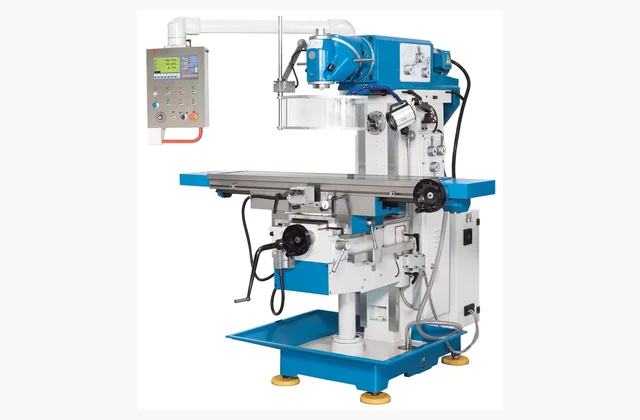
Shown as a configuration reference. Availability and the equipment offered for your project are confirmed separately.
What is the application scope for universal toolroom milling machine?
A universal toolroom mill supports flexible manual machining with suitable horizontal or vertical spindle arrangements. The guide focuses on low-volume tooling and repair setups rather than repeating a general CNC machining-center selection page.
Flexible toolroom milling and angled setups; intended workflow differs from repetitive machining centers. Versatility can become setup effort if the head, arbor or accessory cannot be changed and aligned conveniently. Evaluate the actual workshop mix, including the space consumed by dividing heads and fixtures. A cutter with adequate diameter clearance can still lack a stiff support arrangement. Compare finished slots, faces and angular features after a practical changeover, with the supplied readouts, feeds and accessories installed.
How should setup versatility and workholding be specified?
List typical parts, fixture heights and angular operations. Table size alone does not establish access when a dividing head, rotary table or long milling arbor occupies the working space.
The RFQ should make setup versatility and workholding a separate review item. Describe the expected variation, not only the easiest operating case, and ask the bidder to identify restrictions that affect the intended production mix.
What configuration evidence should be compared?
Compare head orientation, horizontal arbor support, spindle interface and available feed directions. The intended materials and cutters determine useful torque, rigidity and whether powered feeds improve the actual workshop operation.
| Decision | Evidence to compare | Procurement consequence |
|---|---|---|
| Setup versatility and workholding | List typical parts, fixture heights and angular operations. Table size alone does not establish access when a dividing head, rotary table or long milling arbor occupies the working space. | Defines the input and work envelope to be included in the offer. |
| Spindle modes and feeds | Compare head orientation, horizontal arbor support, spindle interface and available feed directions. The intended materials and cutters determine useful torque, rigidity and whether powered feeds improve the actual workshop operation. | Determines configuration, supporting equipment and exclusions. |
| Production acceptance | Mill representative faces, slots and angled features using the supplied accessories, then inspect squareness and finish. Demonstrate a head or spindle-mode change with practical alignment verification. | Establishes the agreed demonstration and inspection records. |
What must be prepared for installation?
Allow space for table travel, arbor installation, tool storage and chip removal. Check leveling, guarding and coolant containment for the planned manual operating positions.
Retain head-tramming and accessory-alignment checks with representative workshop setup sheets. The receiving team should demonstrate conversion between the intended spindle modes and verify squareness after head, arbor support or table adjustments rather than relying on old offset readings.
How should production acceptance be demonstrated?
Mill representative faces, slots and angled features using the supplied accessories, then inspect squareness and finish. Demonstrate a head or spindle-mode change with practical alignment verification.
Witness the agreed challenge cases and keep the settings that produced them. A factory acceptance result should be repeatable after installation, with measuring instruments and site differences clearly identified.
Which service provisions protect repeatability?
Maintain slide lubrication, backlash adjustment, head tram and spindle condition. Training should cover accessory alignment and safe cutter changes as well as routine machine controls.
Ask for maintenance instructions tied to the delivered configuration. The offer should distinguish operator consumables, periodic specialist work and parts with uncertain lead times, with training covering safe fault finding and recovery.
What can be customized through OEM or ODM?
OEM readouts, feeds and workshop accessories may be selected; ODM unusual fixtures need reach and rigidity checks without compromising guarding or manual control access.
Submit the proposed changes with the universal toolroom milling machine duty and acceptance plan. Separate a purchased option from new engineering, and agree drawings, validation responsibility, documentation and spare-part support before design release. The manufacturer example is a technical reference only; customization does not imply permission to copy protected designs or use a brand.
What should your universal toolroom milling machine RFQ include?
- Universal toolroom milling machine application and required process result
- Setup versatility and workholding: List typical parts, fixture heights and angular operations. Table size alone does not establish access when a dividing head, rotary table or long milling arbor occupies the working space.
- Spindle modes and feeds: Compare head orientation, horizontal arbor support, spindle interface and available feed directions. The intended materials and cutters determine useful torque, rigidity and whether powered feeds improve the actual workshop operation.
- Representative input variation and difficult production cases
- Required acceptance evidence: Mill representative faces, slots and angled features using the supplied accessories, then inspect squareness and finish. Demonstrate a head or spindle-mode change with practical alignment verification.
- Site and utility scope: Allow space for table travel, arbor installation, tool storage and chip removal. Check leveling, guarding and coolant containment for the planned manual operating positions.
- Service provision: Maintain slide lubrication, backlash adjustment, head tram and spindle condition. Training should cover accessory alignment and safe cutter changes as well as routine machine controls.
- OEM/ODM engineering scope: OEM readouts, feeds and workshop accessories may be selected; ODM unusual fixtures need reach and rigidity checks without compromising guarding or manual control access.
- Upstream preparation and downstream handling interfaces
- Destination country and applicable installation requirements
- Production schedule, changeover mix and operator availability
- Drawings, samples, inspection method and rejected-output criteria
Need OEM / ODM customization?
Submit branding, packaging, configuration or engineering requirements for this equipment. Include the target market, initial and annual quantities, required changes and acceptance criteria.
Customization feasibility, permitted branding, development responsibilities, minimum quantity, cost and lead time are reviewed for the proposed supplier and configuration before a quotation is confirmed.
Frequently asked questions
What defines the application boundary for universal toolroom milling machine?
A universal toolroom mill supports flexible manual machining with suitable horizontal or vertical spindle arrangements. The guide focuses on low-volume tooling and repair setups rather than repeating a general CNC machining-center selection page. Flexible toolroom milling and angled setups; intended workflow differs from repetitive machining centers. Define the intended production result before comparing nominal ratings, and ask for evidence using the actual input conditions.
What should the universal toolroom milling machine RFQ state about setup versatility and workholding?
List typical parts, fixture heights and angular operations. Table size alone does not establish access when a dividing head, rotary table or long milling arbor occupies the working space. Send the representative inputs and the difficult cases together, then require the supplier to state any restrictions or preparation steps needed to repeat the proposed result.
How should spindle modes and feeds be checked?
Compare head orientation, horizontal arbor support, spindle interface and available feed directions. The intended materials and cutters determine useful torque, rigidity and whether powered feeds improve the actual workshop operation. Ask the bidder to document the selected arrangement and exclusions against the real duty. Confirm which supporting components and setup work are included in the commercial scope.
What acceptance test is appropriate for universal toolroom milling machine?
Mill representative faces, slots and angled features using the supplied accessories, then inspect squareness and finish. Demonstrate a head or spindle-mode change with practical alignment verification. Agree the sampling method and rejection criteria before the trial, and keep configuration and inspection records for the later site-acceptance comparison.
What installation and service details should be confirmed?
Allow space for table travel, arbor installation, tool storage and chip removal. Check leveling, guarding and coolant containment for the planned manual operating positions. Maintain slide lubrication, backlash adjustment, head tram and spindle condition. Training should cover accessory alignment and safe cutter changes as well as routine machine controls. Allocate local preparations and specialist support to named parties before shipment so commissioning and subsequent maintenance have a clear owner.
Can universal toolroom milling machine configurations be customized through OEM or ODM?
OEM readouts, feeds and workshop accessories may be selected; ODM unusual fixtures need reach and rigidity checks without compromising guarding or manual control access. Supply drawings and operating conditions for feasibility review. Engineering changes require agreed validation and documentation; a reference brand image does not establish an authorized supply or manufacturing relationship.
Reference information
- Conventional Milling Machines | Universal & Knee Mills | KNUTH USA
- UWF 3.2 - Universal Milling Machine | KNUTH USA
Reference data and images explain equipment configurations. IndustryApex engineers confirm the offered model, specification and commercial scope in your project quotation.