
Select an air source heat pump using a building heat-demand assessment and the required heating-water or air temperatures at local design conditions. Distinguish space heating, cooling and domestic hot water duties. Compare capacity and efficiency at relevant conditions, system integration, controls and service. Qualified designers should review refrigerant, placement and destination requirements for the exact model. Include electrical and hydraulic work, emitters where needed, commissioning and warranty conditions in the project budget.
Applications and production fit
Start with the building and the heat service required, rather than replacing an old boiler with an equally labeled heat-pump output. Gather the heat-demand assessment, occupancy schedule and existing emitter information. Separate space heating, cooling and domestic hot water where applicable. A useful selection compares performance at the temperatures the building actually needs, especially during the local design climate, not only at a favorable catalogue test point.
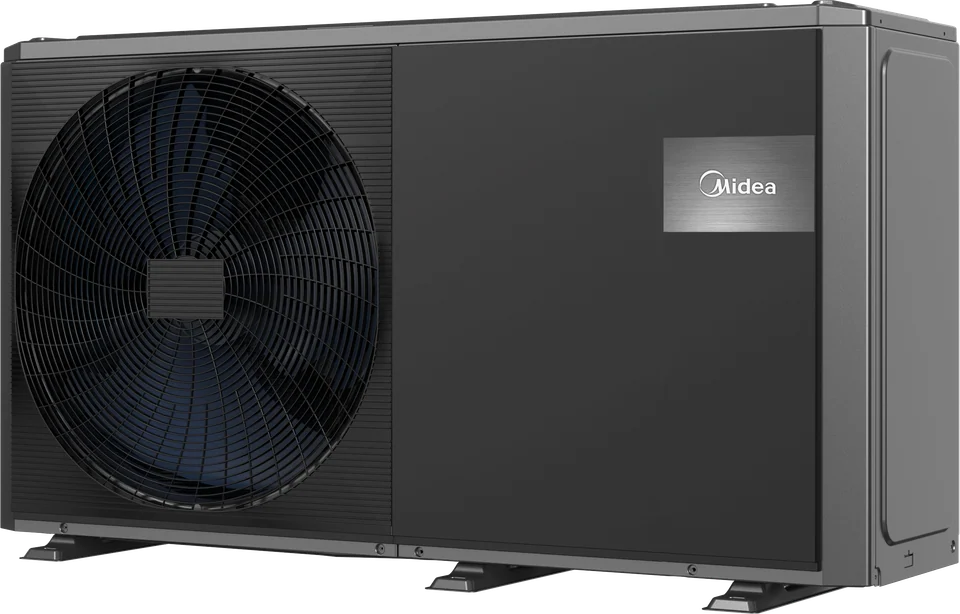
Shown as a configuration reference. Availability and the equipment offered for your project are confirmed separately.
Configuration choices to compare
Ask for the exact model’s capacity and efficiency information at relevant outdoor and delivery-temperature conditions. Review modulation, controls and the proposed hydraulic or air-distribution arrangement with a qualified designer. For water systems, assess emitter compatibility, water flow and any buffer or cylinder role. A high maximum water temperature alone does not establish efficient year-round operation. Compare the complete system proposal and the assumptions behind any estimated annual consumption.
Utilities, layout and site compatibility
Placement should be reviewed for airflow, noise, service access, drainage and other conditions in the exact installation instructions. Qualified parties should assess the refrigerant-related and destination requirements of the offered version. Confirm electrical supply and the existing distribution system. Cold-weather drainage and backup arrangements may need attention at the actual site. A model-family picture or seasonal rating cannot establish that every building location is suitable.
Delivered project cost and scope
Include the unit, controls, electrical changes, hydraulic or duct work, cylinders or buffers where specified and commissioning in the budget. Identify emitter upgrades and other building work separately. Compare tariff and operating-cost assumptions using the heat-demand assessment, climate and delivery temperatures. Ask for warranty conditions, local service and refrigerant-related maintenance responsibilities. A lower equipment price does not ensure a lower installed cost or a universal payback period.
Representative acceptance testing
Agree commissioning around the exact system design and relevant operating checks by qualified personnel. Record model identity, settings, flow or distribution conditions and the heating or hot-water functions included. Review the handover and monitoring plan. A brief warm-water demonstration does not establish seasonal performance or the building’s design-day result. If annual performance is a project objective, define the measurement boundary and follow-up evidence rather than claiming it from commissioning alone.
Maintenance and operating handover
Handover should provide model manuals, the design basis, settings, commissioning records and a local support route. Establish the maintenance responsibilities for the unit and connected building system. Ask how controls are adjusted when occupancy or emitter arrangements change, with the responsible designer involved. Retain warranty and service conditions for the exact regional product. Building changes or different desired temperatures should trigger review rather than a simple assumption of unchanged efficiency.
OEM/ODM and project customization
Define customization as a separate scope in the quotation. Configuration choices concern the equipment arrangement and operating requirements; OEM requests can include permitted branding, labels, manuals and packaging; ODM requests may involve engineering changes. Identify the party responsible for design, documentation and verification before agreeing to a change. A manufacturer reference photograph demonstrates a category or model family and does not establish that IndustryApex represents that brand or can relabel its product. Ask which changes are feasible for the proposed supplier, what sample or drawing approval is needed and how the change affects service parts, testing and delivery.
RFQ checklist for a comparable proposal
Send a concise project brief with the specific items below and attach drawings, samples or site information where available. Distinguish essential requirements from preferences so alternative offers remain comparable. Ask each bidder to return a configuration list, utility and installation boundary, relevant model documentation, acceptance plan and an itemized quotation. State the destination and who will review applicable local requirements for the exact offered configuration. Identify exclusions, recurring consumables, training, warranty conditions and after-sales responsibilities before comparing totals. If important data is unavailable, mark it as an assumption to verify instead of allowing different bidders to silently solve different projects.
- Building location and heat-demand assessment
- Space heating, cooling and hot-water duties
- Existing emitters and required temperatures
- Local design outdoor conditions
- Occupancy and operating schedule
- Model-specific capacity and efficiency data
- Hydraulic or air-distribution arrangement
- Electrical supply and backup provisions
- Outdoor placement, drainage and noise review
- Refrigerant and destination responsibility
- Commissioning and monitoring boundary
- Local service and warranty conditions
Manufacturer configuration references
Review the linked manufacturer information as configuration references. Request the current sheet, included scope and relevant evidence for the exact proposed equipment; these references do not establish an IndustryApex supply relationship.
What should you include in your RFQ?
- Building location and heat-demand assessment
- Space heating, cooling and hot-water duties
- Existing emitters and required temperatures
- Local design outdoor conditions
- Occupancy and operating schedule
- Model-specific capacity and efficiency data
- Hydraulic or air-distribution arrangement
- Electrical supply and backup provisions
- Outdoor placement, drainage and noise review
- Refrigerant and destination responsibility
- Commissioning and monitoring boundary
- Local service and warranty conditions
For OEM / ODM requests, include the branding, packaging, configuration or engineering changes you need, initial and annual quantities, target market, sample approval and acceptance requirements. Feasibility and commercial scope are confirmed for the specific project.
Need OEM / ODM customization?
Submit branding, packaging, configuration or engineering requirements for this equipment. Include the target market, initial and annual quantities, required changes and acceptance criteria.
Customization feasibility, permitted branding, development responsibilities, minimum quantity, cost and lead time are reviewed for the proposed supplier and configuration before a quotation is confirmed.
Frequently asked questions
Can a heat pump be sized from the old boiler rating?
Not reliably on that information alone. Use a building heat-demand assessment, required delivery temperatures and local design conditions. The old boiler may have been oversized or selected for a different duty, so its label is not a complete replacement specification.
Will existing radiators work with an air to water heat pump?
They need assessment at the proposed water temperatures and building heat load. Ask a qualified designer to review emitter output and system flow. A heat pump's maximum temperature alone does not establish comfortable or efficient operation in the building.
Does a seasonal efficiency label predict every building's electricity use?
No. Actual use depends on climate, demand, delivery temperatures, controls and installation conditions. Request a building-specific model with assumptions and a defined measurement boundary rather than transferring one rating directly to an annual bill.
What belongs in the installed heat-pump quotation?
Include controls, electrical work, hydraulic or distribution changes, cylinders or buffers where required, commissioning and any emitter upgrades. Clarify placement, maintenance and warranty responsibilities. A unit-only price is not a complete building-system offer.
Can I request OEM or ODM customization for an air source heat pump?
Yes, include the requested configuration, branding or engineering changes in your project inquiry. Feasibility, ownership of the design, validation, documentation, minimum quantities and delivery terms need confirmation with the proposed supplier. The referenced manufacturer model is an example, not an OEM commitment from that brand.
What information is needed to request an air source heat pump quotation?
Send the category-specific checklist on this page, the destination, your operating conditions and available drawings or samples. Ask for an itemized complete project scope and a representative acceptance plan. Flag missing input data so quotations state the same assumptions rather than appearing comparable while covering different configurations.
Reference information
- Midea R290 M thermal Arctic HT heat pump
- Midea official supporting product documentation
Reference data and images explain equipment configurations. IndustryApex engineers confirm the offered model, specification and commercial scope in your project quotation.