
Avocado pulp destoning separates stones and removes part of the peel, delivering unrefined pulp to a downstream refining stage. Confirm the destoning principle, expected peel removal, stone fragment control, edible recovery measurement and whether oxidation protection is needed.
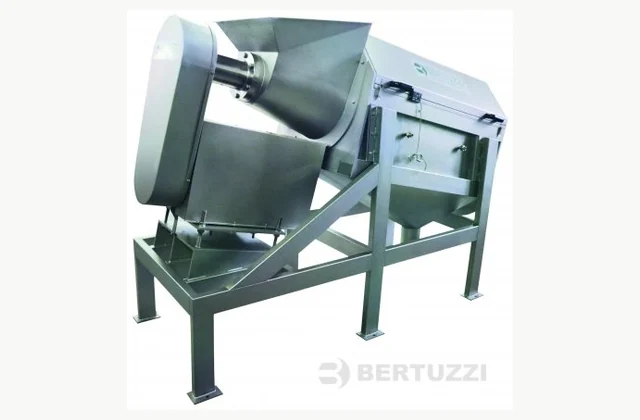
Shown as a configuration reference. Availability and the equipment offered for your project are confirmed separately.
Destoning principle for avocado pulp production
Avocado pulp destoning machines separate stones and remove part of the peel from fresh fruit, delivering unrefined pulp to a subsequent refining operation. The Bertuzzi JumboDestoner is designed for efficient separation of stones from fruits with large stones and strong peel, such as mango or avocado [S1]. This configuration is distinct from whole-fruit pitters that preserve intact halves.
State whether the required output is unrefined pulp or product ready for filling. Destoning does not automatically include refining. The avocado reference explicitly separates unrefined pulp extraction from a later single-stage refining operation. Clarify remaining skins, fibers and particle texture at the destoner outlet so the refining supplier receives a truthful inlet specification.
Peel removal and fragment control
Avocado destoners partially peel fresh fruit during the separation process. Stone breakage changes the inspection problem. Some fruit lots arrive with damaged pits, while aggressive handling can create additional fragments. Include these realistic conditions in the challenge set and identify the subsequent inspection or separation operation needed for the intended product.
Residual peel, fiber and stone fragments remain in the unrefined output and require downstream refining or inspection. Agree residual stone and peel criteria using weighed streams and the actual quality specification rather than a single headline yield.
Oxidation control and nitrogen blanketing
Avocado pulp oxidizes when exposed to air during processing. If required, oxidation can be reduced using a nitrogen blanket during refining [S1]. Confirm whether oxidation protection is needed and at which process stage it should be applied. Nitrogen blanketing adds equipment cost, operating expense and integration complexity.
The destoning stage may not require nitrogen if the unrefined pulp is transferred quickly to a protected refining vessel. Establish the maximum acceptable residence time and exposure before oxidation becomes visible or measurable. Request the supplier’s recommendation for nitrogen flow rate, delivery pressure and monitoring arrangements when oxidation control is part of the acceptance specification.
Process integration and unrefined pulp handover
Map washing, destoning, unrefined pulp transfer and waste removal. The Bertuzzi configuration washes avocados by immersion in water using a jet system, then rinses fruits with a shower of fresh water on the elevator that takes the fruits to subsequent sorting operations [S1]. Confirm whether the accepted handover is unrefined pulp or product ready for the next process.
Ripeness changes the balance between flesh recovery and peel contamination. A setting that improves recovery on one lot may carry unwanted material into another. Ask how adjustment is made and which observations tell an operator that the product needs a different operating condition. Retain fruit-lot descriptions, operating settings and accepted samples from trials.
Buyer decision worksheet
| Decision factor | Buyer input required | Evidence to request |
|---|---|---|
| Output form | Unrefined pulp or refined product handover | Accepted output sample with texture and peel criteria |
| Peel removal | Acceptable residual peel in unrefined pulp | Trial-lot peel separation measurement |
| Stone fragments | Incoming damaged-stone frequency and size distribution | Difficult-lot inspection and fragment detection method |
| Edible recovery | Minimum acceptable flesh recovery | Weighed accepted pulp and waste streams from representative fruit |
| Oxidation control | Maximum acceptable color change or oxidation level | Nitrogen blanket equipment, flow rate and monitoring |
| Upstream preparation | Washing, sorting and feed metering scope | Complete process flow with handover points |
| Downstream refining | Required final particle size and fiber removal | Refining equipment specification and unrefined pulp inlet criteria |
Acceptance trial for avocado pulp destoning
Process normal and difficult fruit lots with the intended preparation. Examine unrefined pulp for stone fragments and residual peel, weigh edible recovery and waste, and record the lot’s ripeness so yield comparisons remain meaningful. A successful demonstration on one favorable consignment should not become an unsupported guarantee across every crop the buyer might process.
The waste stream deserves direct examination. Too much edible flesh on discharged stones can indicate poor recovery, but chasing every remaining trace may worsen the accepted product. Agree the balance using weighed streams and the actual quality specification. Include seasonal fruit variety changes in the trial plan and retain operating settings for future reference.
Configuration and OEM scope
ODM can address fruit-specific separation parts, feed arrangements or waste discharge. Establish sample trials and approval criteria before committing to tooling. OEM labels, languages and project documentation are separate requests, subject to the proposed manufacturer’s written agreement.
Inspect access to the separation chamber and waste outlets. Confirm food-contact cleaning, drainage and product transfer arrangements, including how sticky fruit residues are removed without dismantling unrelated parts of the line. Request the supplier’s maintenance schedule and typical wear-part replacement interval for avocado processing.
Discuss your avocado pulp processing requirements with IndustryApex engineers to build a complete equipment solution and request a project-specific quotation. Review the broader fruit destoning machine selection guide for additional process integration and configuration decisions.
Define your equipment requirements
Review the Fruit destoning machine buying guide for the complete equipment scope.
Discuss this equipment project ↗ · OEM requirements · ODM requirements. Configuration and feasibility are reviewed for your application.
Explore the Fruit destoning machine buying guide and RFQ checklist ↗
Frequently asked questions
What distinguishes avocado pulp destoning from whole-fruit pitting?
Avocado pulp destoning separates stones and removes part of the peel, delivering unrefined pulp to a downstream refining stage. Whole-fruit pitters preserve intact halves. State whether the required output is unrefined pulp or intact fruit pieces to receive the correct equipment configuration.
How is peel removal measured after destoning?
Confirm acceptable residual peel in unrefined pulp and request trial-lot separation measurements. Residual peel and fiber require downstream refining. Agree residual peel criteria using weighed streams and the actual quality specification rather than a single headline yield.
When is nitrogen blanketing needed for avocado pulp?
Nitrogen blanketing reduces oxidation during refining if color change or oxidation level must be minimized. Confirm whether oxidation protection is needed, at which process stage it should be applied, and the maximum acceptable residence time before oxidation becomes visible. Request nitrogen flow rate, delivery pressure and monitoring arrangements.
What upstream preparation should be specified with destoning?
Map washing, sorting, feed metering, destoning, unrefined pulp transfer and waste removal. Confirm whether washing uses immersion and jet systems, how fruits are sorted before destoning, and whether the accepted handover is unrefined pulp or product ready for the next process. Provide a complete process flow with handover points.
How should edible recovery be measured in acceptance trials?
Weigh accepted pulp and waste streams from representative fruit lots. Record ripeness so yield comparisons remain meaningful. Examine waste for edible flesh and unrefined pulp for stone fragments and residual peel. Agree the balance using the actual quality specification. Include seasonal variety changes in the trial plan.
What ODM scope applies to avocado destoning machines?
ODM can address fruit-specific separation parts, feed arrangements or waste discharge. Establish sample trials and approval criteria before committing to tooling. OEM labels, languages and project documentation are separate requests, subject to the proposed manufacturer's written agreement. Confirm feasibility and development responsibilities in writing.
Reference information
- Avocado processing machinery and plants
Reference data and images explain equipment configurations. IndustryApex engineers confirm the offered model, specification and commercial scope in your project quotation.