
A centrifugal air compressor matches factory base load when sustained demand stays within its stable operating map. Reject configurations missing control-sequence documentation, unclear turndown behavior, or unverified seasonal cooling boundaries. Request the demand profile plotted against the proposed machine's operating range, anti-surge strategy, and delivered air across your production calendar before comparing offers.
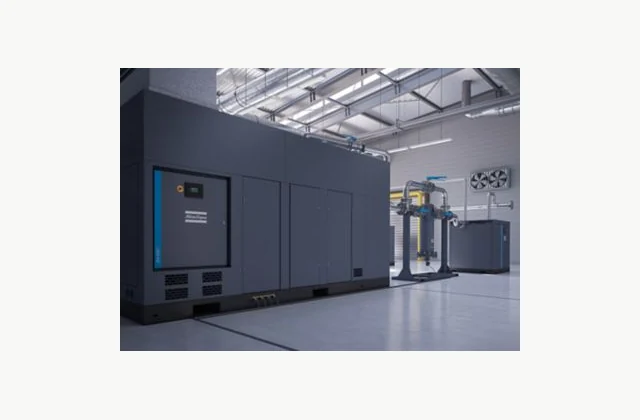
Shown as a configuration reference. Availability and the equipment offered for your project are confirmed separately.
Match the compressor operating map to measured demand
A centrifugal air compressor suits factory base load when the plant has substantial sustained air demand that stays within the machine’s stable operating range. Collect your measured demand profile, including variation across shifts, production changes and shutdowns. Request the manufacturer’s operating map for the proposed configuration and compare it against that profile. A package designed for steady full-load operation delivers poor energy performance when deep turndown forces frequent blow-off or unloading.
Ask each bidder to plot your actual demand data against the proposed machine’s flow and pressure boundaries, showing where blow-off begins and where anti-surge protection activates.
Understand inlet control and anti-surge behavior
Centrifugal machines use inlet guide vanes, blow-off valves or unloading to respond to changing demand. Each method affects delivered air and power differently. Request a written control-sequence description for the proposed package, stating how it responds when plant demand drops below minimum stable flow. Verify whether blow-off wastes compressed air to atmosphere or recirculates it, and confirm the power consumption during these periods.
Ask the supplier to explain anti-surge protection logic and how it coordinates with other compressors in your system. A central controller can help manage base and trim machines only when the actual machine interfaces, response limits and communications-loss behavior are documented and supported. Include normal shutdown and restart sequences in the operating description you request for engineering review.
Define package boundaries and air-quality responsibility
Itemize what the quoted package includes: compression stages, intercoolers, aftercoolers, lubrication system, controls, starting equipment and discharge treatment. [S2] An oil-free compression claim does not independently establish moisture or particle levels at the user connection. State your required air quality and the inspection location. Review whether aftercooling, condensate drains, filters, dryers and receivers are included in the quoted package or remain separate plant responsibilities that must be sized for the actual air flow.
Confirm which coolers are inside the package boundary, how they are arranged, and what cooling utility they require. Ask for a battery-limit diagram showing included equipment, excluded equipment, and connection points rather than interpreting an installation photograph as a complete quotation scope.
Verify seasonal cooling and site conditions
Provide the bidder with site ambient conditions and available cooling-water supply, including seasonal temperature range, water quality and flow constraints where applicable. Ask which conditions determine the quoted air output and heat rejection capacity. A rating valid at favorable conditions may not represent performance during summer peak production or when cooling-water temperature rises.
Review cooler access, drainage and maintenance requirements for the exact package configuration. Identify responsibility for cooling towers, circulation pumps, water treatment and connecting pipework so an assumed utility does not become an unplanned installation dependency. Obtain foundation loads, equipment dimensions and rigging information for the package and its largest serviceable component, and check the delivery route and lifting access.
Request acceptance conditions and performance evidence
Request a rating basis and a performance acceptance plan that states flow, pressure, power and the inlet or cooling conditions under which these are measured. Have the responsible parties agree how site deviations from quoted conditions will be handled before commissioning begins. Observe control behavior during representative demand changes as well as stable operation. Delivery of rated air at one favorable point does not prove acceptable system behavior during low production, cooling disturbances or transition between machines.
Review protective functions, operator handover and controller settings with the manufacturer or authorized service provider. Document the boundary between machine control and plant control. Ask who analyzes a failure to meet the agreed operating point and what corrective actions are available, rather than leaving correction responsibilities undefined until commissioning.
Base-load compressor decision worksheet
| Decision factor | Buyer input required | Rejection condition | Evidence to request |
|---|---|---|---|
| Demand match | Measured flow profile across shifts, peaks and shutdowns | Plant demand falls outside stable operating map for extended periods | Operating map with customer demand data plotted; turndown limit before blow-off |
| Control method | Acceptable blow-off duration and energy waste | Control sequence not documented; anti-surge behavior unclear | Written control-sequence description; delivered air and power across demand range |
| Cooling | Seasonal ambient and cooling-water conditions; available utility capacity | Quoted output not verified at site worst-case conditions | Rated performance basis; heat rejection schedule; cooler maintenance access |
| Air quality | Required particle, moisture and oil limits at user connection | Treatment boundary unclear; aftercooling, drains or dryers excluded without notice | Battery-limit diagram; air-train components; inspection and test location |
| System integration | Existing base/trim compressors; plant control interface requirements | Coordination strategy missing; communications loss not addressed | Sequencing logic; interface specifications; startup and shutdown procedures |
| Acceptance | Representative operating conditions during commissioning | Acceptance plan vague; no agreement on deviation handling | Flow, pressure and power test method; witness points; deviation responsibility |
Compare maintenance access and service plans
Compare the service plan for bearings, gears, coolers and instrumentation using the proposed configuration. Ask which tasks require specialist access, what site resources are needed, and what downtime is typical for scheduled maintenance. A generic uptime statement does not replace a documented maintenance route and a realistic plant contingency plan when the base-load machine is out of service.
The manufacturer reference equipment shown in this discussion illustrates centrifugal compressed-air technology. It does not imply authorized representation, stock availability, equivalent performance from another supplier or permission to relabel the pictured brand. Confirm the proposed equipment model, commercial scope and service arrangements for your specific project.
Discuss your factory air system and base-load requirements with IndustryApex engineers to prepare a technical proposal and equipment supply scope.
Define your equipment requirements
Review the Centrifugal air compressor buying guide for the complete equipment scope.
Discuss this equipment project ↗ · OEM requirements · ODM requirements. Configuration and feasibility are reviewed for your application.
Explore the Centrifugal air compressor buying guide and RFQ checklist ↗
Frequently asked questions
When does a centrifugal air compressor suit factory base load?
A centrifugal compressor suits base load when your measured demand profile stays within the machine's stable operating map for most of the production calendar. Collect demand variation across shifts, peaks and shutdowns, then request the manufacturer's operating map for the proposed configuration and compare them. Reject a configuration when plant demand frequently falls below the machine's minimum stable flow, forcing energy-wasting blow-off or unloading.
What control information should I request for base-load operation?
Request a written control-sequence description stating how the machine responds when plant demand drops, including inlet guide vane position, blow-off activation point, anti-surge protection logic and power consumption during these periods. Ask how the proposed package coordinates with other compressors in your system and what happens during communications loss or normal shutdown. Verify that delivered air and energy performance are documented across your demand range, not just at one favorable point.
Why do seasonal cooling conditions affect a centrifugal compressor quotation?
Air output and efficiency depend on inlet temperature and cooling-water conditions. A rating valid at favorable conditions may not represent performance during summer peak production or when cooling-water temperature rises. Provide site ambient range and cooling-water temperature, quality and flow constraints. Ask which conditions determine the quoted output and request verification that the machine meets your air demand at site worst-case conditions.
What package boundaries must be clear before comparing base-load compressor offers?
Itemize compression stages, intercoolers, aftercoolers, lubrication system, controls, starting equipment, aftercooling, condensate drains, filters, dryers and receivers. State your required air quality and inspection location. Request a battery-limit diagram showing included equipment, excluded equipment and connection points so you can compare offers on the same scope.
How do I verify centrifugal compressor performance at my site?
Request a performance acceptance plan stating flow, pressure, power and the inlet or cooling conditions under which these are measured. Have the responsible parties agree how site deviations from quoted conditions will be handled before commissioning. Observe control behavior during representative demand changes and transitions, not just stable full-load operation. Document who analyzes a failure to meet the agreed operating point and what corrective actions are available.
Can IndustryApex supply a centrifugal air compressor configured for my base-load application?
IndustryApex engineers work directly with customers on application assessment, equipment selection and configuration for factory air systems. Provide your measured demand profile, required pressure, existing compressors, cooling conditions and air-quality requirements. IndustryApex will prepare a technical proposal and equipment supply scope addressing your base-load needs. Configuration, commercial scope and service arrangements are confirmed in the project quotation.
Reference information
- Oil-free air centrifugal compressors
Reference data and images explain equipment configurations. IndustryApex engineers confirm the offered model, specification and commercial scope in your project quotation.