
Select a battery impedance analyzer around UPS chemistry, terminal access and repeatable condition trending. Confirm voltage limits, probe compatibility and baseline-record management. Impedance measurements support screening and trending, not standalone capacity claims. Define how readings fit the capacity-test program and request witnessed terminal demonstrations.
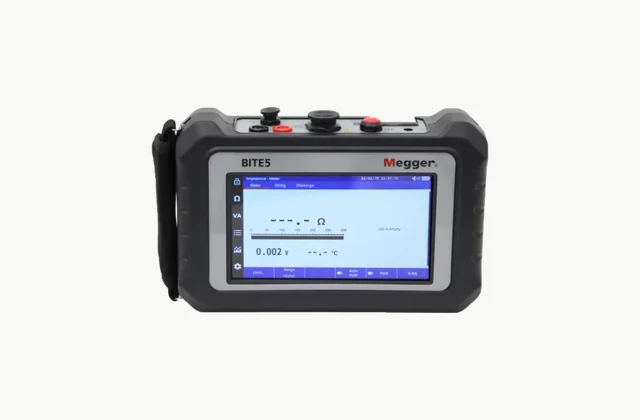
Shown as a configuration reference. Availability and the equipment offered for your project are confirmed separately.
Define the UPS battery measurement task before selecting an analyzer
Stationary UPS batteries require condition monitoring that fits the maintenance schedule and available access. Start with battery chemistry and arrangement: valve-regulated lead-acid, flooded lead-acid, nickel-cadmium or lithium-ion modules, along with cell count, string voltage and typical float conditions. Photograph representative terminals, intercell links and any recessed posts or terminal guards that affect probe placement.
An impedance analyzer measures electrical response that can flag changes within cells and connections. It does not independently establish remaining capacity or backup runtime. The Megger BITE5 and BITE5 Advanced test lead-acid, NiCd and lithium-ion batteries [S1]. Procurement should therefore define how impedance readings complement existing capacity discharge tests rather than replacing them.
Match instrument voltage limits and probe design to the installation
Confirm voltage measurement and impedance-test limits against the actual battery modules and accessible test points. Some instruments specify separate voltage ranges for measurement and for impedance testing. Parallel strings, float-charging conditions and connected UPS equipment can affect the required method and interpretation. Request the manufacturer’s instructions for the proposed configuration and have qualified site personnel review the measurement plan.
Probe access often determines whether an analyzer is practical for the intendedracks. Recessed posts, safety lugs and crowded intercell links require compatible lead sets and probe tips. Supply terminal drawings or photographs with the inquiry and request a witnessed demonstration on representative hardware. Include repeated probe placement in the demonstration so the result reflects field repeatability rather than an undisturbed laboratory condition.
Base analyzer selection on repeatable trending and baseline records
A single impedance reading has limited diagnostic value without test conditions and historical context. Specify how the instrument records asset identity, cell location, temperature, state of charge and relevant operating conditions. Decide how technicians will use consistent contact positions and measurement methods during future maintenance visits so trend data remains comparable.
Request a sample report and the underlying exported data before purchase. A useful report should distinguish cells, modules and strings, retain measurement units and identify the instrument used. Confirm whether historical results can be moved between computers and whether licenses, accounts or subscriptions are required. If multiple technicians or subcontractors maintain the fleet, define a common naming structure and review process. The software must preserve replaced-cell history without silently joining unlike assets into one trend.
UPS battery measurement decision worksheet
| Decision factor | Required buyer input | Supplier evidence to request |
|---|---|---|
| Chemistry compatibility | VRLA, flooded lead-acid, NiCd or lithium-ion module designation | Confirmed chemistry and voltage limits in instrument documentation |
| Terminal access | Terminal photographs, post geometry and intercell-link arrangement | Compatible probe tips, lead length and witnessed placement demonstration |
| Measurement conditions | Float voltage, parallel strings, connected equipment and site procedure | Relevant manufacturer instructions and qualified site-personnel confirmation |
| Baseline management | Asset naming, technician count, contractor involvement and offline requirements | Software licensing, historical export format and report-retention method |
| Integration with capacity tests | Existing discharge-test schedule and load-bank arrangement | Discharge-test monitoring capability and compatible voltage recording |
| Intercell connections | Strap material, suspected corrosion and required intercell measurements | Intercell resistance function, test-current specification and accessory compatibility |
Evaluate software, calibration and destination support
Include cybersecurity and offline-working requirements where UPS sites restrict network access. Check that the software can operate without constant internet connection and that data export does not depend on cloud accounts. Request the software or firmware version used for acceptance and confirm that updates do not require subscription fees or eliminate offline capability.
Ask how damaged probes are replaced, where calibration or repair is handled and what support is available at the destination. Verify instrument identity, lead sets, charger, carrying case, documentation and any agreed calibration evidence during acceptance. Base acceptance on the functions and accessories ordered, not on a generic catalog description. Include consumables, software access, operator familiarization and return logistics in the ownership comparison.
State OEM and ODM requirements with measurement traceability
OEM inquiries may involve labeling, carrying kits, report branding or documentation languages where a supplier can support them. ODM inquiries may involve a custom fixture, data interface or integration into a maintenance station. Describe the battery geometry, test method and data requirements so the responding manufacturer can assess feasibility.
Keep traceable instrument identity and measurement records intact when branding or software presentation changes. A custom probe or fixture needs validation with the selected instrument and application, and new electronic functions can alter the necessary evidence. Send the destination, battery list and current reporting example with the inquiry. Ask the supplier to separate standard capability, optional accessories and development work in its response.
Prepare a complete analyzer specification
- Battery chemistry, manufacturer and cell or module designation
- Typical measurement-point voltage and overall string arrangement
- Stationary application and maintenance decisions required
- Parallel strings, charging state and expected test conditions
- Terminal drawings or photographs and access restrictions
- Required impedance, voltage, temperature and intercell-connection tests
- Baseline history, asset identification and report example
- Data export, offline operation and software licensing requirements
- Calibration evidence, probe spares, training and destination support
- OEM branding or ODM fixture and data-interface development request
IndustryApex engineers work with buyers to match battery impedance analyzers to UPS maintenance programs, confirm probe compatibility and define baseline-management workflows. Discuss your UPS battery testing requirements and request an equipment proposal athttps://industryapex.com/equipment/battery-impedance-analyzers/.
Define your equipment requirements
Review the Battery impedance analyzer buying guide for the complete equipment scope.
Discuss this equipment project ↗ · OEM requirements · ODM requirements. Configuration and feasibility are reviewed for your application.
Explore the Battery impedance analyzer buying guide and RFQ checklist ↗
Frequently asked questions
Does an impedance analyzer confirm UPS battery backup runtime?
An impedance measurement supports condition screening and trending but does not independently establish remaining capacity or backup runtime. Capacity verification requires an appropriate discharge test and interpretation for the UPS application. Specify how the analyzer will complement the existing maintenance and capacity-test program.
Can one analyzer test VRLA, flooded and lithium UPS batteries?
Some instruments cover multiple chemistries, but compatibility must be checked for the exact model, module voltage and installation arrangement. Provide the battery types and measurement points in the inquiry. Do not infer lithium-module compatibility solely from a general voltage-measurement range or a product-family description.
Can UPS batteries remain on float while being tested?
Permitted arrangements depend on the instrument, battery bank and site procedure. Parallel strings, charger conditions and accessible terminals can affect both the method and interpretation. Request the relevant manufacturer instructions and have qualified site personnel confirm the measurement plan before acceptance or use.
Why are probe accessories critical when comparing UPS battery analyzers?
Terminal guards, recessed posts and crowded racks can prevent a standard probe from making consistent contact. Supply representative terminal photographs and dimensions, then request a suitable lead and probe configuration. A witnessed demonstration should include repeated contact placement to show whether the proposed kit is practical.
What baseline data should a UPS battery impedance system retain?
Retain asset and cell identity, measurement units, date, relevant test conditions and instrument identity. Historical readings should remain exportable and distinguish replaced cells from older assets. Request a sample report and raw-data export, and clarify software licensing and offline access before comparing instrument prices.
What OEM or ODM options can be requested for a battery analyzer?
Ask about labeling, carrying kits, documentation or report branding, subject to manufacturer feasibility. Custom probes, fixtures and data interfaces need application details and validation. Branding must preserve traceable instrument identity and records. Confirm standard capability, optional accessories and any required development work separately.
Reference information
- BITE5 battery tester series | Megger
Reference data and images explain equipment configurations. IndustryApex engineers confirm the offered model, specification and commercial scope in your project quotation.