
Choose a motor grader from road geometry, material and the required grading tolerance. Match moldboard control, articulation, traction and grade interfaces to the site, then verify working visibility and complete grading passes with the offered destination configuration. Grade representative material through the required cross-sections and curves using the intended pass method. Survey the achieved surface with the agreed procedure and record conditions, settings, delays and useful output. Verify control, visibility and service access without treating one ideal straight pass as proof of every project duty. Submit the intended configuration and any OEM/ODM changes for project-specific feasibility review.
Choose a motor grader from road geometry, material and the required grading tolerance. Match moldboard control, articulation, traction and grade interfaces to the site, then verify working visibility and complete grading passes with the offered destination configuration.
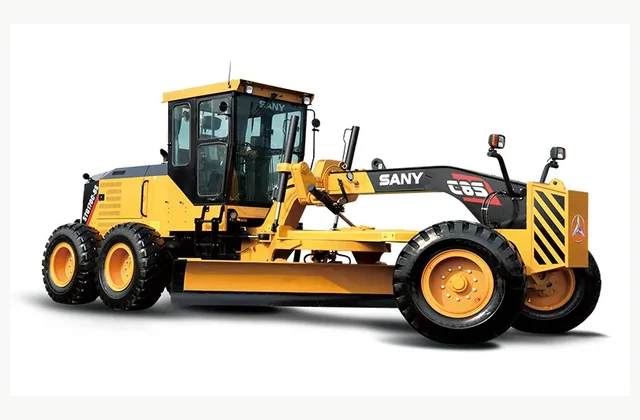
Shown as a configuration reference. Availability and the equipment offered for your project are confirmed separately.
Define the grading task and material
Provide road width, crossfall, curves, base material and required surface condition. Maintenance grading and fine construction trimming have different objectives. A large moldboard or engine rating does not establish that the machine can achieve the specified geometry efficiently in the project's material.
Match moldboard movement and reach
Review blade length, side shift, rotation, tilt and the working positions needed near edges or ditches. Supply the actual cross-section and obstacles. Family imagery may show optional arrangements, so compare the offered movement envelope rather than assume every grader reaches every illustrated position.
Assess articulation and maneuvering
Provide turning areas, narrow roads and the planned pass pattern. Frame articulation and steering behavior influence access and operator control. A turning-radius number should be evaluated with blade position and site traffic because the complete moving envelope can extend beyond the tire path.
Review traction tires and working resistance
Describe ground support, gradients, loose material and expected cutting resistance. Confirm tire and drive arrangement for the offered variant. More engine power alone does not establish useful grading force when traction or stability limits the operation, so the engineer should assess the complete site duty.
Define grade control and operator visibility
Specify manual control or supported grade guidance with datum and survey responsibility. Check visibility of blade ends and the work area from the operator position. An installed display does not automatically deliver project tolerances without calibration, a sound reference and an approved grading procedure.
Plan edges joints and destination service
Identify cutting edges, circle or blade wear points, hydraulics and drive service. Check engine/emissions and transport requirements for the destination. Used graders require individual joint, wear and maintenance-history assessment rather than applying the new model's general specifications to the offered unit's condition.
Compare a complete motor grader scope
| Decision | Information to compare |
|---|---|
| Define the grading task and material | Road geometry, material, maintenance/fine-grade task and tolerance |
| Match moldboard movement and reach | Moldboard length, movement envelope, ditch/edge duty and obstructions |
| Assess articulation and maneuvering | Turning space, articulation, blade envelope and grading pass pattern |
| Review traction tires and working resistance | Ground, slopes, tire/drive configuration and cutting resistance |
| Define grade control and operator visibility | Grade interface, datum, calibration, operator view and survey method |
| Plan edges joints and destination service | Cutting edges, blade/circle wear, hydraulics, variant and service records |
Plan installation and access
Arrange unloading, inspection and commissioning with qualified heavy-equipment personnel. Fit the approved blade and grade-control options and verify calibration. Establish working routes and traffic controls and provide an isolated maintenance position for blade, hydraulic and drive service according to the exact machine instructions.
Agree acceptance evidence before ordering
Grade representative material through the required cross-sections and curves using the intended pass method. Survey the achieved surface with the agreed procedure and record conditions, settings, delays and useful output. Verify control, visibility and service access without treating one ideal straight pass as proof of every project duty.
Define OEM/ODM engineering boundaries
OEM blades, grade interfaces and permitted options may be reviewed. ODM frame, articulation, blade or control changes require engineering and field validation. A reference image does not establish stock, authorized agency or transferable grading accuracy for another configuration.
What should your motor grader RFQ include?
- Road geometry, material, maintenance/fine-grade task and tolerance
- Moldboard length, movement envelope, ditch/edge duty and obstructions
- Turning space, articulation, blade envelope and grading pass pattern
- Ground, slopes, tire/drive configuration and cutting resistance
- Grade interface, datum, calibration, operator view and survey method
- Cutting edges, blade/circle wear, hydraulics, variant and service records
- Destination, working environment, access and delivery constraints
- Installation responsibility, utilities and connection drawings
- Acceptance samples, documented test method, operator training and maintenance scope
- OEM/ODM changes requested: identification, tooling, interfaces or new design; engineering feasibility to be confirmed
Need OEM / ODM customization?
Submit branding, packaging, configuration or engineering requirements for this equipment. Include the target market, initial and annual quantities, required changes and acceptance criteria.
Customization feasibility, permitted branding, development responsibilities, minimum quantity, cost and lead time are reviewed for the proposed supplier and configuration before a quotation is confirmed.
Frequently asked questions
How do I define the grading task and material?
Provide road width, crossfall, curves, base material and required surface condition. Maintenance grading and fine construction trimming have different objectives. A large moldboard or engine rating does not establish that the machine can achieve the specified geometry efficiently in the project's material.
How do I match moldboard movement and reach?
Review blade length, side shift, rotation, tilt and the working positions needed near edges or ditches. Supply the actual cross-section and obstacles. Family imagery may show optional arrangements, so compare the offered movement envelope rather than assume every grader reaches every illustrated position.
How do I assess articulation and maneuvering?
Provide turning areas, narrow roads and the planned pass pattern. Frame articulation and steering behavior influence access and operator control. A turning-radius number should be evaluated with blade position and site traffic because the complete moving envelope can extend beyond the tire path.
How do I review traction tires and working resistance?
Describe ground support, gradients, loose material and expected cutting resistance. Confirm tire and drive arrangement for the offered variant. More engine power alone does not establish useful grading force when traction or stability limits the operation, so the engineer should assess the complete site duty.
How do I define grade control and operator visibility?
Specify manual control or supported grade guidance with datum and survey responsibility. Check visibility of blade ends and the work area from the operator position. An installed display does not automatically deliver project tolerances without calibration, a sound reference and an approved grading procedure.
How do I plan edges joints and destination service?
Identify cutting edges, circle or blade wear points, hydraulics and drive service. Check engine/emissions and transport requirements for the destination. Used graders require individual joint, wear and maintenance-history assessment rather than applying the new model's general specifications to the offered unit's condition.
Reference information
- SANY STG170C-8S official product reference
- SANY motor grader official family or technical reference
Reference data and images explain equipment configurations. IndustryApex engineers confirm the offered model, specification and commercial scope in your project quotation.