
Select a mobile crane using the actual lift geometry, road-movement plan and available setup space. Compare load charts, outrigger conditions, ballast and mobilization scope together so the proposed machine can reach the site and perform the intended lifts. Prioritize lift cases, configuration, setup. Use the checkpoints to build a consistent equipment scope and confirm the intended trial or installation evidence. The official image is a product reference; it does not establish availability or an authorized supplier relationship. Submit OEM/ODM changes for application-specific feasibility review.
Select a mobile crane using the actual lift geometry, road-movement plan and available setup space. Compare load charts, outrigger conditions, ballast and mobilization scope together so the proposed machine can reach the site and perform the intended lifts.
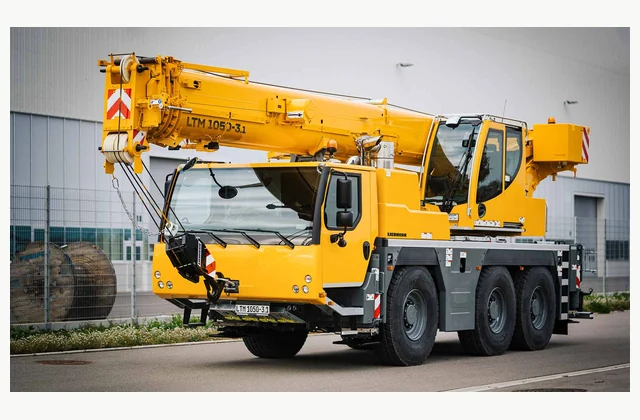
Shown as a configuration reference. Availability and the equipment offered for your project are confirmed separately.
Describe each demanding lift
Provide gross load, rigging weight, pick-up and placement positions, operating radii and required hook height. Nearby structures, overhead obstructions and underground services influence the setup. Maximum rated capacity describes only a particular chart condition; it does not identify performance at the farthest reach. Ask for assessment of the exact lift cases and make clear whether several lifts require different crane positions or boom arrangements.
Use the chart for the offered configuration
Telescopic boom length, jib, counterweight, reeving and support arrangement affect usable capacity. Identify which components are included in the quotation and which are transported or supplied separately. Do not assume an optional variable-outrigger feature is standard. The Liebherr LTM 1050-3.1 reference has a specific technical configuration; a different proposed crane needs its own applicable charts rather than an informal comparison with the pictured model.
Resolve outriggers and supporting ground
The site must accommodate the permitted outrigger positions and the associated reactions. Provide the available footprint and ground information, including slabs, services and buried voids. Mats or other support need appropriate engineering, not an assumption based on crane weight divided by area. Clarify who designs and approves the setup. A restricted outrigger footprint can materially change allowable lifts, so it belongs in the initial requirement rather than a site-day discovery.
| Selection issue | Information to specify |
|---|---|
| Lift cases | Gross load with rigging, radius and required hook height. |
| Configuration | Boom, jib, reeving and counterweight in the relevant chart. |
| Setup | Permitted outrigger footprint and engineered supporting ground. |
| Mobilization | Road route, axle loads and separately transported components. |
| Work pattern | Frequency of travel, setup and configuration changes. |
| Handover | Inspection records, charts, operator instruction and service access. |
Check road mobilization separately
Road travel involves axle loads, ballast carried on the crane, dimensions, route constraints and local permissions. The configuration used on public roads may differ from the one used for lifting. Ask for the movement plan and any support vehicles, extra ballast delivery or setup operations required. A mobile crane can offer convenient movement, but it is not a promise that every proposed route or transport configuration is locally permitted.
Consider repetitive work and setup effort
For a sequence of smaller jobs, setup, travel and reconfiguration can influence usable productivity more than the maximum lifting figure. Describe how often the crane moves, the typical site restrictions and the mix of lifts. Review visibility, controls and access with trained operators. Where remote or assistance functions are offered, identify their specific role and limitations rather than substituting them for a planned and supervised lifting operation.
Plan inspection, service and handover
Obtain identification of the crane and supplied lifting equipment, operating instructions, applicable charts and the inspection records required for the destination. Check access to specialist diagnostics and replacement hydraulic or control components. Training should cover the agreed configuration and manufacturer procedures. For a used unit, maintenance history and structural condition need independent attention; the model’s brochure cannot establish the condition of the particular crane being offered.
Bound project adaptations and OEM/ODM
Auxiliary interfaces, labels and some equipment arrangements may be reviewed. Changes to boom structures, outriggers, controls or protective functions require a defined engineering process and supporting evidence. Provide lift cases, road constraints and destination requirements with an OEM/ODM brief. Confirm ownership of drawings, approval boundaries and service responsibilities. A reference-brand image is an equipment example and does not indicate permission to reproduce, privately label or represent the pictured crane.
What should your mobile truck crane RFQ include?
- Lift cases: Gross load with rigging, radius and required hook height.
- Configuration: Boom, jib, reeving and counterweight in the relevant chart.
- Setup: Permitted outrigger footprint and engineered supporting ground.
- Mobilization: Road route, axle loads and separately transported components.
- Work pattern: Frequency of travel, setup and configuration changes.
- Handover: Inspection records, charts, operator instruction and service access.
- Destination, site conditions and delivery access
- Installation boundary, utilities and connection drawings
- Acceptance procedure, documentation and training scope
- OEM/ODM changes: interface, material, branding or new design; written engineering feasibility required
Need OEM / ODM customization?
Submit branding, packaging, configuration or engineering requirements for this equipment. Include the target market, initial and annual quantities, required changes and acceptance criteria.
Customization feasibility, permitted branding, development responsibilities, minimum quantity, cost and lead time are reviewed for the proposed supplier and configuration before a quotation is confirmed.
Frequently asked questions
Why is maximum mobile-crane capacity insufficient for selection?
Capacity varies with radius, boom and jib, counterweight and support conditions. The lift also includes rigging weight. Provide real pick-up and placement geometry and require the appropriate configuration chart; a maximum class rating cannot establish that the intended lift can be performed.
Can the crane operate with partly extended outriggers?
Only where the specific design, instructions and load chart permit that support arrangement. Provide available setup dimensions and require an assessment of the exact condition. A general variable-outrigger feature should not be assumed present or applicable to every proposed lift.
What ground assessment does a mobile crane need?
The setup must account for the outrigger reactions and actual supporting ground or structure. Identify slabs, services, voids and settlement risks. Clarify responsibility for engineered mats or other support and obtain approval for the planned position before equipment mobilization.
Does mobile mean the crane can drive to any site?
No. Road dimensions, axle loads, carried ballast, route limits and local permissions must be checked. Ask whether support vehicles or separate ballast transport are needed. The travel configuration and the lifting configuration may differ, which affects mobilization cost and setup time.
What records matter when buying a used mobile crane?
Review the particular machine’s identity, maintenance and inspection history and supplied components, alongside structural and mechanical condition. Obtain applicable charts and operating information. Generic documentation for the model is useful but does not establish the condition or history of the unit for sale.
Which mobile-crane changes need engineering review?
Structural, support, control and protective-function changes require a defined technical assessment. State the actual lift and road requirements in an OEM/ODM inquiry. More limited interfaces or labels may also need documentation, and branding should not obscure configuration identification or service responsibilities.
Reference information
- Mobile crane LTM 1050-3.1 - Liebherr
- Construction machines from Liebherr - Liebherr
Reference data and images explain equipment configurations. IndustryApex engineers confirm the offered model, specification and commercial scope in your project quotation.