
A metal coil slitting line should be selected using coil condition, slit-edge quality and recoiled sub-coil handling, with the receiving site and upstream or downstream equipment included in the discussion. Compare the proposed configuration, stated assumptions and a realistic acceptance trial together. Ask each supplier to identify exclusions, maintenance responsibilities and unresolved application questions. Define OEM branding separately from ODM integration changes so an altered machine is assessed against the same documented production requirement.
Compare metal coil slitting line proposals around coil condition, slit-edge quality and recoiled sub-coil handling. Define the process boundary, supporting equipment and acceptance evidence before choosing a configuration. Send the same application details to each bidder and include project-specific OEM or ODM requirements in the initial inquiry.
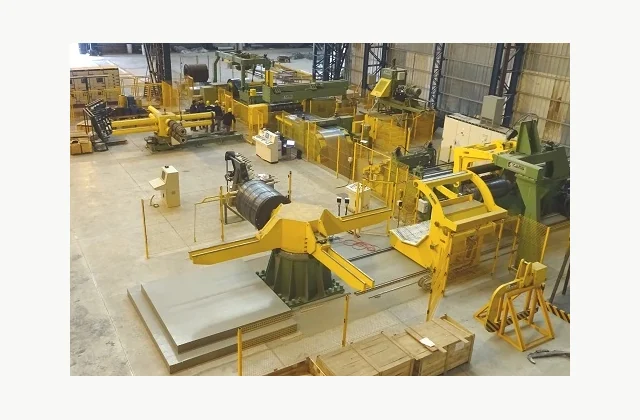
Shown as a configuration reference. Availability and the equipment offered for your project are confirmed separately.
Specify the incoming coil and outgoing strips
Provide alloy or steel grade, strength, thickness, master-coil dimensions and surface condition. Define the slit-width combinations, width acceptance, edge burr and required sub-coil dimensions. A line’s maximum strip width does not describe its useful range for every material. Include narrow strips and delicate coatings in the review because they can change tooling, tensioning and handling choices across the line.
Explain the receiving process, such as roll forming, tube production or stamping. State whether coil-set, edge condition or surface marks create downstream rejection. Those requirements help distinguish a suitable slitting process from one that merely divides the master strip into narrower pieces.
Treat the slitter head and tooling as a system
Ask how the proposed knife arrangement, spacers, clearance setting and tooling change support your material and width mix. Review the actual minimum slit widths and the number of strips in demanding normal patterns. A nominal material-thickness rating does not establish burr or edge quality on another strength grade. Include tooling preparation and changeover in the comparison rather than looking only at the cutting shaft.
Clarify who prepares and maintains knives and separator tooling. Identify whether width changes use complete head changes or another arrangement. The offered automation should be demonstrated on the production pattern mix, including how the operator verifies the setup before threading a valuable coil.
Match strip tension to the surface requirement
After cutting, individual strips need controlled handling and tension before recoiling. Ask how the proposed system accommodates strip-thickness variation and protects delicate surfaces. Compare the resulting sub-coil tightness, edge alignment and marks, not simply line speed. A tensioning method appropriate for ordinary carbon steel may need a different application review for bright stainless steel, aluminum or prepainted strip.
The CAMU installed line reference illustrates a complete slitting-line category with multiple available configurations. Do not interpret a family brochure as an offer of every tensioning or automatic handling option. Require a battery-limit drawing for the actual proposed strip path and recoiler.
| Decision | Requirement to state | Evidence to request |
|---|---|---|
| Coil | Grade, strength, dimensions and finish | Identified production coil |
| Slits | Width patterns and edge requirements | Tooling setup and strip inspection |
| Tension | Surface protection and thickness variation | Recoiled sub-coil quality |
| Layout | Loading, loop, scrap and unloading | Allocated line and civil boundary |
| Changeover | Width mix and tooling preparation | Observed normal setup sequence |
Lay out coil loading, loops and scrap removal
Allocate coil storage, loading car, uncoiler, threading, any loop pit, scrap handling, recoiler and sub-coil unloading. Review foundations, lifting and service access with the responsible designers. Show the route for edge trim and damaged coil ends. A slitter-head quotation is not comparable with a complete processing line unless these mechanical, civil and material-flow boundaries are made explicit.
Discuss threading and normal interruption recovery under the manufacturer’s procedure. If the line connects to strapping or packing, confirm the coil identification and transfer interface. The heaviest incoming coil and the least stable narrow sub-coil deserve separate handling checks.
Inspect slit edges and packed sub-coils
Use identified production coils and agreed slit patterns, including a demanding narrow-strip or surface-sensitive case. Inspect width, burr, edge condition and surface marks along the resulting strip, then inspect recoiled tightness and alignment. Record knife setup, tensioning and interventions. A short strip sample cut at low speed cannot establish consistent sub-coils through an entire production coil.
Include a width change and the associated tooling preparation in the observation. Agree how head and tail losses are recorded. Retain coil certificates and sample locations with the report so the demonstrated material condition remains traceable when a later quality issue is investigated.
Define tailored line functions under ODM
OEM requests may cover labels, manuals and a defined tooling package. ODM work can change tensioning, inspection, head change, coil loading or packing interfaces. Require engineering review of strip quality, coil handling and the complete control sequence. Define responsibility for foundations, drawings, software and acceptance, rather than assuming a standard slitter rating validates a custom line designed for another material mix.
Request a service route for knives, arbors, mandrels and tensioning components. Keep tooling and replacement identifiers linked to the installed line. A production-data interface should preserve master-coil and sub-coil traceability across the customized handling and packing sequence.
The pictured manufacturer equipment and linked documents are technical configuration references. They do not imply authorized representation, stock availability, equivalent performance from another supplier or permission to relabel the pictured brand. Confirm the proposed equipment and commercial scope for the specific project.
What should your metal coil slitting line RFQ include?
- Coil alloy/grade, strength, thickness and surface
- Master-coil ID, OD, width and handling weight
- Slit-width patterns and minimum useful strips
- Width, burr, edge and coating acceptance
- Knife, spacer, separator and head-change scope
- Strip tensioning and sub-coil dimensions
- Coil car, loops, scrap, recoiler and unloading boundary
- Foundations, utilities, packing and traceability interfaces
- Production-coil acceptance and tooling service plan
- OEM tooling or ODM tensioning, inspection and packing review
Need OEM / ODM customization?
Submit branding, packaging, configuration or engineering requirements for this equipment. Include the target market, initial and annual quantities, required changes and acceptance criteria.
Customization feasibility, permitted branding, development responsibilities, minimum quantity, cost and lead time are reviewed for the proposed supplier and configuration before a quotation is confirmed.
Frequently asked questions
What should I specify for a metal coil slitting line?
Provide alloy or steel grade, strength, thickness, master-coil dimensions and surface condition. Define the slit-width combinations, width acceptance, edge burr and required sub-coil dimensions. A line's maximum strip width does not describe its useful range for every material. Include narrow strips and delicate coatings in the review because they can change tooling, tensioning and handling choices across the line.
How do slitting knives affect the line specification?
Ask how the proposed knife arrangement, spacers, clearance setting and tooling change support your material and width mix. Review the actual minimum slit widths and the number of strips in demanding normal patterns. A nominal material-thickness rating does not establish burr or edge quality on another strength grade. Include tooling preparation and changeover in the comparison rather than looking only at the cutting shaft.
Why does recoiling tension matter on a slitting line?
After cutting, individual strips need controlled handling and tension before recoiling. Ask how the proposed system accommodates strip-thickness variation and protects delicate surfaces. Compare the resulting sub-coil tightness, edge alignment and marks, not simply line speed. A tensioning method appropriate for ordinary carbon steel may need a different application review for bright stainless steel, aluminum or prepainted strip.
What installation work belongs around a coil slitting line?
Allocate coil storage, loading car, uncoiler, threading, any loop pit, scrap handling, recoiler and sub-coil unloading. Review foundations, lifting and service access with the responsible designers. Show the route for edge trim and damaged coil ends. A slitter-head quotation is not comparable with a complete processing line unless these mechanical, civil and material-flow boundaries are made explicit.
How should coil slitting acceptance be measured?
Use identified production coils and agreed slit patterns, including a demanding narrow-strip or surface-sensitive case. Inspect width, burr, edge condition and surface marks along the resulting strip, then inspect recoiled tightness and alignment. Record knife setup, tensioning and interventions. A short strip sample cut at low speed cannot establish consistent sub-coils through an entire production coil.
Can a metal coil slitting line support OEM or ODM?
OEM requests may cover labels, manuals and a defined tooling package. ODM work can change tensioning, inspection, head change, coil loading or packing interfaces. Require engineering review of strip quality, coil handling and the complete control sequence. Define responsibility for foundations, drawings, software and acceptance, rather than assuming a standard slitter rating validates a custom line designed for another material mix.
Reference information
- Slitting lines - CAMU
- About Us - CAMU
Reference data and images explain equipment configurations. IndustryApex engineers confirm the offered model, specification and commercial scope in your project quotation.